There are lies that depend on falsehood and collapse when confronted with evidence. And there are more durable contradictions: those built on principles that are true, admirable, even indispensable, but applied selectively enough to become instruments of power.
Democracy is not a lie. Liberty is not a lie. Fraternity is not a lie. International law is not a lie. The contradiction begins when the civilisation that most insistently invokes their universality reserves to itself, or to its allies, the practical power to decide where, when and to whom they apply.
This is not an argument against the political inheritance commonly associated with the West. It takes that inheritance seriously enough to judge Western power by its own standards. Nor does it reduce Europe and the United States to a single moral actor. The West contains its dissidents, abolitionists, anti-colonialists, jurists, journalists and historians; some of the strongest indictments of Western domination arose within Western intellectual life itself.
The problem lies elsewhere: in the recurrent distance between the universality of the principle and the selectivity of its enforcement. That distance has a name: conditional universalism. A principle is proclaimed as universal; its application becomes conditional upon geography, strategic alliance, race, economic interest, military usefulness or political convenience.
What follows is therefore not an inventory of every Western crime — no civilisation could survive an exercise in comparative innocence. It examines something narrower and more consequential: the recurring contradiction between the West’s claim to universal norms and the exemptions Western power has repeatedly granted itself and its partners. For two centuries the ledger has been accumulating. In 2026, Gaza, Lebanon and Iran have made it increasingly difficult to close.
Democracy, and the Bayonet Behind It
On 8 May 1945, Europe celebrated the defeat of Nazism. In Algeria, the same date entered history differently: nationalist demonstrations in Sétif, Guelma and Kherrata were followed by vast colonial repression. The death toll remains contested — Algerian memory retains the figure of 45,000, while other estimates are considerably lower — but historiographical disagreement over magnitude cannot erase the event. At the very moment Europe proclaimed the defeat of an ideology founded on racial hierarchy, colonial hierarchy remained violently enforceable on the Mediterranean’s southern shore.
The contradiction is more profound than hypocrisy. France could be democratic in Paris and colonial in Algeria without ceasing to understand itself as the homeland of universal rights. Democracy operated at the centre while coercion governed the periphery. The promise did not disappear; the category of those fully entitled to it narrowed.
The same disjunction had already structured European imperial expansion. At the Berlin Conference of 1884-85, European powers established rules for their colonial competition in Africa without a single African representative at the table. The Congo Free State that followed became the personal domain of Leopold II of Belgium. Forced labour, mutilation, coercive extraction and demographic catastrophe accompanied a project publicly clothed in the language of civilisation, commerce and humanitarian purpose. The exact scale of excess mortality remains disputed; the structure of exploitation does not.
Imperial domination required more than armies; it required moral vocabulary. Conquest became civilisation, extraction became development, resistance became disorder. The Algerian War exposed the same mechanism again. Between 1954 and 1962, a republic whose schools taught the Rights of Man used torture, summary execution and collective punishment in a colonial war — practices documented by victims, journalists, historians and, later, acknowledged by figures such as General Paul Aussaresses. Democracy could coexist with colonial exception. The principle remained intact; its geography changed.
Liberty, But Not Yet for Everyone
Modern Western political thought produced some of humanity’s most powerful formulations of liberty — and repeatedly restricted the category of human entitled to enjoy them. The Enlightenment did not invent slavery, but Enlightenment Europe coexisted with slave economies and colonial systems that converted human beings into property. The United States declared in 1776 that all men are created equal while maintaining chattel slavery for nearly nine more decades, followed by a century of racial segregation and disenfranchisement. The principle and its violation inhabited the same constitutional imagination.
South Africa supplied a later example. Apartheid endured from 1948 to 1994 within a Cold War structure in which strategic calculation repeatedly competed with moral principle. Western governments were never uniform, and opposition inside Western societies became formidable, but anti-communist logic long softened pressure on Pretoria. Nelson Mandela, who would become a global symbol of democratic reconciliation, remained subject to United States terrorism-related immigration restrictions until Congress removed the anomaly in 2008 — fourteen years after his election as president and fifteen years after he shared the Nobel Peace Prize. Liberty had become universal faster in rhetoric than in administrative memory.
Fraternity, and the Passport at the Door
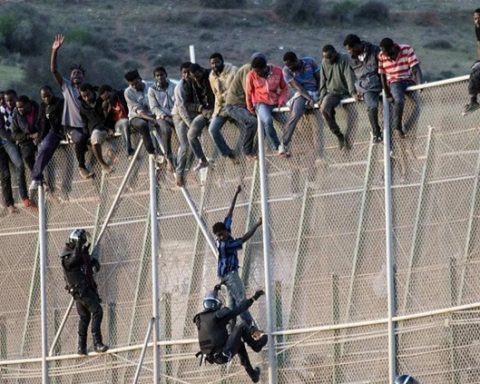
Fraternity is perhaps the most revealing of the three promises because it begins where law ends: whom do we recognise instinctively as one of us? Europe’s response to Ukrainian refugees after February 2022 — open borders, temporary protection and extraordinary administrative speed — should be remembered as evidence of what humane policy can accomplish. That is precisely why comparison became unavoidable. Syrians, Afghans, Iraqis and Africans reaching the same continent had long encountered a different vocabulary: deterrence, externalisation, pushback, reception capacity. The scandal was never that Ukrainians were welcomed generously. It was that comparable generosity had so often been described as impossible when the people at the border came from elsewhere. European migration control, meanwhile, has relied in part on cooperation with Libyan authorities despite extensive documentation by international organisations of arbitrary detention, trafficking, torture, forced labour and other grave abuses along the route. If the moral value assigned to the refugee changes with the face of the refugee, fraternity becomes recognition by resemblance rather than a universal principle.
Justice and the Architecture of Exception
The modern international order rests on a revolutionary proposition: power alone should not determine legitimacy. Yet the system carried a structural weakness from its birth. The Security Council illustrates it almost mathematically. Five states possess permanent veto power, so the institution created to defend collective security contains at its centre a formal hierarchy between states. The United States has repeatedly used its veto on questions concerning Israel and Palestine; Russia, China, Britain and France possess their own records of geopolitical selectivity. The lesson is larger than any single country: the institution charged with universal security institutionalises exceptional power.
And then came Gaza.
Gaza: The Laboratory of the Exception
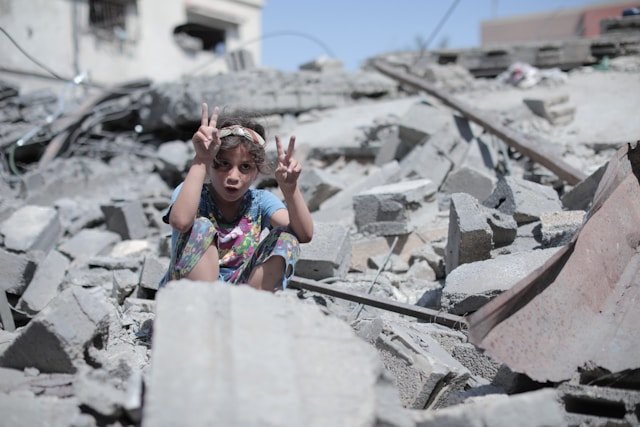
Gaza has become the most severe contemporary test of Western claims regarding international law precisely because ignorance is no longer plausible. There are satellites, journalists, hospitals, humanitarian agencies, diplomatic cables, courts, open-source investigators and public warnings. Whatever disputes remain over individual incidents or legal characterisation, the international system cannot credibly claim that it lacked information.
In January 2024, acting on South Africa’s application under the Genocide Convention, the International Court of Justice did not rule that genocide had been established. That distinction must remain explicit. At the provisional-measures stage, the Court found plausible at least some of the rights claimed under the Convention — including the right of Palestinians in Gaza to be protected from acts of genocide and related prohibited acts — and found the conditions for provisional protection met. It subsequently indicated additional measures. That legal precision strengthens rather than weakens the argument. The question is not whether a final merits judgment had already been delivered; it is what an international order means when binding provisional measures from its highest court collide with military alliance, diplomatic protection and strategic interest.
The International Criminal Court deepened the contradiction. When the Court issued an arrest warrant for Vladimir Putin in 2023, much Western political discourse presented international criminal justice as an essential pillar of the rules-based order. When the ICC issued warrants for Benjamin Netanyahu and Yoav Gallant on 21 November 2024, political responses in parts of the West shifted sharply toward jurisdiction, legitimacy, immunity and national interest. The cases are not legally identical and should not be treated as such. But the institutional principle is indivisible: a court cannot remain universally credible if respect for its authority appears to fluctuate with the alliance status or passport of the accused.
By 2026, after years of devastation, the deeper contradiction is that the international system does not lack vocabulary. It possesses an extraordinary lexicon of protection — distinction, proportionality, civilian immunity, humanitarian access, prevention, accountability — yet vocabulary has not guaranteed protection. A legal principle is not truly tested when it restrains an adversary. It is tested when it imposes a political cost on an ally.
Lebanon and Iran: Sovereignty and Force
Lebanon presents the same contradiction through the lens of sovereignty. When Russia invaded Ukraine, Western governments rightly insisted that borders cannot be revised by force and that military superiority creates no legal entitlement to another state’s territory. Universality begins only when that proposition survives a change of geography.
Lebanon’s sovereignty is undeniably complicated by Hezbollah’s armed status outside the state’s exclusive control; that is a genuine sovereign problem. But one violation of sovereignty cannot logically dissolve sovereignty itself. The Lebanese state may legitimately seek a monopoly on force without Israel thereby acquiring an unlimited licence to strike Lebanese territory. In 2026, the United Nations continued to call explicitly for respect for Lebanon’s sovereignty and territorial integrity. Otherwise sovereignty ceases to be a principle and becomes a ranking system: some borders sacred, others provisional, the law unchanged while the identity of the actors decides its application.
Iran adds a third test — not merely of civilian protection or territorial sovereignty, but of the rules governing force itself. On 28 February 2026, the United States and Israel launched further military strikes on Iran, including attacks involving nuclear sites; the IAEA subsequently reported renewed disruption to safeguards verification and damage at nuclear-related facilities. Tehran retaliated across the region, and the United Nations warned of a grave threat to international peace and security. The legal and strategic arguments advanced by every belligerent deserve scrutiny, including Iran’s own conduct.
But the central question survives them all: how far can anticipation of a threat be stretched before preventive war displaces the prohibition on the use of force? Once an expansive doctrine of pre-emption is normalised for one state, the precedent becomes available to every rival invoking the same logic. Beneath the rhetoric of values lies the geography of flows — oil, tankers, insurance, energy infrastructure and the Strait of Hormuz — where the moral grammar of international affairs suddenly reveals its material anatomy. States speak in values; power thinks in corridors. Gaza asks whether human life is universally protected. Lebanon asks whether sovereignty is universally respected. Iran asks whether the rules governing force are universally binding. Three theatres, one grammar.
The Power to Name
Power operates through vocabulary as much as through bombs and treaties. Edward Said showed in Orientalism that domination includes the ability to construct the categories through which the dominated are perceived. Contemporary conflict repeatedly demonstrates the political force of naming: who is a terrorist and who a resistance fighter; what is aggression and what is self-defence; who is massacred and who becomes a casualty count; whose fear is treated as context and whose fear is treated as justification. Language does not itself kill, but it helps determine how killing is morally processed, legally framed and politically remembered. The hierarchy can therefore be established before the facts are even debated.
The Necessary Objection: Which West?
Any argument this severe must turn its scrutiny on itself. There is no single Western mind deciding, in one room, how to contradict its own principles. The West that vetoes Security Council resolutions is not identical to the West that fills streets in London, Paris, Berlin, Madrid, New York or Washington to protest the consequences. The West that arms is not the West that indicts. Aimé Césaire wrote his Discourse on Colonialism in Paris, using the intellectual language of the tradition he was indicting. European and American journalists, jurists, scholars and civil-society organisations have exposed abuses committed by their own governments. The International Criminal Court itself emerged largely from a legal architecture strongly supported by European states and is, in principle, capable of constraining governments that may resist its decisions.
That capacity for self-correction is real. It has never been the question. The question is its timing.
Recognition often arrives on schedule — but on history’s schedule, not the victim’s. In 2005, France’s ambassador in Algeria described the massacres of 8 May 1945 as an “inexcusable tragedy”, sixty years after the event. In 2020, Belgium’s King Philippe expressed his “deepest regrets” for the wounds inflicted during colonial rule in Congo, without issuing a formal apology. In 1997, Queen Elizabeth II described the Amritsar massacre as a deeply distressing episode, while Britain again stopped short of a formal state apology during the centenary commemorations in 2019. The pattern is not perfect, but it is recurrent: the archive opens, the memorial is visited, the language becomes more candid — often after the strategic, electoral or imperial cost of candour has sharply diminished.
Conditional universalism, then, is selective not only in space but also in time. A principle is applied most fully once applying it can no longer prevent the event to which it refers. This is what separates the argument from a simple accusation of hypocrisy. What the record describes is not merely weak character. It is a recurring political mechanism: societies genuinely capable of producing the vocabulary of universal justice, genuinely capable of self-criticism, yet repeatedly more comfortable deploying that vocabulary retrospectively than allowing it to constrain power in real time.
What Is Actually Being Asked
Nothing here asks the West to renounce its stated principles. On the contrary, it asks that those principles be honoured at the moment of live application, when doing so is difficult, costly and consequential — not only in the retrospective register of commemoration. It asks that judicial orders matter whether the state concerned is ally or rival; that veto power answer to some conception of common responsibility rather than permanent exemption; that sovereignty mean the same thing on the Dnipro and on the Litani; that civilian protection not weaken when strategic affinity strengthens; and that a starving, displaced or bombarded population not require sixty years, an opened archive and a memorial ceremony before its suffering acquires the vocabulary the law already possessed while it was occurring.
The ledger traced here is not an indictment of democracy, liberty, fraternity or international law. It is an indictment of the interval — the widening distance between the moment a state possesses the words to recognise an injustice and the moment it is willing to let those words constrain its power. The credibility of universalism will not be restored by better declarations. It will be restored when the principle survives contact with interest.
That is the test. Not whether a civilisation can commemorate yesterday’s victims, but whether it can recognise today’s before they become monuments. Not whether universal values can be spoken, but whether they can bind the speaker. The true opposite of universalism is not difference. It is exemption.
Methodological note: figures for excess mortality in the Congo Free State and for the 1945 Sétif-Guelma-Kherrata repression remain contested in the historiography; the disputes concern magnitude, not the occurrence of mass violence. Legal terminology is used deliberately: the ICJ’s provisional-measures orders are not presented as a final merits judgment on genocide; acknowledgement, regret and apology are not treated as interchangeable terms; and the conduct of all belligerents remains subject to international law.
Documentary basis: International Court of Justice, South Africa v. Israel, Orders of 26 January, 28 March and 24 May 2024; International Criminal Court, Situation in the State of Palestine, warrants of 21 November 2024; UNHCR/IOM reporting on abuse, detention and trafficking along routes through Libya; United Nations Security Council and Department of Political and Peacebuilding Affairs reporting on Lebanon and Iran in 2026; International Atomic Energy Agency safeguards reports and incident reporting on Iran, 2026.