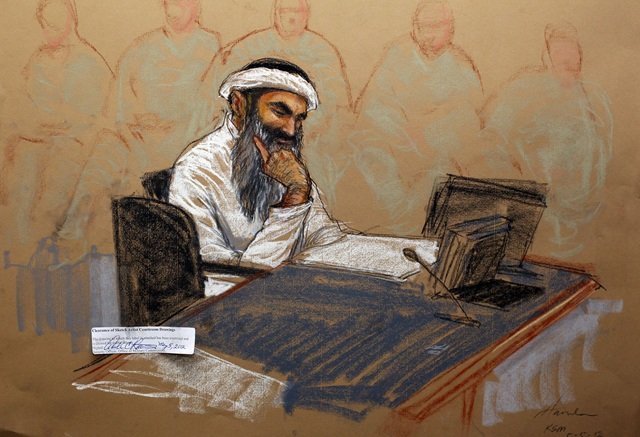
A U.S. military judge has set June 5, 2028, as the new trial date for Khalid Sheikh Mohammed (KSM), the accused mastermind of the September 11, 2001, attacks, and three co-defendants: Walid Muhammad Salih Mubarak bin ‘Atash, Mustafa Ahmed Adam al Hawsawi, and Ali Abdul Aziz Ali. The announcement comes nearly a quarter of a century after the attacks and represents the latest attempt to bring one of the most consequential terrorism cases in American history to trial.
But the date is better understood as a potential milestone than a guarantee. The prosecution of KSM has been marked by years of pretrial litigation, changing judicial decisions, a failed plea agreement and fundamental questions over the consequences of the U.S. government’s use of torture. As the twenty-fifth anniversary of September 11 approaches, the announcement therefore carries a striking contradiction: a case intended to deliver accountability for the deadliest terrorist attack in American history remains unresolved after decades.
KSM was captured in Pakistan in 2003 and subsequently held for several years in secret CIA detention facilities, known as “black sites”, before being transferred to the U.S. military prison at Guantánamo Bay in 2006. He and the other defendants were arraigned in 2012, but the proceedings remained in the pretrial phase. A previous military judge had set a trial date for 2021, yet the trial never occurred, primarily because of the COVID-19 pandemic.
The case appeared to move towards a resolution in July 2024, when KSM and two other defendants entered into a plea agreement with the Department of Defense (DoD). Under the agreement, the defendants would plead guilty and receive life sentences rather than face the death penalty. Prosecutors subsequently notified family members of the nearly 3,000 people killed in the attacks, offering the prospect of some form of justice and resolution.
That prospect lasted only days. Then-Secretary of Defense Lloyd J. Austin III revoked the agreement, returning the defendants to the prospect of a capital trial. What had appeared to be a pathway towards finality therefore became another chapter in a case already defined by uncertainty.
The latest date was itself the result of judicial caution. The current military judge, Lt. Col. Michael Schrama, rejected a request by prosecutors to begin the trial in January 2027, describing that timetable as “unrealistic”. The June 5, 2028 date remains dependent on the completion of numerous pretrial deadlines. Given that an earlier trial date passed without proceedings beginning and that the case has moved through several judges, there is considerable uncertainty over whether the latest timetable will be achieved.
The most consequential obstacle may be the legacy of the U.S. government’s treatment of KSM after his capture. He was subjected to “enhanced interrogation techniques”, including waterboarding — now banned under federal law — 183 times before his transfer to Guantánamo.
That history has direct consequences for the courtroom. Days after the latest trial date was announced, Judge Lt. Col. Sharma ruled that KSM’s confession to FBI agents in 2007 could not be used at trial because it had been tainted by the CIA’s torture of him before his arrival at Guantánamo. In his decision, the judge stated: “The prosecution has failed to prove by a preponderance of the evidence that Mr. Mohammad’s statements to the FBI were voluntarily given.”
The ruling illustrates the extraordinary legal consequences of the interrogation programme. The government’s treatment of a detainee in the years following September 11 has become an issue capable of affecting the prosecution of the man accused of conceiving the attacks themselves. Whether prosecutors will appeal the ruling has not been confirmed, but an appeal could produce another delay.
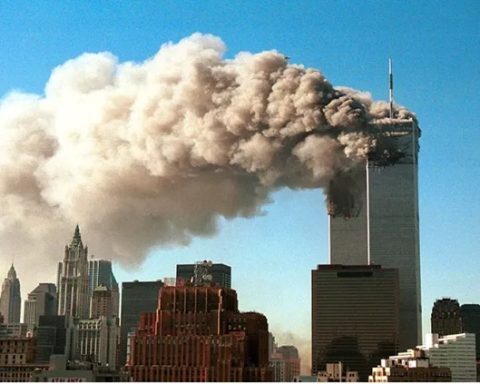
The timing of the new trial date gives the development an additional significance. As the United States approaches the twenty-fifth anniversary of September 11, the country will once again remember the nearly 3,000 people who died and reflect on the profound transformation of U.S. counterterrorism policy that followed.
Yet the anniversary also highlights what remains unfinished. A quarter-century after the attacks, the United States has still not obtained a trial and verdict against KSM. Families who lost spouses, parents, children, siblings and friends have spent decades waiting for the judicial process to reach its conclusion. For some, that waiting has lasted for more than half their lives. Older family members have also expressed concern that they may not live to see any form of justice.
The June 2028 date could eventually provide those families with an opportunity for the case to be adjudicated. But its significance is inseparable from the history that preceded it. Every previous stage of the proceedings has demonstrated the extraordinary complexity of attempting to prosecute the defendants, while the latest ruling over KSM’s statements introduces another potential legal obstacle.
The central difficulty is therefore not simply scheduling. The case embodies the consequences of decisions made in the aftermath of September 11, when the United States pursued an aggressive counterterrorism campaign that included secret detention and coercive interrogation. Decades later, those decisions remain intertwined with the attempt to establish criminal accountability for the attacks.
The case also raises a broader question about the meaning of counterterrorism after a terrorist attack. Capturing a high-value target may remove an individual from the battlefield, but prosecution requires something different. The accused must be brought before a court under procedures capable of producing a legally sustainable verdict. If interrogation methods compromise evidence, the consequences can extend for years and potentially affect the ability of prosecutors to establish guilt in court.
That tension is particularly stark in the KSM case. The man accused of planning an attack that transformed U.S. national security policy has spent years in detention, yet has not been sentenced. The government’s own interrogation practices have become part of the legal struggle surrounding his prosecution, contributing to the extraordinary length and complexity of the proceedings.
As September 11 reaches its twenty-fifth anniversary, the new trial date therefore carries two very different meanings. For families who have waited for decades, it offers renewed hope that the case may finally move towards a judicial conclusion. But for a prosecution that has already survived multiple delays, a failed plea agreement and continuing litigation over evidence shaped by torture, June 2028 remains a date on the calendar rather than a certainty.
The enduring lesson of the KSM case, as the Soufan Center assessment argues, is that counterterrorism cannot end with the capture of a high-value target. When terrorist suspects are captured alive, they must be apprehended and interrogated lawfully so that evidence can withstand scrutiny when the case reaches court. Otherwise, the pursuit of immediate intelligence and security objectives can create legal consequences that endure for decades.
Nearly twenty-five years after September 11, KSM remains accused rather than sentenced. The latest trial date may yet become the point at which the case finally moves beyond pretrial proceedings. But after a quarter-century of uncertainty, the families of the victims have little reason to regard another scheduled date as anything more than a promise still waiting to be fulfilled.