US President Donald Trump’s renewed support for the India-Middle East-Europe Economic Corridor (IMEC) has given fresh political momentum to a project whose proposed routes are facing growing exposure to regional conflict.
The corridor, unveiled at the G20 summit in 2023, is intended to link India with Europe through the Middle East using a combination of shipping routes, railways, energy pipelines and data cables. It is backed by India, the United States, Saudi Arabia, the United Arab Emirates, Israel and the European Union. While parts of the required infrastructure already exist, key rail links, ports and other connections remain under development.
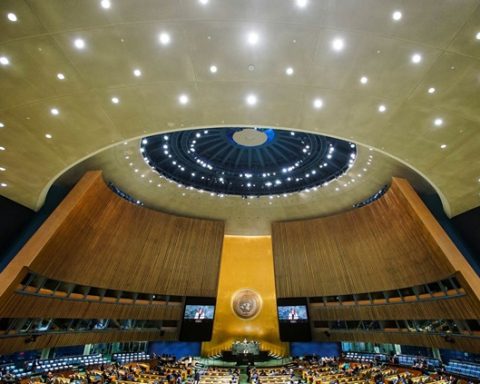
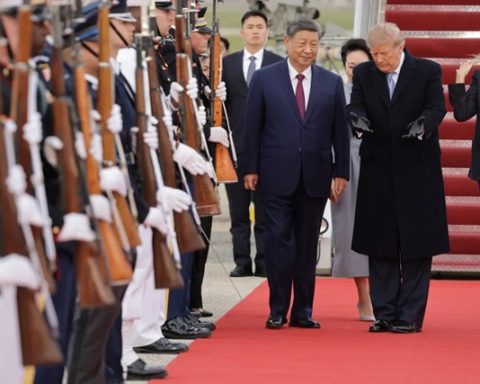
Trump endorsed the project on September 22 during a meeting with Gulf leaders on the sidelines of the UN General Assembly. Linking his support to the vulnerability of Middle Eastern energy infrastructure during the conflict with Iran, he said Iranian attacks on commercial shipping had demonstrated the need to move energy infrastructure away from vulnerable maritime routes.
“That’s why my administration strongly supports the India-Middle East-Europe Economic Corridor and other places of getting oil out, whether it’s pipelines or anything else,” Trump said. He added that the region was “on the verge of overcoming challenges that have plagued this region for a decade”.
Alberto Rizzi, a policy fellow at the European Council on Foreign Relations, described IMEC as an area of continuity between the Trump and Biden administrations, although he said Trump’s support had previously been inconsistent. His latest endorsement had created political momentum, Rizzi said, but it was “currently difficult to imagine that this political approval will translate any time soon into financial support from the US”.
The conflict has also exposed a central vulnerability in the corridor’s design. Its eastern maritime leg envisages cargo travelling from Indian ports to UAE ports including Jebel Ali and Khalifa, before moving by land through the UAE, Saudi Arabia and Jordan towards Israel and Europe. Because those UAE ports are inside the Persian Gulf, ships travelling from India must pass through the Strait of Hormuz. The western gateway at Haifa is also exposed to regional conflict.
Rizzi said the near-total closure of the Strait of Hormuz during the Iran war had already begun altering the project, with trucks crossing the Arabian deserts to carry goods towards the Mediterranean in what he called an “IMEC on wheels”. Reliance on Omani and Emirati ports outside the strait had also increased, although he said much of this remapping had been spontaneous rather than coordinated.
Shanthie Mariet D’Souza, founder and president of the Mantraya Institute for Strategic Studies in Goa, said the corridor risked replacing one vulnerable trade route with another. “IMEC was conceived as a reliable alternative to the Suez route. But under the present circumstances, it can only become a corridor that swaps one chokepoint risk for another,” she said.
The Gaza war, which began weeks after IMEC was launched, had already delayed the project amid regional tensions and logistical difficulties. The Iran conflict has added further uncertainty. Afaq Hussain, a non-resident senior fellow with the Atlantic Council’s Project for Middle East Integration, said the corridor should instead become a network incorporating alternative routes and gateways, including Salalah in Oman and possible routes through Egypt or Syria via Jordan.
Alternative infrastructure is already emerging. On September 20, Etihad Rail and AD Ports launched a direct freight service linking the Port of Fujairah, on the UAE’s eastern coast outside the Strait of Hormuz, with Abu Dhabi’s Industrial City. Cargo arriving at Fujairah can travel inland through the UAE’s national rail network.
Oman could provide another alternative, according to foreign affairs analyst Robinder Sachdev, who pointed to a 238km rail project linking Sohar with the UAE. But he said simply moving gateways would not eliminate the risks created by regional warfare.
“The crisis has not weakened the logic of IMEC – it has weakened the logic of a single-gateway IMEC,” Sachdev said. “The next stage should transform IMEC from a corridor into a network, because a line can be broken at one point; a network can reroute.”