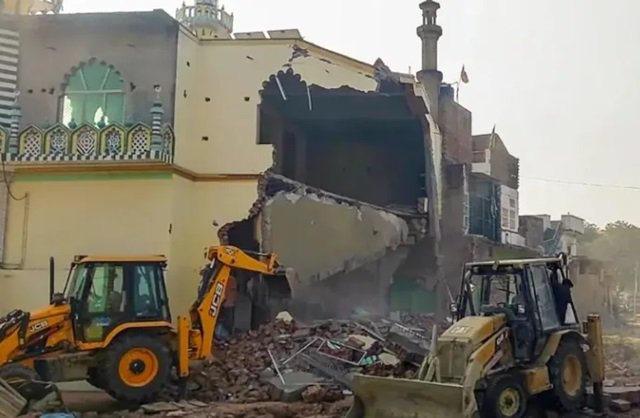
In June 2026, the civil administration of Rajasthan served eviction notices on mosques, madrasas and shrines in the border districts of the state, raising major concerns about the alleged targeting of places of worship used by the Muslim community. The fact that Barmer, Jaisalmer, Phalodi, Bikaner and Shri Ganganagar were included suggests that this was not merely an isolated administrative act but part of a broader campaign with significant implications for religious freedom and minority rights.
The Rajasthan section of the Association for the Protection of Civil Rights (APCR) became aware of the notices on 16 June and subsequently met in Jaipur on 11 July to publish its investigation report, Notice, Faith, and Justice. By documenting the extent and nature of the demolitions and evictions, APCR argued that administrative actions were being used to disrupt communities whose spiritual and cultural foundations were at risk.
To address these concerns, the Association for the Protection of Civil Rights sent a fact-finding mission to the border areas affected by the situation to gather evidence. The mission was headed by Muzammil Islam Rizvi, State General Secretary, and included Dr Muhammad Iqbal Siddiqui, Mosoof Ahmad, Asif Qureshi, an APCR volunteer, Master Zakir Hussain, and Advocate Arvind. They documented the extent of the demolitions and recorded the concerns of local communities. Their presence indicated that the issue extended beyond ordinary administrative matters and involved questions of constitutional rights and the dignity of the affected communities. The eviction campaign was perceived by many residents as an attack on their faith and identity, as well as on the fragile trust between citizens and the state, according to the mission’s observations and testimonies.
The investigation carried out by APCR found that the eviction drive was extensive, with more than 50 mosques, madrasas and shrines in Barmer and Jaisalmer receiving notices. The scale of the operation raised concerns about the targeting of a wide range of religious institutions that form an important part of community life in the region. For residents, the notices represented a serious threat to their communities, placing not only their places of worship but also their educational institutions and cultural heritage at risk. APCR’s investigation documented numerous administrative orders, raising questions about the extent to which such measures were being used to disrupt minority communities and whether they were consistent with constitutional protections and the pluralist principles underlying India’s democratic system.
The fact that six mosques were demolished between 18 and 21 June 2026 has been viewed by critics as part of the Bharatiya Janata Party’s (BJP) broader political project associated with the promotion of a Hindu Rashtra ideology. Critics argue that this approach has weakened the rights of minorities. Over the past decade, measures such as the Citizenship Amendment Act (CAA) and the removal of Jammu and Kashmir’s special constitutional status following the abrogation of Article 370 have generated concerns about a political order that privileges a majoritarian identity while weakening protections for minorities. Alongside reports of vigilante violence, discriminatory land-use practices and restrictions affecting madrasa education, these developments have been cited as evidence of a broader pattern of governance in which exclusionary practices have become increasingly normalised.
The demolitions in Rajasthan can therefore be examined as part of a wider debate over the use of state power to reshape social relations along communal lines, particularly when Muslim religious institutions are treated as expendable in pursuit of a more homogenised conception of national identity. Critics argue that the incorporation of religious hierarchy into administrative practices places India’s pluralist foundations at risk. They contend that such policies can legitimise the displacement of communities whose religious and cultural presence has long formed part of India’s social fabric. The closure or demolition of Muslim religious institutions can leave affected communities vulnerable to the exercise of state power with limited institutional safeguards.
The argument put forward by the Indian administration—that the demolitions are necessary for border security—has also been challenged by critics who point to the presence of religious sites belonging to other communities within 50 kilometres of the frontier that have not been similarly affected. They argue that this disparity raises questions about whether security considerations are being applied consistently, and whether communal considerations have influenced the implementation of the policy.
Theories of securitisation provide one framework for analysing this development. Such theories examine how states can portray ordinary religious or social activities as security threats, thereby creating a justification for exceptional administrative measures, including restrictions on property and institutional activity. When such practices are applied selectively, critics argue, they can reinforce religious hierarchies within systems of governance, contribute to exclusion and weaken principles of pluralism.
The implications are significant. The controversy raises questions about the protection of constitutional rights, the deepening of communal divisions and the establishment of administrative precedents that could allow officials greater discretion over religious institutions. If such practices continue without effective legal or political scrutiny, critics warn that India’s democratic framework could increasingly be shaped by majoritarian conceptions of national identity, with minority rights subordinated to ideological nationalism.