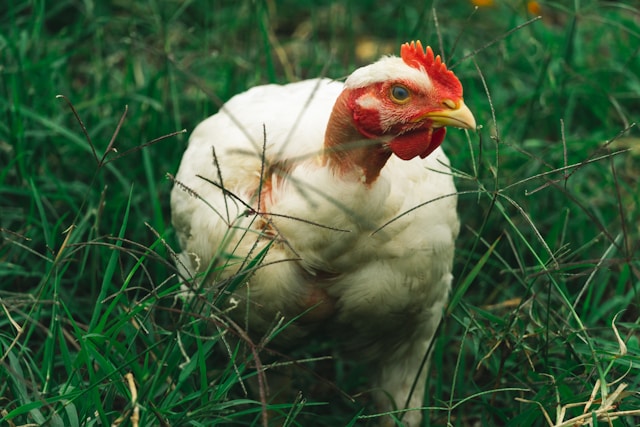
China has suspended chicken imports from Brazil, the world’s largest poultry exporter, after the South American nation confirmed its first-ever case of avian influenza on a commercial farm. The move marks a significant development in the global bird flu crisis that has already battered poultry sectors in the United States and Europe.
Brazil’s agriculture minister, Carlos Fávaro, confirmed on Friday that the outbreak was detected at a breeding facility in the southern state of Rio Grande do Sul. The virus was found on a farm with egg-laying birds, prompting immediate containment measures. Until now, Brazil had remained the last major poultry-exporting country untouched by the virus.
Speaking to CNN Brasil, Fávaro said that the Chinese suspension is expected to last for 60 days. However, he expressed optimism that normal trade could resume earlier. “If we manage to eliminate the outbreak, we think it is possible to re-establish a normal trade flow before the 60 days are up,” he said.
The suspension is a blow to Brazil’s meat industry, particularly because China is its largest customer for chicken, accounting for around 14% of its poultry exports. In the year to March, Brazil exported $9.46 billion worth of poultry, with other major buyers including the United Arab Emirates, Japan, Saudi Arabia, and Mexico, according to data from The Observatory of Economic Complexity.
China’s decision comes just days after President Luiz Inácio Lula da Silva visited Beijing, where Brazil and China announced R$27 billion (around $4.7 billion) in Chinese investments. The suspension highlights the precarious balance between deepening economic ties and stringent health protocols in international trade.
The Financial Times reported that leading Brazilian poultry producers such as BRF, the world’s largest poultry exporter, had not issued immediate statements. Meanwhile, protein giant JBS directed inquiries to the Brazilian Animal Protein Association, which said the situation was “under control.”
Authorities in Rio Grande do Sul have launched an investigation within a 10km radius of the affected facility to determine the scope of the outbreak. Brazil’s agriculture ministry emphasized that the disease is not transmitted through the consumption of poultry meat or eggs. “The risk of human infection by the avian influenza virus is low and, in most cases, occurs among handlers or professionals who have intense contact with infected birds,” it said in a statement.
China’s strict response contrasts with the more targeted approaches of other major importers. Japan and Saudi Arabia, for example, only impose regional bans on areas directly affected by the virus, rather than nationwide restrictions. Minister Fávaro noted that chicken already in transit to China would not be affected by the suspension.
The case in Brazil comes amid a global resurgence of avian flu. The World Organisation for Animal Health (WOAH) reported that bird flu outbreaks surged 91% globally from January to February 2025, reaching 980 new cases. The virus has devastated poultry populations elsewhere: the US has culled over 31 million birds, incurring billions in losses, while Poland, Europe’s largest poultry exporter, has slaughtered over 10 million.
Greg Tyler, chief executive of the USA Poultry and Egg Export Council, recently told reporters that Brazil had enjoyed “a distinct advantage” in the global market by remaining bird flu-free until now. That advantage may now be lost, at least temporarily. Tyler added that the virus has had “a devastating impact” on global poultry exports.
Brazil had previously recorded cases of avian flu in wild birds in 2023 but had managed to keep its commercial operations untouched. This first commercial case now places it in the same category as other leading poultry producers grappling with biosecurity threats.
The economic implications are significant not only for Brazil but for the global poultry supply chain. Brazil accounts for roughly a quarter of all poultry exports worldwide, and any prolonged disruption could tighten supplies and lead to price increases — a scenario already seen in the US and Europe during past outbreaks.
The latest development may reignite discussions on biosecurity and food trade resilience, especially as animal diseases increasingly influence geopolitics and economics. With Brazil’s prominence in global agriculture, how it manages this outbreak will be closely watched by both trade partners and competitors alike.