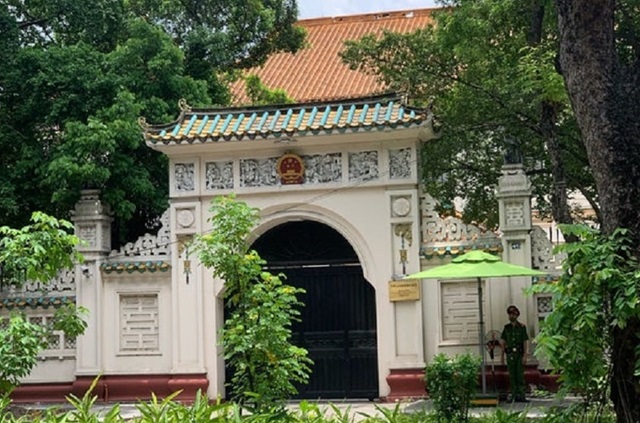
Chinese companies are fueling nearly one in three new investments in Vietnam, as reported by the Financial Times, signaling how Chinese manufacturers are relocating operations abroad to circumvent trade war tariffs with the US. This growing investment in Vietnam, however, raises the stakes for the country, potentially making it a target for retaliatory measures from President Donald Trump, who has previously targeted countries with large trade surpluses with the US.
Vietnam has emerged as one of the biggest beneficiaries of the ongoing trade tensions between China and the US. The nation’s trade surplus with the US hit a record $123.5 billion in 2024, making it the third-largest surplus after China and Mexico. A significant portion of this growth has been driven by companies like Apple and Intel, which shifted production lines from China to Vietnam to mitigate risks in their supply chains and avoid hefty tariffs. However, with Chinese companies now contributing 28% of new projects in Vietnam — up from 22% in 2023 — concerns are rising over the long-term impact of this increased investment.
Meir Tlebalde, the CEO of Sunwah Kirin Consulting Vietnam, remarked that despite the higher costs, Chinese capital is being driven to Vietnam largely by pressures from buyers in the US and Europe to relocate manufacturing out of China. Many of these investments are focused on circumventing US tariffs by ensuring that goods produced in Vietnam are labeled with a different “certificate of origin.” However, Vietnam remains heavily reliant on Chinese raw materials, with at least half of its raw materials still coming from China.
The FT reports that in the first month of 2025 alone, Chinese companies accounted for 30% of new investment projects in Vietnam. Investments also flowed into Vietnam through Hong Kong and Singapore, with Singapore emerging as the top investor in dollar terms in 2024. While the surge in Chinese investment has boosted Vietnam’s manufacturing sector, it raises concerns about potential scrutiny from the Trump administration, which has accused China of rerouting goods through third countries to avoid tariffs.
Vietnam is particularly vulnerable to retaliation from the US due to its significant trade surplus and close ties to China. Trump has previously threatened to impose reciprocal tariffs on countries with large trade surpluses, and his administration has targeted countries such as Vietnam that are seen as involved in tariff circumvention. Furthermore, the US is Vietnam’s largest export market, accounting for nearly 30% of its exports. With the US being the fifth-largest supplier of steel to the US, Trump’s threats to levy 25% tariffs on steel imports could significantly impact Vietnam’s economy.
Jack Nguyen, CEO of Incorp Vietnam, pointed out that the surge in Chinese investment could be seen by the US as a form of indirect tariff avoidance, potentially triggering investigations into goods coming from Vietnam. Vietnamese companies and government officials have become increasingly aware of these risks. Nguyen emphasized that Vietnam is already taking steps to ensure its supply chains are not used to reroute Chinese products back to the US. “Vietnam would not allow itself to become a transshipment country at the risk of the US imposing harsh measures,” he said.
Prime Minister Pham Minh Chinh acknowledged the challenges in a recent speech at Davos, stating that Vietnam was developing both political and economic solutions to address its trade imbalance. Hanoi is actively working to reduce its dependency on Chinese exports and has committed to bolstering trade with the US, including purchasing between 50 and 100 Boeing planes over the next decade. Trade Minister Nguyen Hong Dien recently affirmed that Vietnam would increase agricultural imports from the US and avoid any measures that could restrict trade with Washington.
As Vietnam walks a tightrope between its two largest trading partners — China and the US — experts suggest it may push Chinese companies to focus on higher-value manufacturing to strengthen the domestic supply chain and reduce the risks associated with rerouting goods. However, as Nguyen Khac Giang of the Iseas-Yusof Ishak Institute noted, Vietnam will have to “walk a fine line” in balancing its economic relationships with both China and the US, without openly antagonizing either side.