by Eric
Göran Rosenberg’s Israel: A Personal History is a reckoning disguised as reminiscence, a confession of belief betrayed by history and ideology. In revisiting his formative years in the fledgling State of Israel, Rosenberg does not merely recount a boyhood of “ascension” and “arrival,” but dissects the metaphysics of Zionism itself—the strange metamorphosis of a messianic dream into an apparatus of power. “This book,” he writes in his 2025 preface, “is about a young man’s journey from specious clarity to obscure groping.” That phrase, borrowed from Arthur Koestler, sets the intellectual key: Israel: A Personal History is not an elegy for lost innocence but an indictment of the illusions that made innocence possible.
The story opens with the familiar liturgy of exile and return. “We ascended to Israel at the end of April 1962,” Rosenberg recalls, “my mother, my sister, and I.” The word aliyah—ascent—carries the sacred weight of Jewish destiny, yet for Rosenberg it becomes a metaphor for the seductive falsity of transcendence. “We were heading for a loftier place,” he writes, “but also departing from a low point in our life.” The promise of elevation masks the reality of flight. The surviving fragments of a European Jewish family—his father dead, “overtaken by the disaster he had spent fifteen years trying to survive”—board a ship not to Canaan but to the myth of Canaan. The adolescent narrator, armed with Exodus and Zionist camp songs, believes he is joining history’s redemptive epic. What he finds instead is “a thoroughly ideologized society” that sanctifies its ignorance as virtue.
The brilliance of Rosenberg’s narrative lies in its refusal of nostalgia. He remembers, but remembrance becomes an act of unmasking. “Was my early Israel an innocent society?” he asks. “No, not if innocent means free of guilt and shame, but perhaps yes, if innocence means ignorance.” The Israel of the early 1960s, he shows, was built not only on Holocaust memory but on the will to forget—the necessary amnesia of a people remaking itself. He captures this paradox in a sentence as precise as it is devastating: “It was an ideology that, like all ideologies, created its own reality, shedding light on what should be seen and shrouding in darkness what should be hidden and forgotten.” The hidden, of course, are the Palestinians, the villages “buried under the lawns of the kibbutzim,” the displaced others who make the miracle possible. But Rosenberg’s insight cuts deeper: the buried are also the Jews who could not fit the new mold, the “small, pale, bearded East European Jews” replaced by the “anti-Jewish Israeli,” blond, muscular, “with tractors and guns.” Zionism’s revolution, he implies, demanded a form of cultural self-annihilation—an erasure disguised as rebirth.
Rosenberg’s prose alternates between lyrical intimacy and analytic detachment. He writes with the tenderness of a son and the precision of a sociologist. The recollection of his father—“handsome and cheerful, with fine features and a warm smile, but inside he was as fragile as glass”—casts a long moral shadow over the narrative. The father’s fragility becomes a counter-image to the hard, sunlit masculinity of the new Israelis. In one scene, Rosenberg remembers the camp songs about “the new Jew… muscular and slender, eyes fixated at a point slightly above the horizon.” Later he realizes that this aesthetic of vitality carries a fascistic echo. “When you keep coming up against this paradoxical observation,” a Swedish journalist had written in 1955, “you begin to wonder whether it is not the reflection of an unconscious ‘antisemitism’ among Israeli Jews.” Rosenberg cites this not as scandal but as truth: Israel’s cult of strength was born of trauma’s inverse, the desperate need never again to be victim.
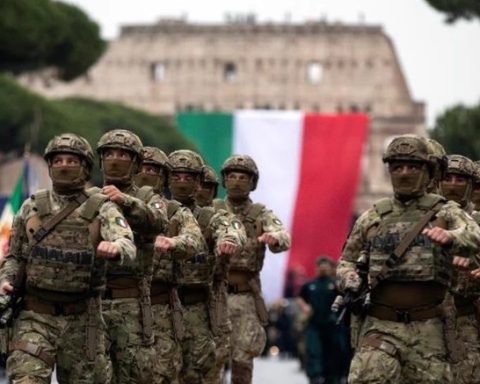
Throughout the book, he dissects with calm fury the ideological rituals that shaped the young state. The blue shirts of the youth movements, the khaki drills of the Gadna brigades, the communal dances and collective farms—each is rendered with anthropological precision. “Once a week, we traded our blue school uniforms for khakis and boots… we ran cross-country, learned to shoot at targets with old Mauser rifles.” What might have been adventure becomes initiation into a theology of discipline. “There were things every young Israeli knew had to be done,” he writes, “and we learned to do them with enthusiasm and pride.” The quiet horror of that line—obedience as pride—resonates beyond the page. Rosenberg’s Israel is not merely militarized; it is moralized militarism, a world where conscience is replaced by duty and complexity by unity.
Yet Israel: A Personal History is not polemic. Its power lies in the moral poise of a writer who critiques because he loves. Rosenberg’s skepticism is the child of commitment, not distance. He describes his adolescent awe at the sight of Haifa—“the marble-white Bahai temple with its golden dome sparkled in the rising morning sun”—and one feels both the rapture of belonging and the foreknowledge of disillusionment. The writing is saturated with biblical cadence: “This was the Promised Land, and no other land had ever promised so much, to so many, for so long.” The syntax of revelation serves a secular tragedy. The land of promise becomes the land of forgetting; the “mother of utopia” births a state “that must survive as a fortress.”
Rosenberg’s deeper argument is not about Israel alone but about the pathology of redemptive politics. The Jewish state, he suggests, is a microcosm of the modern dream of purity—be it communist, nationalist, or religious. “Departure and arrival, ascent and initiation, longing and belonging,” he observes, “were the heavy building blocks of a new Israeli identity.” Each term carries the scent of liturgy; together they form the grammar of ideology itself. The young Göran’s transformation—“After a little more than a year, Sweden was a foreign country, Hebrew was my language”—becomes the human face of a collective metamorphosis. To become Israeli is to forget.
The book’s 2025 edition, written after the trauma of October 7, 2023, closes with a refusal of finality: “The final chapter of this story is yet to be written.” In that suspended sentence lies Rosenberg’s moral theology: history as unfinished confession. He refuses the cynic’s satisfaction of saying I told you so. Instead, he insists that Israel’s tragedy—its turn from redemption to domination—remains reversible only if it can be faced without denial. “The goal can turn out to be a mirage,” he had written of his 1962 voyage, “or the first sight of it might make your heart sink.” That double vision—faith and heartbreak intertwined—is the book’s ethical method.
Israel: A Personal History is neither memoir nor manifesto; it is a forensic reading of belief. Its most radical gesture is its tone: measured, reflective, resistant to slogans. Rosenberg’s sentences carry the authority of someone who has lived both inside and outside the myth. His critique is constructive because it insists that truth-telling is not betrayal but fidelity—to memory, to ethics, to the possibility of a Judaism uncorrupted by nationalism. In an age when discourse on Israel has hardened into absolutes, Rosenberg’s voice—mournful, lucid, unflinching—feels almost prophetic. He reminds us that the only honest ascent is downward, into the depths of what has been denied. One suspects he means not only for Israel, but for all of us who still mistake clarity for salvation.