Cambodia has referred nearly 450 cases involving around 4,000 people to court in just over a year as it seeks to dismantle the country’s online scam industry, but questions remain over whether authorities will investigate and prosecute politically connected individuals accused of links to the criminal networks.
Between July 2025 and the end of August 2026, Cambodian officials targeted 832 locations, leading to crackdowns on 663 sites linked to online fraud. The government says 86 industrial-scale scam compounds have been dismantled. Yet prominent individuals identified by the United States over alleged connections to scam operations and human trafficking have not been prosecuted.
Cambodia’s anti-scam chief, Senior Minister Chhay Sinarith, said investigations into major cases were continuing, including inquiries into alleged masterminds operating within the country. “Suspicion alone cannot immediately lead to enforcement action. An investigation is necessary,” he said in a recent interview in Phnom Penh.
The US Treasury Department sanctioned Cambodian senator Ly Yong Phat and his businesses in September 2024, citing their alleged role in serious human rights abuses involving trafficked workers subjected to forced labour in online scam centres. In April, it sanctioned fellow senator Kok An and 28 individuals and entities connected to him, accusing their network of operating scam centres from casinos and office complexes, laundering victims’ money and targeting US citizens.
Neither senator has been prosecuted, and both remain in the Senate, which is headed by former prime minister Hun Sen. Their continued positions have raised concerns about the independence of Cambodia’s anti-scam campaign.
In September, some members of the US Congress urged the Trump administration to investigate and sanction 26 individuals and two entities over alleged connections to online scam centres and other crimes, including torture and human trafficking. Those named included Hun To, a cousin of Prime Minister Hun Manet; Dy Vichea, deputy commissioner-general of the National Police and Hun Sen’s son-in-law; and Sar Sokha, deputy prime minister and interior minister.
Chhay Sinarith said Cambodia was conducting thorough investigations but declined to identify the individuals under scrutiny. He said prosecutions must be based on evidence that an offence had been committed and follow procedures consistent with court action.
Independent political analyst Seng Vanly questioned whether the investigations would reach senior figures. “When businessmen closely connected to Hun Sen’s family and senior government officials face such serious international scrutiny, (Prime Minister) Hun Manet and the Cambodian People’s Party cannot expect the public to trust their anti-scam campaign without independent investigations,” he said.
Vanly added that prosecuting individuals with close family ties to the leadership or senior government positions could create significant political difficulties. He warned that without impartial enforcement, the campaign risked becoming an exercise in repairing Cambodia’s international reputation rather than establishing the rule of law.
The concerns were echoed in a September report by the National Democratic Institute and software company Inca Digital. Jacob Sims, an expert on transnational crime and human rights in South-east Asia and a visiting fellow at Harvard University, wrote that the crackdown had done little to dismantle the political arrangements that enabled Cambodia’s scam economy. He said no politically exposed domestic elites had faced credible prosecution and that the ruling coalition’s institutional control remained intact.
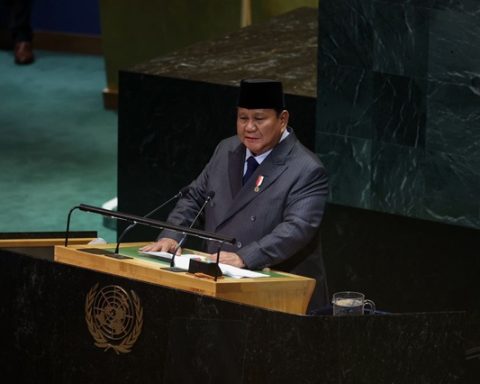
Prime Minister Hun Manet declared at Cambodia’s inaugural two-day conference on combating online scams, held in Phnom Penh on 23 and 24 September, that “scam compounds no longer exist within the sovereign territory of the Kingdom of Cambodia”. More than 1,000 international participants attended, including government officials from the United States, Britain and Singapore.
The authorities also arranged media visits to three dismantled compounds in Prey Veng, Svay Rieng and Kandal provinces. Raided between January and April, the sites included a casino and contained dormitories, restaurants, medical clinics, shops and recreational facilities. The largest had accommodated as many as 30,000 people.
The crackdown carries economic consequences. The World Bank lowered its forecast for Cambodia’s 2026 growth by 0.4 percentage points to 3.5 per cent in an October 6 assessment, citing weaker private consumption, declining remittances, elevated inflation and subdued credit growth. Analysts say the country’s reputation for online fraud has also made foreign investors more reluctant to enter or expand in the market.
Cambodia enacted its first anti-scam law in April, introducing prison sentences of two to five years and fines of up to US$125,000 for convicted online scammers. Offences involving gangs or large numbers of victims can carry sentences of up to 10 years and fines of US$250,000. The legislation also covers money laundering and the recruitment of scammers.
Chhay Sinarith acknowledged that the campaign had not yet achieved enough. “As long as these criminals can break away from large compounds, flee to neighbouring or other countries and continue their operations there, we do not consider Cambodia’s efforts a success yet,” he said.