Brazil is not simply another Latin American country. Its geographical scale, economic resources, diplomatic tradition and international influence make it an important actor in global affairs.
Over the years, Brazil has sought to establish an independent foreign-policy identity, avoiding excessive dependence on any single major power. This approach has become particularly relevant as international politics increasingly revolves around strategic competition between Washington and Beijing.
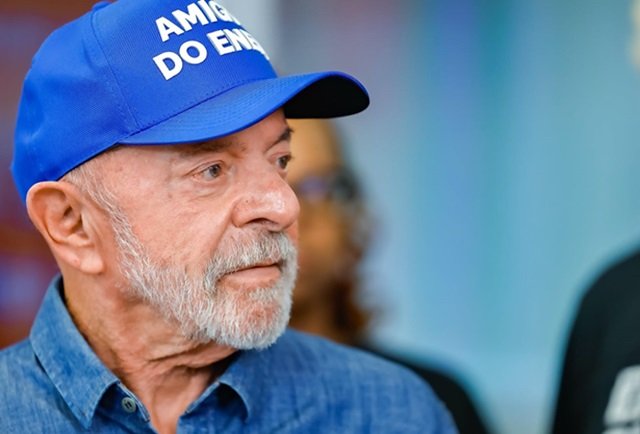
Lula’s political return is significant because his foreign-policy outlook emphasises strategic autonomy and independent decision-making, stronger relations with emerging economies, greater institutional influence for the Global South, multilateralism and the reform of international institutions, as well as economic and diplomatic engagement with both Western and non-Western powers. His victory therefore represents continuity in Brazil’s attempt to pursue an independent geopolitical position rather than align exclusively with either the United States or China.
The outcome also has implications for the international balance of power because Brazil possesses the economic resources, diplomatic networks and institutional influence to shape debates on trade, climate change, development finance and global governance.
China is Brazil’s largest trading partner, and the economic relationship between the two countries has become increasingly important. Brazil exports substantial quantities of soybeans, iron ore, petroleum and agricultural products to China. In return, it imports manufactured goods, machinery, electronics, industrial equipment and technological products. Lula’s continuation in office is likely to preserve the political momentum behind this relationship.
During his previous term, Brazil and China expanded cooperation in trade, infrastructure, technology and environmental protection. Their partnership was also elevated through a bilateral framework aimed at promoting a more sustainable and equitable international order.
Lula’s re-election is likely to have several implications for Beijing. Economically, China can expect continued access to Brazilian agricultural commodities, minerals and energy resources. Strategically, bilateral collaboration in infrastructure, renewable energy, telecommunications and industrial development may expand. Diplomatically, Brazil is likely to continue supporting greater representation for developing countries in international institutions. Within BRICS, Beijing can also expect Brazil to remain an active participant in efforts to strengthen the grouping as an international platform.
However, Brazil’s relationship with China should not be interpreted as unconditional strategic alignment. Lula has consistently emphasised Brazilian sovereignty and independent foreign-policy decision-making. Beijing may gain greater diplomatic access, but Brazil is unlikely to become a subordinate partner in China’s geopolitical strategy.
Lula’s victory creates a potentially challenging situation for the United States. The Trump administration has emphasised strengthening American influence in the Western Hemisphere and encouraging closer political and security alignment with governments that share its strategic priorities. The Brazilian election, however, has preserved a government that advocates greater diplomatic independence and maintains close economic relations with China.
Relations between Washington and Brasília have already experienced tensions over trade restrictions, the prosecution of former president Jair Bolsonaro and disagreements concerning the interpretation of regional sovereignty and international law. The election outcome may therefore complicate American efforts to establish a more unified strategic position across Latin America.
Nevertheless, a deterioration in US–Brazil relations is not inevitable. The United States remains a major source of investment, technology and economic cooperation for Brazil. Washington also has important interests in Brazilian energy, critical minerals, agriculture and regional security. Consequently, both countries have strong incentives to maintain diplomatic engagement.
The likely challenge for Washington will be to manage its relationship with a Brazilian government that seeks to cooperate with the United States without compromising its relations with China.
Perhaps the most important geopolitical consequence of Lula’s victory is the preservation of Brazil’s position as a potential balancing power between Washington and Beijing. Brazil does not have the economic or military capacity to compete directly with either superpower. However, its diplomatic influence, natural resources, regional leadership and international partnerships give it considerable strategic importance.
Lula’s foreign-policy approach suggests that Brazil will continue to pursue economic cooperation with both powers while resisting pressure to choose sides. This strategy reflects a broader trend in international politics: middle powers and emerging economies increasingly seek strategic flexibility rather than rigid alignment with competing geopolitical blocs. Recent analysis by the Council on Foreign Relations and State Street similarly identifies Brazil’s dependence on both American and Chinese economic relationships as a central constraint on any exclusive alignment.
Brazil’s geopolitical importance is not confined to diplomacy. Its natural resources make it a strategically important country in global supply chains. Brazil is one of the world’s most important agricultural exporters. Its exports of soybeans, beef, sugar, corn and other agricultural commodities are essential to international food markets, particularly in China and other Asian economies.
Lula’s victory is likely to preserve the existing direction of agricultural trade with China. This has implications for global food security, commodity prices and the economic interests of countries that depend on imported agricultural products.
Brazil’s mineral resources are also becoming increasingly important in the global competition for critical materials. These include rare earth elements, lithium, nickel, graphite and other minerals used in electric vehicles, batteries, renewable energy systems and advanced manufacturing. Both the United States and China have strategic interests in securing access to these resources.
Lula’s government will therefore face an important policy challenge: attracting foreign investment while ensuring that Brazil captures greater domestic economic value from its mineral resources. Recent Reuters analysis highlights the implications of the election for global flows of soybeans, rare earth minerals and energy resources.
Lula’s victory should also be examined against the broader transformation of the international system. The post-Cold War international order is experiencing growing pressures arising from strategic competition, economic fragmentation, regional conflicts and dissatisfaction with existing international institutions. The United States remains the world’s most influential military and financial power, while China has emerged as a major economic and technological competitor. At the same time, countries such as India, Brazil, Indonesia, Saudi Arabia and South Africa are seeking greater diplomatic autonomy.
The geopolitical significance of Lula’s victory can be understood through five interconnected developments. In the context of US–China rivalry, Brazil is likely to continue pursuing strategic autonomy. Within BRICS, the result provides greater continuity in Brazil’s engagement. For the Global South, it offers stronger diplomatic advocacy for developing countries. In Latin America, it contributes to the continuing competition over regional influence. In global governance, it renews calls for a more representative international order.
The election does not mean that Brazil will automatically move closer to China at the expense of the United States. Nor does it suggest that BRICS will emerge as a unified geopolitical counterweight to Western institutions. Rather, it indicates that Brazil intends to preserve its ability to engage with different international powers according to its national interests.
This is particularly important at a time when countries across the Global South are seeking alternatives to excessive dependence on established centres of economic and political power. Brazil’s approach may therefore provide an important example of how emerging economies can pursue strategic flexibility in an increasingly competitive international environment.
Lula’s electoral victory represents more than a domestic political development in Latin America’s largest country. It has wider implications for international relations, particularly the evolving competition between the United States and China, the future of BRICS and the emergence of a more multipolar global order.
The result preserves Brazil’s commitment to strategic autonomy, multilateral diplomacy and stronger engagement with the Global South. It also provides China with an opportunity to maintain its expanding economic relationship with Brazil, while presenting Washington with the challenge of managing relations with an important regional power that does not necessarily share its geopolitical priorities.
For BRICS, Lula’s victory represents continuity in Brazil’s participation and its advocacy of institutional reform and greater representation for developing countries. For the international community, the election reinforces the growing importance of emerging economies in shaping global economic and diplomatic arrangements.
However, the transformation of these political aspirations into tangible geopolitical influence will depend on Brazil’s domestic stability, economic performance and capacity to reconcile competing international interests.
Lula’s re-election is significant not because it places Brazil firmly within the geopolitical orbit of China or against the United States, but because it preserves Brazil’s ambition to act as an autonomous power in an increasingly multipolar international system.
I have retained the writer’s original wording, arguments and substantive details, while correcting grammar, punctuation, spelling and sentence construction. I have also removed the subheadings, numbering, bullet points and table, and integrated their contents into continuous paragraphs.
One editorial point: the text refers to Lula’s “re-election” and “electoral victory” but does not identify the election or its date. These references should be fact-checked against the intended election before publication, as the distinction is important to the accuracy of the article.