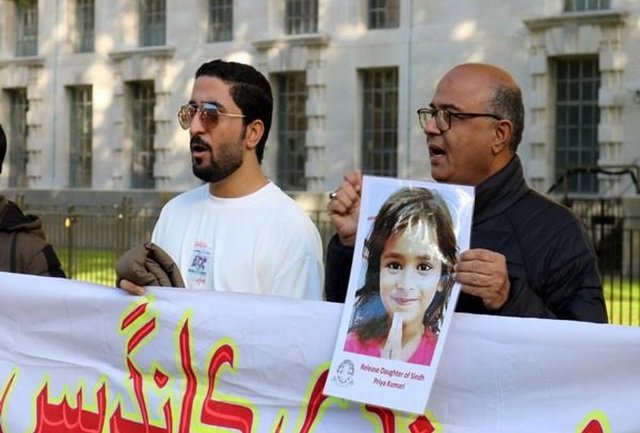
In recent years, the Jeay Sindh Freedom Movement (JSFM) and related diaspora activists have stepped up their campaigns in London, Geneva and other European cities. They describe Sindh as a province deprived of its wealth, water and political voice. These activists often blame the federal government and the military for Sindh’s challenges, arguing that the province is systematically exploited. At a Geneva demonstration in September 2026, speakers called for United Nations-supervised referendums on independence for Sindh and other regions.
These claims are serious and deserve careful examination. Political narratives should be assessed against the Constitution, public finance records, institutional structures and democratic results. Three key questions arise: What resources does Sindh receive from the federation? Who decides how those resources are used within the province? And what evidence demonstrates that any group has the right to speak on behalf of all the people of Sindh?
An objective assessment of the available evidence presents a more complex reality than the one advanced by separatist activists. While governance challenges and development disparities undoubtedly exist, many of the core claims promoted by JSFM overlook the substantial resources, constitutional authority and political autonomy already available to Sindh under Pakistan’s federal system.
A central argument advanced by JSFM is that Sindh is economically exploited and deprived of its rightful resources. Yet Pakistan’s constitutional framework provides provinces with a guaranteed share of federal revenues through the National Finance Commission (NFC) Award.
Under the 7th NFC Award, the provinces collectively receive 57.5 per cent of the divisible federal tax pool after predetermined deductions. Within this arrangement, Sindh receives 24.55 per cent of the provincial share. Furthermore, Article 160(3A) of the Constitution protects the collective provincial share by ensuring that it cannot be reduced below the level provided under the previous NFC Award.
The financial implications of this arrangement are significant. During FY 2025–26, Sindh received approximately Rs 1.90 trillion through NFC transfers. For FY 2026–27, the federal budget projected approximately Rs 2.21 trillion for Sindh through divisible-pool taxes and direct resource-related transfers.
These figures challenge the notion that Sindh receives little or no benefit from the federal system. The province’s constitutional entitlement provides it with one of the largest resource allocations in Pakistan. Any argument alleging systematic economic deprivation must therefore account for the substantial fiscal transfers that Sindh receives every year.
The actual financial position of Sindh can be assessed through provincial budgetary records rather than political rhetoric.
For the period between July and September 2026, Sindh received approximately Rs 479.3 billion under the NFC Award and collected Rs 135 billion through provincial taxation. During the same period, total provincial revenue reached Rs 690.6 billion, while total expenditure amounted to Rs 510 billion. As a result, Sindh recorded a budget surplus of Rs 180.6 billion.
This surplus is important because it demonstrates that the province was not operating under conditions of financial collapse or total fiscal deprivation. Allegations that Sindh is being economically stripped of its resources require evidence showing that legally mandated revenues were withheld. The existence of a substantial fiscal surplus suggests a different question altogether: how effectively are available resources being allocated and utilised?
Where concerns arise regarding royalties, resource payments or district-level allocations, those claims should be evaluated through specific comparisons between legally defined entitlements and actual receipts rather than through generalised allegations of exploitation.
One often-overlooked aspect of the debate is not simply how much money flows to Sindh, but how much of that funding actually reaches ordinary citizens through district governments and local development projects.
A review conducted by former provincial minister Mohammad Younus Dagha examined sixteen Sindh budgets up to the fiscal year 2026–27. His analysis estimated that Sindh received approximately Rs 14.47 trillion in NFC and other federal transfers, while generating about Rs 4.86 trillion through provincial taxation.
Despite this substantial resource base, significant shifts have occurred in budget priorities. According to the analysis, the share of the budget allocated to the Annual Development Programme (ADP) declined from approximately 25 per cent to 10.8 per cent. The share transferred to local governments fell from 16 per cent to 5.6 per cent, while district development allocations dropped sharply from Rs 55 billion in FY 2025–26 to Rs 15 billion in FY 2026–27.
These figures do not necessarily indicate mismanagement, but they do raise important questions about provincial spending priorities. If residents in different districts complain about poor roads, inadequate schools, weak healthcare facilities or insufficient municipal services, the discussion cannot focus solely on the federal level. Elected provincial authorities must also account for the decline in development allocations and local government funding.
The evidence suggests that some of Sindh’s development challenges may be linked not only to federal-provincial relations but also to decisions made within the province itself.
The argument that Islamabad is solely responsible for governance issues in Sindh becomes difficult to maintain when viewed through the lens of constitutional reform. The 18th Constitutional Amendment, enacted in 2010, significantly increased provincial autonomy. As a result, Sindh now exercises extensive authority over various areas, including education, health, agriculture, irrigation, land administration, local government and numerous social and development sectors.
Additionally, Article 140A of the Constitution mandates that provinces devolve political, administrative and financial authority to elected local governments.
Therefore, when schools lack classrooms, hospitals do not have sufficient medical staff, irrigation systems deteriorate or municipal services fail to meet public needs, decisions made at the provincial level play a significant role in these issues.
While this does not absolve federal institutions of their responsibilities, attributing every governance failure solely to Islamabad ignores the need for scrutiny of provincial decision-making. Such an approach prevents a balanced assessment of accountability.
Water disputes have long been a sensitive issue in Pakistan and remain central to Sindhi nationalist discourse. Concerns regarding river flows, agricultural sustainability and environmental degradation deserve serious consideration.
However, these issues are governed by established constitutional and institutional mechanisms. The 1991 Water Apportionment Accord, agreed upon by all provinces, provides the framework for water distribution. The Council of Common Interests (CCI) approved the arrangement, while the Indus River System Authority (IRSA) monitors its implementation and allocation.
Similarly, natural resource entitlements are protected by constitutional provisions. Article 161 provides for provincial revenues and royalties from natural gas production. Furthermore, Article 172(3) establishes equal federal and provincial ownership of mineral oil and natural gas located within a province, subject to existing commitments.
These constitutional guarantees provide Sindh with a clear basis for pursuing grievances where legitimate shortfalls exist. The proper method is to identify the entitlement, measure the actual delivery, establish any discrepancy and hold the responsible authority accountable.
In other words, allegations of resource theft or discrimination should be supported by verifiable evidence demonstrating the gap between what was legally due and what was actually delivered.
Another important question concerns political legitimacy. JSFM and associated diaspora groups frequently claim to speak on behalf of the people of Sindh. However, political representation must ultimately be demonstrated through public support rather than overseas activism alone.
The movement’s demonstrations in London, Geneva and other European cities undoubtedly demonstrate its ability to mobilise international supporters. Yet organising protests abroad is not equivalent to obtaining a political mandate from millions of Sindh’s residents.
The most reliable indicator of political representation remains the ballot box. In the 2024 provincial elections, the Pakistan Peoples Party (PPP) secured a majority of general seats in Sindh and formed the provincial government. MQM-Pakistan emerged as the second-largest political force in the province.
These results do not mean that all voters are satisfied with existing governance arrangements. However, they do indicate that the electorate entrusted constitutional political parties, rather than separatist organisations, with governing the province.
If a diaspora-led movement seeks international recognition, self-determination or foreign intervention, it bears the burden of demonstrating measurable and broad-based support for its political programme within Sindh itself.
JSFM’s portrayal of Sindh as a colony deprived of its wealth, water and political voice omits two crucial realities. First, Sindh receives substantial federal resources as a constitutional entitlement through the NFC framework, resource-sharing mechanisms and other transfers. Second, Sindh’s elected government exercises significant authority over how those resources are distributed among districts, local governments and development sectors.
Federal authorities should be held accountable for any documented shortfalls in transfers, water allocations, royalties or constitutional obligations. At the same time, provincial leaders must explain reductions in local development spending, declining shares for district governments and shortcomings in public service delivery. Security concerns, governance failures and human rights grievances likewise deserve examination through courts, legislatures, independent oversight bodies and democratic institutions.
The interests of Sindh’s people are best served not by broad political slogans but by evidence-based accountability. Every rupee transferred, every water entitlement allocated, every royalty paid and every development decision should be traceable to the institution responsible. Likewise, every claim to represent Sindh should be tested against the freely expressed choices of its citizens. Only through such scrutiny can genuine grievances be addressed and democratic legitimacy be maintained.