
The escalating confrontation between Pakistan and Afghanistan is colliding with widening turmoil in the Middle East, creating new economic and security pressures across South Asia. As Islamabad and the Taliban exchange air strikes along the disputed Durand Line, the broader Middle East conflict is simultaneously unsettling energy markets, trade routes and migrant labour networks that underpin the region’s economic stability.
Taken together, the two crises show how quickly local conflicts in Asia are beginning to intersect. What might once have remained a contained frontier dispute now unfolds against a volatile geopolitical landscape stretching from the Persian Gulf to the Hindu Kush.
For Pakistan, the latest fighting represents the most serious military confrontation with Afghanistan since the Taliban returned to power in 2021. What began as accusations over militant sanctuaries has evolved into direct military strikes across borders and an increasingly dangerous regional confrontation.
The Durand Line heats up
The Afghan Taliban’s attack on Pakistani military installations in late February and Pakistan’s subsequent air strikes inside Afghan territory mark a clear escalation from the limited border skirmishes that have characterized relations between the two countries in recent years.
Pakistan’s decision to strike targets in major Afghan cities such as Kabul and Kandahar underscores the gravity of the confrontation. For the first time since the Taliban regained control of Afghanistan, the conflict has moved beyond remote frontier areas and into politically sensitive urban centres.
At the center of the dispute lies Tehrik-e-Taliban Pakistan (TTP), the militant organization responsible for a sharp rise in attacks inside Pakistan. Islamabad maintains the group operates from sanctuaries in Afghanistan under the protection-or at least the tolerance-of the Taliban authorities. Kabul has repeatedly rejected the accusation.
Pakistan’s security establishment argues the surge in militant violence reflects a permissive environment across the border. The Taliban government, however, portrays Pakistani air strikes as violations of Afghan sovereignty and has responded with retaliatory attacks along the frontier.
Pakistan’s conventional military superiority offers no quick solution. Taliban fighters have spent decades fighting insurgencies across mountainous terrain and porous tribal regions. The frontier’s terrain and cross-border militant networks make the conflict particularly suited to asymmetric warfare.
The confrontation may therefore settle into a prolonged cycle of retaliatory strikes, insurgent attacks and cross-border raids rather than a conventional war.
Durand Line Dispute and the India Factor
The tensions are rooted in the long-standing dispute over the Durand Line, drawn in 1893 during British colonial rule. The border cuts through Pashtun tribal areas spanning both countries, and Afghanistan has never formally recognized it as an international boundary. This unresolved issue has shaped relations between Kabul and Islamabad for decades and remains a sensitive element of Afghan nationalism.
The dispute predates Pakistan itself. In 1947, Afghanistan was the only country to oppose Pakistan’s admission to the United Nations because of the border issue. For years Islamabad believed influence in Afghanistan could provide “strategic depth” in its rivalry with India, supporting the Taliban during the Afghan civil war of the 1990s while India backed the Northern Alliance. When the Taliban returned to power in 2021, Pakistan initially expected a cooperative government in Kabul. Instead, militant attacks inside Pakistan increased, with Islamabad accusing TTP factions and Baloch militants of operating from Afghan territory.
The deterioration in Pakistan-Afghanistan relations has revived long-standing concerns in Islamabad about India’s role in the region. India has cautiously resumed diplomatic engagement with the Taliban authorities, reopening its embassy in Kabul and pursuing limited political and economic contacts despite not formally recognizing the government.
For Pakistan’s security establishment, any warming of relations between Kabul and New Delhi raises legitimate concerns about strategic encirclement along its western frontier. From Islamabad’s perspective, closer political and security cooperation between Afghanistan and India risks complicating an already fragile regional security environment. Pakistani officials have therefore voiced concerns that certain developments in Afghanistan could indirectly advance Indian strategic interests — a claim Kabul disputes but one that continues to shape Pakistan’s domestic debate and security planning. Although India has denied direct involvement in the current escalation along the Durand Line, the possibility of a two-front strategic challenge remains a key factor in Islamabad’s calculations.
Iran’s war and regional shockwaves
Complicating the situation further is the dramatic escalation in the Middle East following US and Israeli strikes on Iran and the widening conflict that followed.
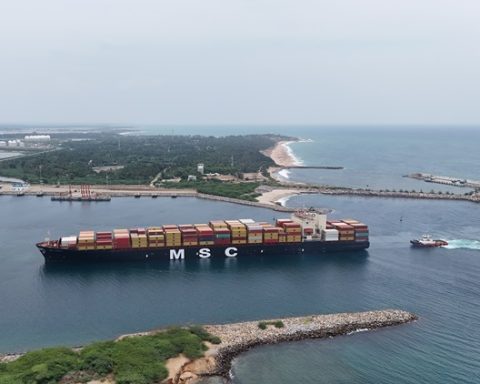
The crisis is already sending shockwaves through global energy markets. The potential closure of the Strait of Hormuz-a maritime corridor through which a large share of the world’s oil supply passes has raised fears of a major disruption to global energy supplies.
Oil prices approaching $100 per barrel would place enormous pressure on energy-importing economies across South Asia. Countries such as India, Bangladesh, Sri Lanka and Nepal rely heavily on energy imports from the Gulf, meaning rising prices would quickly translate into inflation, widening trade deficits and growing fiscal strain.
India’s energy security architecture shows major exposure to Middle Eastern disruptions, with 89% crude import dependency, while the Strait of Hormuz carries about 2.6 million barrels of Indian crude daily alongside significant LNG and LPG shipments. In 2025, India imported $70 billion in crude and petroleum products from West Asia and $9.2 billion in LNG (68.4% of total needs), meaning regional instability can quickly affect domestic energy supply and prices. The vulnerability extends to trade as well: Iran remains a key partner for basmati rice exports, and disruptions to shipping routes such as the Strait of Hormuz have slowed exports and left large consignments stuck at ports or in transit.
Regional supply chains are also vulnerable. Bangladesh, for instance, depends heavily on Gulf markets not only for exports but also for financial flows tied to migrant labour. Disruptions to shipping routes or port operations could ripple through its export sector.
The most immediate economic impact of instability in the Middle East may be felt in migrant labour markets. Millions of South Asian workers are employed across Gulf states, particularly in construction, services and domestic work, and their earnings sustain remittance flows that support national economies. India receives more than $130 billion in remittances annually, while Bangladesh and Nepal also depend heavily on these inflows. Smaller economies such as Sri Lanka, which rely heavily on imported energy and overseas remittances, would also be vulnerable to prolonged disruptions in Gulf markets.
A prolonged conflict could disrupt this economic lifeline through layoffs, evacuations, or interrupted contracts, reducing remittance flows particularly impacting remittance-dependent economies like Nepal while aviation rerouting through Middle Eastern airspace further complicates South Asia-Gulf travel and labour mobility.
Pakistan’s strategic balancing act
Pakistan now finds itself navigating crises on multiple fronts. To the west, tensions with Afghanistan risk evolving into a prolonged confrontation fueled by militant networks and unresolved border disputes. To the east, relations with India remain fragile after earlier military crises. At the same time, instability in the Middle East threatens economic shocks that could ripple through Pakistan’s already strained economy.
Islamabad has sought to expand its diplomatic and security role in the Gulf in recent years, deepening defence ties with Saudi Arabia and presenting itself as a potential partner in regional security initiatives. Yet its ability to project influence abroad is constrained by instability along its own frontiers.
China is also watching developments closely. Beijing has invested heavily in Pakistan through the China-Pakistan Economic Corridor, and instability along the western frontier raises concerns for Chinese infrastructure and energy investments. China’s Special Envoy for Afghanistan Affairs has recently shuttled between Islamabad and Kabul in an effort to ease tensions.
Despite sharp rhetoric from both sides, neither government appears eager for a prolonged war. Afghanistan lacks the military and economic capacity to sustain a conventional conflict, while Pakistan faces significant economic pressures. Although regional actors have mediated similar crises in the past, Middle Eastern governments are currently preoccupied with their own security challenges. Ultimately, meaningful de-escalation will depend on direct negotiations between Islamabad and Kabul.
The simultaneous escalation in Afghanistan, Pakistan and the Middle East underscores how interconnected regional crises have become. Conflicts that once unfolded in separate theatres now intersect in ways that amplify instability across Asia.
For South Asia, the consequences extend well beyond military confrontation. Energy security, trade corridors, migration flows and diplomatic alignments are increasingly shaped by events far beyond the region’s borders.
The result may be a more volatile strategic environment in which shocks from Afghanistan, the Gulf and the wider Indo-Pacific converge-placing new pressure on an already fragile regional balance.