A powerful “super El Niño” climate pattern is expected to intensify global warming in the coming months, with scientists warning that it could make 2027 the hottest year ever recorded and unleash widespread disruption to weather systems, food production and public health around the world.
Researchers say the weather phenomenon, caused by the release of vast amounts of heat from the Pacific Ocean into the atmosphere, is developing rapidly and carries an unusually high probability of reaching extreme strength. Forecasts from leading climate agencies, including the European Union’s Copernicus Climate Change Service, indicate there is now an 82 per cent chance of a “very strong” El Niño event forming this year.
Experts believe the consequences could be severe. Britain could once again face temperatures above 40C, while vulnerable regions across South America, Africa, India and Australia may experience prolonged droughts capable of devastating crops and worsening global food insecurity. At the same time, wetter conditions are expected in parts of North America and China, increasing the likelihood of floods and infrastructure damage.
Mark Maslin, professor of earth system science at University College London, described the emerging event as potentially historic in scale. He said it was fair to call the phenomenon a “super El Niño” and warned it could become one of the strongest ever recorded.
El Niño events occur irregularly, typically every two to seven years, and are known to alter weather patterns across the globe. While the phenomenon itself is natural, scientists say its effects are now being amplified by the continued warming of the planet caused by greenhouse gas emissions from fossil fuels.
Climate scientists increasingly fear that the combination of a major El Niño and rising human-driven warming will push average global temperatures beyond critical thresholds. Zeke Hausfather, a climate scientist at Berkeley Earth, estimates there is a 73 per cent chance that next year will become the warmest on record.
The world has already come dangerously close to breaching the Paris Agreement target of limiting warming to 1.5C above pre-industrial levels. Over the past three years, average global temperatures have hovered around 1.48C above that benchmark, and scientists now believe the next major El Niño could push the planet beyond it for sustained periods.
The prospect has raised alarm among climate experts who warn that extreme weather events are no longer isolated disasters but part of an escalating global pattern. Katharine Hayhoe, a climate scientist at Texas Tech University, compared El Niño’s effect on the climate system to “pushing the turbo button” on global warming caused by fossil fuel emissions.
She said the Earth’s atmosphere was already under immense strain from rising temperatures, likening it to an exhausted person with a weakened immune system. El Niño, she argued, acts as an additional shock that intensifies existing vulnerabilities.
The effects could ripple rapidly through the global economy. Scientists expect drought conditions in major agricultural regions, particularly in Brazil, one of the world’s largest producers of coffee and sugar. Disruptions to crops such as rice, palm oil and wheat could increase prices worldwide and place additional pressure on countries already struggling with inflation and food shortages.
History offers repeated examples of El Niño’s destructive power. Previous events have damaged agricultural output on several continents. Scientists point to the collapse of southern Brazil’s coffee crops during the powerful 1982 El Niño and the severe drought that slashed Russia’s wheat harvest by a third in 2010. Some historians have even linked climate-driven crop failures before the French Revolution to weather anomalies associated with El Niño patterns.
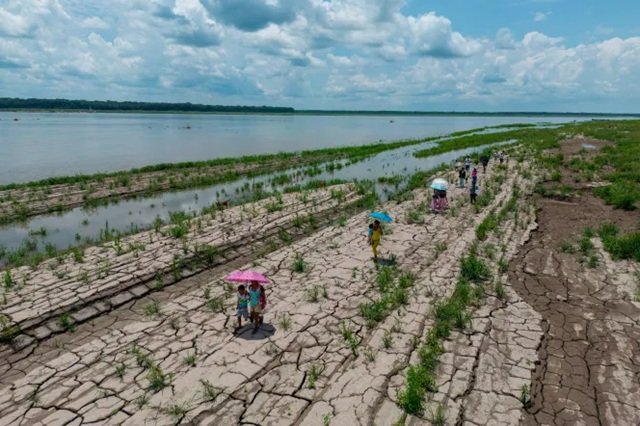
The Amazon rainforest is also expected to face dangerous dry conditions. Scientists fear that reduced rainfall could intensify drought across large areas of South America, increasing the risk of forest fires and threatening biodiversity in one of the world’s most important ecosystems. Similar conditions during previous El Niño years caused rivers to dry dramatically and disrupted water supplies for communities deep within the Amazon basin.
Although Britain is less directly exposed to El Niño than tropical regions, experts say the country will still feel significant impacts. The Met Office has predicted a 40 per cent chance that this summer could resemble the extreme heat experienced in 2022, though scientists note that the strongest El Niño effects are more likely to emerge later in the year and continue into 2027.
The summer of 2022 offered a stark warning of what future heatwaves could look like. Temperatures exceeded 40C in Britain for the first time on record, resulting in thousands of excess deaths among older people and triggering major wildfires. In Wennington, east London, flames destroyed homes as dry vegetation ignited during the intense heat.
The Climate Change Committee has since warned that Britain remains dangerously unprepared for future extreme heat. Railway lines, roads and power systems are vulnerable to high temperatures, while many homes were built to retain warmth rather than withstand prolonged heatwaves.
Scientists also believe climate change may increasingly progress in sharp bursts rather than gradual rises. Maslin said El Niño years could produce sudden jumps in global temperatures, followed by short periods of stabilisation before another spike occurs.
That pattern is already becoming visible. The last major El Niño contributed to 2024 becoming the warmest year ever recorded, with global temperatures temporarily exceeding the 1.5C threshold for the first time.
For many climate experts, the looming “super El Niño” is not simply another weather event but a warning about the accelerating pace of planetary warming. As nations continue to burn fossil fuels and struggle to reduce emissions, naturally occurring climate cycles are becoming more dangerous and more costly.
Hayhoe said the interconnected nature of modern economies means no country will remain untouched by the coming disruptions. Droughts, food shortages, rising prices and extreme weather, she warned, are no longer regional problems but global ones.
“It affects food, it affects the economy, it affects water,” she said. “Who is not connected these days? We are all connected in ways that we never imagined.”