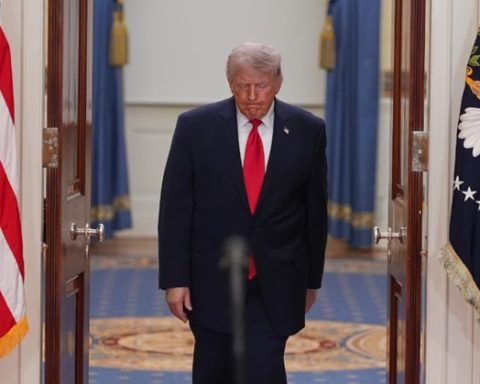
In a striking diplomatic victory that has reshaped the global climate debate, the tiny Pacific island nation of Vanuatu has pushed through an ambitious climate resolution at the United Nations General Assembly, overcoming resistance from the administration of Donald Trump and a bloc of powerful petro-states led by Saudi Arabia.
The resolution, backed by 141 countries, urges nations to move away from fossil fuels and opens the door to possible compensation for countries most severely affected by climate change. Although the measure is not legally binding, it is being viewed by climate advocates and legal experts as a potentially transformative moment in the growing movement for international climate accountability.
For Vanuatu, a remote archipelago of roughly 320,000 people scattered across the South Pacific, the stakes could not be higher. Rising sea levels threaten the very survival of the country, which sits on the frontline of the climate crisis despite contributing almost nothing to global greenhouse gas emissions.
Over recent years, Vanuatu has emerged as one of the most determined voices among vulnerable island states seeking stronger international climate action. Frustrated by the slow pace of negotiations at global climate summits, the country launched an unprecedented legal campaign at the International Court of Justice to clarify states’ legal obligations in confronting global warming.
That effort culminated last year when all 15 judges of the court unanimously concluded that failing to combat climate change could amount to a violation of international law. Though advisory in nature and not enforceable, the ruling sent shockwaves through diplomatic and legal circles because it provided a foundation for future lawsuits against governments and corporations responsible for large-scale emissions.
The new resolution adopted in New York effectively gives formal recognition to that landmark legal opinion. It also strengthens efforts to establish what campaigners describe as “climate justice” — the principle that countries and industries most responsible for emissions should compensate those suffering the gravest consequences.
The diplomatic battle leading to the vote revealed deep fractures in the international order. Vanuatu initially proposed an even more ambitious text that included the creation of an international registry documenting climate-related damages and a mechanism for compensation claims. According to Vanuatu climate envoy Lee-Anne Sackett, the United States launched an intense diplomatic effort to weaken or block the proposal entirely.
Washington has repeatedly opposed international climate initiatives that could expose major emitters to legal or financial liability. The Trump administration has also threatened tariffs and sanctions against countries pursuing stricter emissions policies, including measures targeting international shipping pollution.
Under pressure from the United States and allied oil-producing nations, references to the international damage registry were ultimately removed from the final text. Still, the adopted resolution retained strong language calling for the gradual abandonment of fossil fuels and the elimination of the hundreds of billions of dollars in annual subsidies still directed toward coal, oil and gas industries worldwide.
Such explicit references to fossil fuels have become increasingly difficult to secure at United Nations climate negotiations, where decisions require unanimous consensus and can be blocked by a single country. In contrast, resolutions at the General Assembly require only a simple majority, allowing climate-vulnerable states to bypass some of the procedural deadlock that has paralysed formal climate summits.
Saudi Arabia made a last-minute attempt to dilute the text further through amendments that would have weakened oversight and follow-up mechanisms connected to the court ruling. European Union representatives criticised those manoeuvres, noting that the resolution had already undergone five months of negotiation before the final vote.
Ultimately, the amendments failed. Alongside the 141 countries supporting the resolution, 28 abstained and eight voted against it, including the United States, Saudi Arabia, Russia, Iran and Israel.
The resolution also states that governments failing to meet climate obligations could face legal consequences, including demands for “full reparations” through restitution or compensation for affected states. However, it specifies that a direct and provable link between harmful emissions and climate damages would need to be established.
While the measure itself does not create enforceable obligations, it directs the UN secretary-general to prepare a report exploring ways to strengthen compliance with international climate responsibilities. Legal scholars believe the resolution adds another significant layer to the evolving architecture of global climate litigation.
The vote also carries major symbolic significance at a time when international cooperation is under severe strain. Trump has repeatedly attacked climate science and dismantled environmental commitments since returning to office. His administration once again withdrew the United States from the Paris Agreement after re-entering the White House, reviving fears that the world’s largest economy could obstruct coordinated global action during a critical decade for emissions reductions.
In recent days, Trump has seized on revisions to older climate modelling scenarios to argue falsely that scientists exaggerated the threat of global warming. On social media, he claimed that the United Nations climate panel had admitted its predictions were “wrong, wrong, wrong.”
In reality, climate scientists were updating assumptions first developed more than a decade ago. Researchers now consider the most extreme warming scenario less likely not because climate change is disappearing, but because renewable energy growth has accelerated faster than expected, slowing the pace of emissions growth compared with early forecasts.
That irony has not been lost on climate advocates. The very expansion of renewable energy technologies that helped make catastrophic warming scenarios less probable is now being challenged by political movements calling for renewed fossil fuel extraction. Trump himself frequently campaigned under the slogan “drill, baby, drill,” promoting expanded oil and gas production while attacking clean energy policies.
Against that backdrop, Vanuatu’s success at the United Nations represents more than a procedural diplomatic win. It highlights the growing influence of climate-vulnerable nations determined to force legal and moral accountability onto the global stage, even when confronting the world’s most powerful economies.
For supporters of the resolution, the vote sends a message that the era of treating climate change purely as a political debate may be ending. Increasingly, it is becoming a question of international law, financial responsibility and global justice.