The United States is confronting a munitions shortage that could take years to reverse, raising questions about how long Washington can sustain its expanding military commitments while remaining prepared for a potential confrontation with Russia or the People’s Republic of China (PRC).
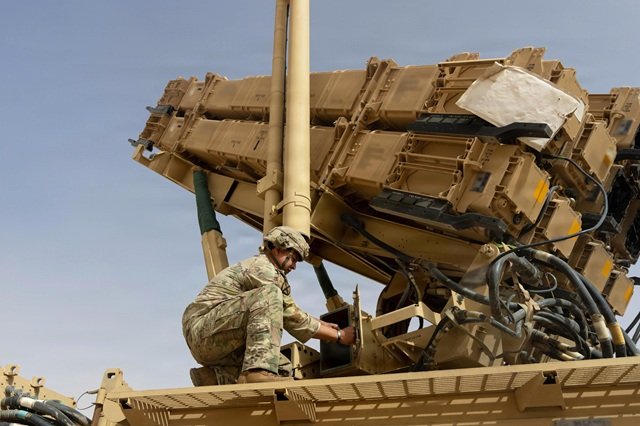
The crisis has intensified as the war against Iran enters its seventh month. According to an assessment by The Soufan Center, U.S. intervention in Iran and continued aid to Ukraine have rapidly depleted American stores of key munitions. Reports have estimated that nearly 80 percent of U.S. Terminal High Altitude Area Defense (THAAD) missiles and 50 percent of Patriot interceptors have been depleted, while the supply of Tomahawk missiles is estimated to have fallen to a critical level of less than 50 percent.
The United States has also expended weapons while supporting Ukrainian defences against Russia, defending Israel against Iranian missile strikes and conducting military operations against Houthi militants in Yemen. Yet the largest source of expenditure has come from the recent war against Iran.
The resulting strain is testing the capacity of the American defence industrial complex. Weapons manufacturers are being required to accelerate production rapidly enough to meet current demand while preparing for future conventional and asymmetric conflicts, including scenarios in which several crises could unfold simultaneously.
The Trump administration has rejected the assertion that the United States faces a munitions crisis, while blaming the Biden administration for providing too many weapons to Ukraine during its war with Russia. In early August, US President Donald Trump declared on Truth Social that “[t]he U.S. has massive amounts of ‘munitions,’ especially of certain types. Additionally, large amounts are being manufactured and shipped to the U.S. as needed. Defense companies are building the largest number of plants and factories in our country’s history.”
But expanding production is not an immediate solution. The Center for Strategic and International Studies has estimated that the return to pre-Iran war inventory levels would not be achieved until 2030 for Tomahawk missiles and 2029 for THAAD and Patriot munitions.
The problem is not simply the amount of money being directed towards defence production. It is also the time and complexity involved in manufacturing sophisticated weapons at the scale required. Restoring the stockpile to pre-war levels will require the defence industry to shift towards a production model that prioritises cheaper, mass-produced weapons.
THAAD interceptors illustrate the difficulty. They are highly complex to manufacture at the rate required by the US military. Historically, Lockheed Martin has produced only 96 a year. In June, however, the company signed a seven-year $35 billion contract to quadruple production capacity to 400 interceptors annually. Even with that expansion, the increase in output could take years to materialise.
Washington’s July 2026 decision to give Ukraine licensing rights to manufacture its own Patriot interceptors could eventually ease pressure on American stocks. But domestic production in Ukraine would take more than a year to begin and has not been officially confirmed by Washington, meaning the agreement could still be reversed.
Ukraine has consequently begun increasing its domestic production of weapons and drones while seeking older munitions to compensate for shortages in US military assistance. A Ukrainian capacity to manufacture Patriot missiles could provide important long-term support in its war against Russia, but it offers little immediate relief because of the time needed to establish production.
For Washington, the more consequential question is what the shortage means beyond the war in Iran. Although depleted stocks do not heavily restrict the United States’ short-term capabilities in that conflict, prolonged pressure on production and supply could affect American readiness for a major confrontation with Russia or the PRC, as well as its ability to deter North Korea.
The consequences are already being felt in the Indo-Pacific. As Washington has prioritised the Middle East, the Trump administration has relocated munitions from the vulnerable Indo-Pacific region, principally South Korea and Japan, to replenish stocks in the Middle East in anticipation of renewed strikes against Iran.
The decision has concerned Tokyo and Seoul, which have relied on the United States to maintain peace and stability on the Korean Peninsula. At a time when tensions are continuing to flare between North and South Korea and between the PRC and Taiwan, deprioritising the region risks altering the strategic calculations surrounding potential conflict.
Recent international satellite imagery has added to those concerns. It has shown the reconstruction of a full-sized model of a US Navy Arleigh Burke-class destroyer in a remote part of a Western Chinese desert. The replica contains detailed structural components that have helped Beijing refine and advance weapons guidance systems through target practice. Additional satellite imagery has identified mock-up Taiwanese military bases being used for missile testing, indicating that the PRC is preparing for a prospective Pacific conflict.
Taiwan, meanwhile, is expanding its own military preparations. Taipei has approved a record-breaking defence budget of $35 billion, equivalent to three percent of the island’s GDP and an 18 percent increase from the previous year.
At its current volume, the US weapons stockpile is unlikely to support simultaneous efforts in Iran and Taiwan if Beijing were to launch an amphibious or aerial assault. The shortage could also reduce Washington’s leverage in attempting to prevent the PRC from blockading the Taiwan Strait, potentially influencing calculations on both sides of the strait.
The stakes extend far beyond military strategy. More than one-fifth of global trade passes through the Taiwan Strait, connecting regional economies with the wider world. Taiwan produces 70 percent of the world’s microchips and 90 percent of semiconductors, making the island and its trade corridor central to the global technology market. A blockade would almost certainly worsen an already strained global supply chain, compounded by unpredictable operations in the Strait of Hormuz.
The Korean Peninsula presents another vulnerability. The Demilitarized Zone separating North and South Korea has been policed by US and South Korean troops since 1953. Alongside its military presence, Washington has provided critical military aid and deterrence capabilities under the Mutual Defense Treaty.
But in recent months, Washington has redeployed THAAD launchers and Patriot batteries to the Middle East because of equipment shortages driven by the Iran war. These systems are vital to South Korea’s defences as Pyongyang’s ballistic missile stockpile continues to grow exponentially. Their absence could leave South Korea more exposed to an aerial attack and introduce new tensions into the US relationship with its allies.
The munitions shortage therefore extends beyond the question of whether the United States possesses sufficient weapons for its current war. It raises a broader question about the sustainability of American military commitments across several theatres at once.
Until the US defence industrial base catches up with growing demand, American global military readiness, particularly in Asia, will remain uncertain. The consequences are also diplomatic. Ukraine, South Korea, Japan and NATO have all grown accustomed to relying on US military assistance for their defence.
The crisis ultimately exposes the tension between the scale of Washington’s global defence commitments and the time required to manufacture the weapons needed to sustain them. The United States may retain formidable military capabilities, but the ability to replenish the arsenal behind those capabilities has become a strategic constraint in its own right.