India’s government has become a central focus of a bitter struggle over the future of Tata, the country’s largest conglomerate, as rival camps lobby senior officials over the leadership of its main holding company and a proposed stock market listing, according to the Financial Times.
The dispute centres on N Chandrasekaran, the longtime chairman of Tata Sons, and billionaire scion Noel Tata, who heads Tata Trusts, the group’s main shareholder. Chandrasekaran wants to remain in charge and lead Tata Sons towards a listing, while Noel Tata is strongly opposed to the flotation. India’s central bank has ordered the listing as part of measures to bring greater transparency to Tata Sons, which it has classified as a large non-bank lender. Noel Tata argues that a public listing would undermine the group’s ability to make long-term decisions, while critics say his opposition is intended to preserve family control.
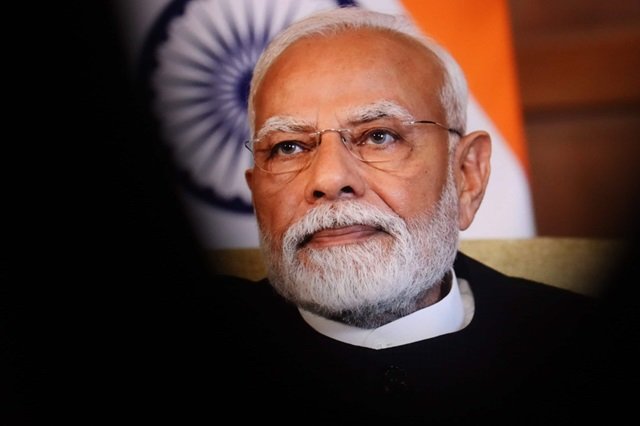
Tata’s importance to Prime Minister Narendra Modi’s industrial ambitions has given the boardroom dispute an unusually prominent government dimension. The conglomerate has backed several major initiatives associated with Modi’s “Make in India” vision, including rescuing the country’s flagship airline, supporting its semiconductor drive and constructing the new parliament complex. Under Chandrasekaran, Tata has also become Apple’s most significant manufacturing partner in India for iPhones, while its aerospace and defence business produces components for military aircraft and missile systems. Tata Consultancy Services is India’s leading software services provider.
People close to both sides of the dispute and outside observers said Chandrasekaran has gained the upper hand in lobbying so far. He has developed strong relationships with senior government figures during his nine years as chairman and previously served for six years as a director of the Reserve Bank of India. “Chandra does not need a lobbyist to represent him — he has direct access to the PM,” a former colleague told the Financial Times.
A Delhi-based lobbyist said Chandrasekaran’s industrial priorities had reinforced those relationships. “Chandra has done everything the government wants . . . [Tata’s] push into semiconductors, aircraft, everything is designed to make sure he has a direct personal connection with the prime minister,” the lobbyist said. The offices of Modi and Chandrasekaran did not respond to requests for comment.
Tata employs more than 1mn people and recorded revenue of $185bn in the most recent financial year, making it India’s largest private sector employer. Its businesses range from salt to Range Rovers. Alongside Gautam Adani’s group, Tata has been a major corporate partner in implementing Modi’s economic and infrastructure ambitions, increasing the political sensitivity surrounding the dispute.
Several senior business figures have privately expressed concern about the government’s apparent involvement. One politically connected billionaire questioned why the central bank should determine Tata’s future rather than its shareholders, saying: “This is bad for corporate India.” Although the Reserve Bank of India is nominally independent, several executives close to the Tata dispute told the Financial Times that they believed its decision on Tata’s request to avoid a mandatory listing would not have been made without approval at the highest levels of government.
Noel Tata has also lobbied the government, according to people close to the Tata board, but his efforts have been less successful. He assumed leadership of Tata Trusts less than two years ago following the death of his half-brother Ratan Tata. Before that, his principal role was chairman of Trent, the group’s retail business, which was fast-growing but less politically sensitive. People familiar with the dispute said this had given him less opportunity to establish relationships with senior government figures than Chandrasekaran and his allies.
The government’s role became more contentious this week after Finance Minister Nirmala Sitharaman said businesses should “engage constructively with government and regulators” and that “every disagreement need not begin as a litigation”. Her comments were widely interpreted as a warning against Tata taking the dispute to court after Noel Tata began considering a challenge to last week’s majority board decision to extend Chandrasekaran’s term and pursue a listing. The finance ministry later said her remarks were a general observation about Indian family businesses and “clearly NOT in the context of the Tata issue”.
Arvind Subramanian, a former chief economic adviser to the Indian government, said the dispute could damage perceptions of India’s corporate governance. “At a time when India is trying to address its weak private investment and FDI inadequacies, this saga will not burnish India’s reputation for corporate governance and government-corporate interactions,” he said.
The conflict is complicated by Tata’s unusual ownership structure. The charitable trusts controlling Tata Sons were established by descendants of the Tata family but are not themselves family-owned, while Noel Tata personally owns only 1 per cent of Tata Sons. The company’s articles require the trusts to agree on major decisions. Last week, however, they were divided, with Noel opposing Chandrasekaran’s extension while Venu Srinivasan, another trust representative and Tata Sons board director, voted in favour.
Sucheta Dalal, managing editor of Moneylife India, said the continuing dispute could threaten Tata’s standing. “Tata Sons has got away with governance issues in the past because of its blue-chip reputation,” she said. “But if they keep fighting, they will lose that reputation.”