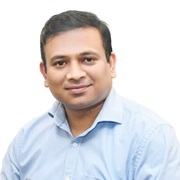
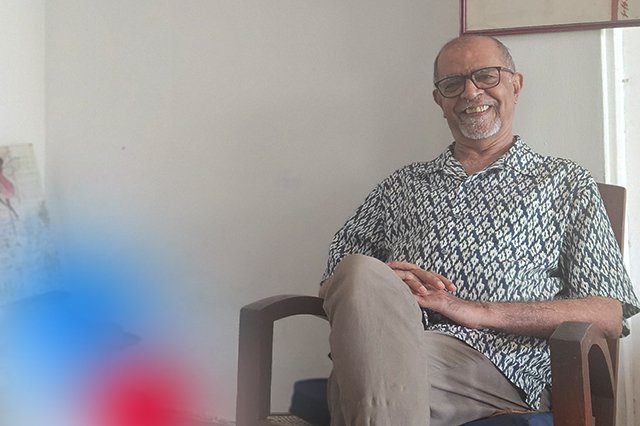
“A violent revolution can overthrow capitalism. But it may not replace capitalism with a humane society.” Professor Jayadeva Uyangoda arrives at that conclusion after a political life that began with a belief in revolutionary transformation, passed through underground politics, armed insurrection, defeat, imprisonment and intellectual reconstruction, and eventually brought him to a position in which democracy is indispensable but liberal democracy itself remains inadequate to eradicate inequalities and ensure social justice. His journey cannot be described simply as a conversion from Marxism to liberal democracy, because he rejects that description himself. “I was never converted to liberal democracy,” he says. He regards liberal democracy as an essential inheritance of modern political life because it protects individual freedom, pluralism, political participation, freedom of expression and association, universal franchise and fundamental rights. But he also argues that it is structurally limited because it exists alongside capitalism, social inequality and unequal access to wealth, power and opportunities.
His political thinking therefore remains marked by a tension that he does not try to resolve by abandoning one side of it. He seeks to merge the liberal idea of individual liberty with the socialist-republican ideal of freedom. Marxism gave him a way of understanding society, power, class, resistance and the state. Prison taught him something Marxism, in his view, could not adequately provide: an understanding of individual subjectivity, emotional suffering and the inner life of human beings. His later engagement with liberal democracy did not erase his criticism of capitalism or inequality. His thinking about Sri Lanka’s ethnic conflict reinforced his belief in group political equality beyond the individual-centric approach to civil and political rights. He firmly believes that ethnic grievances and demands for political rights should be understood as arising due to a persistent neglect of a major democracy deficit in our country. It is the inability of our liberal constitutionalism to accommodate claims to group rights by ethnic and cultural minorities.
“I learned that violent revolution can overthrow capitalism. But it cannot replace it with a humane society.”
And his present support for the National People’s Power is not presented by him as the end of a journey seeking a new form of democracy for Sri Lanka. He views the NPP government as another stage in a uniquely Sri Lankan experiment. It raises the crucial question whether a political movement born from revolutionary politics can use the liberal democratic path and institutions to transform a system that he believes was designed largely to protect elite rule through a democratic-authoritarian hybrid constitution. Recently, I sat down with him at his residence in a Colombo suburb for a long discussion about the journey he led, the criticisms he faces, the beliefs he carries and the outcomes of the assumptions that have shaped his thinking and actions.
Uyangoda was born in September 1950 and grew up in a rural environment in the Matara district, in the Kamburupitiya electorate. The home village he describes as one that was so rural that it did not receive electricity until 1995. As an avid reader of books and newspapers from his childhood, Uyangoda was a beneficiary of the kerosene lamp, even up to his university entrance examination. Much later, in 1995, his father used his political contacts with the government of Chandrika Bandaranaike Kumaratunga to help bring electricity to the village, a detail that illustrates the unusual distance between his childhood world and the political world he would eventually inhabit. He went to a rural mixed school and remained there until his O-levels. Most of his classmates did not continue their education. He estimates that around 95 per cent became casual labourers or farmers, while only a small number continued their studies and eventually became graduate teachers. For Uyangoda, that experience provided an early lesson in the limits of formal equality. Free education existed, teachers were present and educational opportunities were technically available, yet poverty shaped and obstructed what families imagined was possible for their children. “I think that’s one of the ironies, the paradoxes of poverty,” he says, explaining that when people are poor, their families do not even possess the capacity to dream of a better future for their children through school education and beyond. When he returns to his village even now, some of those same classmates address him as “sir”.
He describes the experience with discomfort because he remembers them not as people from a different social world but as his fellow villagers and childhood companions. He had simply been one of the children who managed to move through the educational system and eventually become a university teacher and political scientist. That movement out of rural poverty was not something he presents as an individual achievement detached from the social conditions. His own life became evidence of what education could make possible, while the lives of his classmates demonstrated how the culture of poverty and social isolation could prevent so many families from taking advantage of the same opportunity offered by the welfare state and free education. The political consciousness that later shaped him was therefore rooted in a social environment where class, caste, education, aspirations for social emancipation, and access to opportunity were not mere abstract concepts, but painful social realities too.
“The Welikada prison was my second university after Peradeniya.”
His family provided him another early source of political and intellectual influence. His father had received only a fourth-grade formal education, but he was involved in the Vinayavardhana movement, a radical Buddhist lay movement that emerged among educated Buddhists from communities challenging the caste hierarchy associated with sections of the Buddhist establishment. His father continued his education independently, learning Pali and Sinhala and building a small home library containing Buddhist texts. Uyangoda remembers him as someone who was willing to question monks and the authority of Buddhist monks and what he thought of as the distortion of the Buddha’s teachings. “I realized that my father was questioning the spiritual, intellectual and social authority of monks,” he recalls. That experience mattered because it introduced him to the possibility that inherited institutions could be questioned from within one’s own religious and intellectual traditions. His elder brother was a schoolteacher and later a principal, and he brought many books and magazines from Colombo and elsewhere into the family home. The rural school he attended in his childhood also had teachers who had received new forms of training in teacher training colleges and introduced the village children to some new knowledge and ideas.
In Uyangoda’s recollection, these new teachers, particularly the young women teachers, the English teachers and the male music teacher who came from outside, were more knowledgeable than the traditional village-based teachers who used corporal punishment and fear as methods of teaching. Those idealistic and committed young teachers became his role models. At the same time, his childhood exposed him to the persistence of caste discrimination within religious institutions. He also noticed differences between Buddhist temples associated with different Nikayas and began asking why particular monks attended funerals of only particular families in the village, why their robes and umbrellas differed in colour and shape and why certain temples appeared to draw their patrons from particular social groups. His father explained to him the caste and class dimensions underlying these distinctions.
The Ramanna and Amarapura traditions appeared to him more socially open, while sections of the Siyam Nikaya remained more closely connected to families of high caste, who were landowners. They belonged to the class of local aristocratic families called the Haamu. The chief monks of these temples also came from these Haamu families. He says that from early childhood, he was exposed to caste-based differences, and what he later came to know as casteism and discrimination. At present, these differences are now relaxed considerably, but he does not believe they have disappeared. “Even now most of the temples identify themselves with the lay patrons belonging to their own castes,” he says. The young Uyangoda was therefore growing up in a society in which social hierarchy could be encountered through education, occupation, family background, religion, culture, and the organisation of everyday practices. These experiences would later become relevant to the way he understood the contradictory relationship between formal equality of liberal democracy and deeper inequalities that persist despite equal citizenship rights.
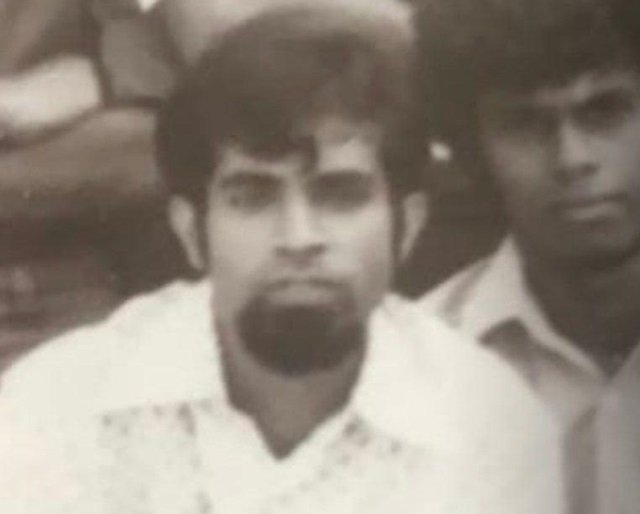
When he entered the University of Peradeniya in October 1968, he did not arrive there as a young adult in a rural village politically neutral or just innocent. As a young adult, he had already been exposed to radical political ideas. His radicalisation had already begun in the village. The Communist Party had a strong influence in the Kamburupitiya area and Dr S. A. Wickramasinghe of the Communist Party was regarded as a political hero by sections of the local population, including his father. Uyangoda remembers the Communist Party activists working among poor people and communities outside the traditional upper-caste establishment. The attraction was not simply theoretical. The Communist movement appeared to offer people like those around him a language of social emancipation. As a schoolboy, he was introduced to revolutionary literature, and he became fascinated by the Cuban Revolution, Fidel Castro, Che Guevara and the Chinese Revolution. Che’s killing in police custody in Bolivia in 1967 affected him deeply. “He was my childhood hero, the idol, as a schoolboy,” he says. Che Guevara’s death became a defining moment that pushed Uyangoda further towards revolutionary politics. By the time he arrived at Peradeniya, he says, he was actively looking for a revolutionary organisation. He encountered Maoists, Trotskyists and Communist Party groups, but eventually found the Socialist Students’ Union, which was connected to the underground movement that later became the JVP. He joined the movement and eventually became a full-time cadre. He also became involved in campaigns against the severe ragging culture at Peradeniya, which he considered “very inhuman”. The combination is revealing. The young revolutionary was not only interested in overthrowing the state. He was also responding to forms of domination and violence that he encountered within everyday social life. The language of revolution offered him a framework through which these different experiences could be understood and critiqued and a different, brave new world imagined.
His first meeting with Rohana Wijeweera occurred in 1969, probably around July or August, and became one of the formative encounters of his political life. He travelled to Kataragama by bus and then continued by bicycle into a dry-zone village where Wijeweera was staying in a small mud house. Uyangoda remembers the future JVP leader as a not-so-tall man with a beard and long hair, dressed in a sarong. When they met, Wijeweera embraced him and told him that he had been eagerly waiting to meet him. The meeting was not a formal political encounter. It was an informal and warm welcome in a small farmhouse surrounded by the jungle. It reminded him of a hermitage of forest monks which he had visited as a young boy with his father and some other villagers. Wijeweera rushed inside the house and came back quickly with a plate of red rice with beef and brinjal curries. The two men and another two spent hours discussing politics, continuing into the early morning and then after breakfast. The other two were young men who were Wijeweera’s comrades and, as Uyangoda learned later, Wijeweera’s ‘bodyguards’. Wijeweera eventually asked Uyangoda to become a full-time member. Wijeweera’s charismatic appeal was irresistible, and Uyangoda could not say ‘no’. On the way back to Peradeniya via Colombo, Uyangoda found himself sort of converted to a prophet. Giving up his university education, Uyangoda became a full-time cadre of the JVP assigned to educational and organisational work in the Colombo district. Within the underground organisation, Uyangoda was also known as “Uyan Mahathtaya” and also as ‘U Mahaththaya’, as his nom de guerre. He stresses that this was not simply a code name but an underground political identity that enabled him, as a cadre of a revolutionary movement, to remain incognito.

Looking back more than half a century later, he describes the revolutionary movement of that period with the awareness of being someone who had participated in it with a profoundly anti-state outlook and later becoming a scholar to spend years studying the state which he, as a young radical, sought to overthrow. Uyangoda sees this as a great irony in his personal life. Asked about what the central intellectual error of 1971 was, he says that it was not merely that the revolution failed. The error was that the movement underestimated the sheer power of the state. “Underestimating the power of the state and its repressive capacity” is how he identifies the principal mistake. The Sri Lankan state, he argues, repeatedly demonstrated its capacity to deploy enormous resources of coercive power, not only in 1971 but again in later periods of political violence and conflict in the South and the North alike. The young revolutionaries in 1971 knew that they did not possess the organisational or military capacity on the scale necessary to capture state power. They nevertheless believed that confrontation with the state was necessary in the face of what they understood as ‘repression’. Their expectation was that even if they could not win immediately, they could survive, preserve their organisation, go underground and eventually reorganise with greater strength and preparedness. That was their Plan B.
They also began thinking about international revolutionary connections and explored possible links with the Palestinian movement, Naxalites in India, revolutionary leftist groups in Kerala, underground movements in Yemen and also Latin America. But the JVP before 1971 did not have any international contacts. The movement had emerged only around 1967 and 1968 and came into the open in 1970. There was simply not enough time to establish international networks. Uyangoda specifically rejects stories that North Korea, Cuba or China provided support to the JVP during the 1971 uprising. The JVP was essentially a home-grown revolutionary youth movement with an international political outlook. It emerged at a time when there were revolutionary upheavals in Africa, Latin America, the Middle East, South and East Asia. In the rich capitalist world of Europe and America, radicalisation of the youth and protests by militant student movements against the Vietnam War marked a new wave of youth politics globally. In South Asia, India and Pakistan were on fire from 1969 onwards. Sri Lanka joined the club through the JVP in 1971.
The failure of 1971 did not end the movement’s existence. Members who survived the repression and those who were in jail began to rebuild the movement. While in prison, Uyangoda held the view that the JVP should be revived and reorganised as a socialist party. He also believed that the political transformation was essential for the JVP to recognise the legitimacy of the new phase of Tamil nationalist struggle which had attracted the Tamil youth of the Northern and Eastern provinces. While in Welikada Jail, he also had the rare opportunity to communicate with young Tamil political activists who were remanded in a section of the prison bordering the building where he and other JVP prisoners were detained. Over the tin-sheet fence, he even had long conversations with those Tamil political prisoners who told him that their struggle was inspired by the JVP’s 1971 uprising. Conversations with them convinced Uyangoda that a rebellion by educated and angry Tamil youth was going to take place in Tamil society too. The same reasons that produced the rebellion in the South, unemployment and the lack of educational opportunities for youth, were going to produce its Northern version in an unexpected way.
Liberal democracy is indispensable for political and social progress. But it is inadequate.
Uyangoda’s narrative also covered the question of how a revolutionary movement could survive against a state that had demonstrated overwhelming coercive power. The subsequent history of the JVP, as Uyangoda sees it, involved repeated attempts at change and transformation. Prison life also transformed Uyangoda in several ways. He spent six years in prison, and he does not describe those years simply as a period of suffering that only interrupted his personal and political life. “I never regret my life in prison although it was hell on earth in an emotional sense. You know why? The Welikada prison was my second university after Peradeniya.” Prison was emotionally difficult and everyone was feeling intensely lonely all the time. Yet it also became an unusual intellectual experience for him. There were many other political and other prisoners, including prisoners facing death sentences. Some prison officials treated the educated political prisoners with a degree of respect because many of them were as educated as, or more educated than, the officials themselves. Senior prison superintendents, he recalls, were sometimes kind, which reduced some of the harshness of incarceration. Uyangoda and his prisoner colleagues adapted to the prison food of uniform taste and developed even an attachment to the breakfast of a bun and coconut sambol prepared in the prison kitchen by other prisoners. But the most painful prison experience was loneliness and isolation from the outside world. Uyangoda describes the prison as a place where one could feel “lonely amongst so many others”. What was most painful for any prisoner was the emotional isolation from the family. Uyangoda was emotionally sensitive, and that sensitivity became particularly important because he began to encounter forms of human suffering that political theory had not prepared him to understand. He also had to deal with the deeply felt guilt about thousands of members of the movement who sacrificed their lives for the movement and the goal of revolution it advocated.
Reading became one of the principal ways through which he responded to imprisonment. Friends and university lecturers, including Dr Kumar Jayawardena, Prof Ashley Halpe and Gunadasa Amarasekera, sent him books. Prisoners were able to receive reading material from outside, and even prepare for university and government examinations. Uyangoda read novels, literature, philosophy, political theory and Marxist literature and even sat for the external law degree examinations conducted by the University of Colombo. He also read the Bible, gifted by a prison officer, more than once, and says that the Books of Exodus and Lamentations of the Bible had a significant influence on his understanding of human suffering and pain. The biblical accounts of human suffering also had a direct influence on the poetry he wrote about prison life while in prison. He read prison writings and biographies by trailblazers such as Jawaharlal Nehru and Rosa Luxemburg, Dostoevsky’s Notes from the Underground, Solzhenitsyn’s One Day in the Life of Ivan Denisovich, Arthur Koestler and other writers who had dealt with themes of confinement, political commitment and human suffering. He began writing poetry partly because he needed a way of dealing with loneliness and pain in jail. The poems were not simply political reportage of the prison life of a radical youth. They emerged from observing his own life and the lives of prisoners around him. This became important to his later intellectual development because he came to distinguish between the material and social suffering that Marxism could analyse and the emotional and subjective suffering located in the inner soul of a human being that he believed Marxism did not adequately address. “I saw in others and experienced myself the emotional suffering while living in a prison for long years,” he says. Prison showed him that human beings could experience profound inner pain that transcends suffering caused by material deprivation.
People, demos, are the true owners of democracy. And democracy had been captured by the elites.
Uyangoda uses the idea of “Adhyatmaya” or “inner soul” to describe this dimension of human experience, and says that a more appropriate philosophical expression would be ‘individual human subjectivity’. “Marxism doesn’t talk about that,” he says. Marxism, in his formulation, is exceptionally powerful in understanding objective social structures, forces of production, economic relations and class relationships and material conditions of human suffering and deprivation. But prison confronted him with the individual as an emotional and subjective being. Literature could enter that territory in ways political theory often could not. His poetry consequently became a record of human subjectivity, not simply an account of a political prisoner. For him, reading and writing poetry was the ‘opium’ to deal with the darkness of the inner soul. The prison was also the space for deep contemplation that aroused poetic imagination. He wrote poetry about unusual human experiences in prison, deep emotions about love and loss, and the pain of isolation. This idea of ‘love and loss’ had a dual meaning for his prison life. The first is about a relationship of love which a young prisoner had with a person in the free world and its inevitable end. The second is the gradual withering away of a romantic attachment to revolution which an idealist young man once had. Uyangoda says: “In my life, this dual loss occurred simultaneously. And that experience was like an earthquake in my ‘adhyaathmaya’ or, the inner soul. Some of those poems I wrote some fifty years ago to deal with this double loss have been published recently in a volume titled Mam Kese Pavasam, which means ‘Can You Hear My Cry?’”
The prison experience also persuaded him to gain a deeper reconsideration of revolution itself. Uyangoda does not claim that Marxism became meaningless to him. He says Marxism gave him the intellectual temperament to understand the prison as the ultimate institution of oppressive and dehumanised power of the state and sharpened his orientation towards society and the world. His reading in prison also introduced him to debates among Euro-Communists, reformist communists and social democrats about whether socialism could be achieved without violent revolution. “I was very much attracted to those debates,” he says. “I was thinking whether socialism, or what we mean by socialism, could be achieved without violence, without violent revolution.” He came to see the twentieth century as an extended historical test of the relationship between revolution and human emancipation. “Yes, that’s actually the 20th century experience of most of the revolutions,” he says when asked whether revolutionary politics could itself become authoritarian. Russian, Cuban, Chinese and Korean experiences demonstrated to him that overthrowing an existing system of exploitation did not automatically produce a humane society. Revolution could destroy capitalism or overthrow an old ruling structure of the oppressors while creating new forms of domination. “I learned that violent revolution can overthrow capitalism. But it cannot replace it with a humane society.” Humanisation of the socialist society was a theme of debate among those who were critical of the Stalinist model of socialism. This became one of the most important preoccupations in his later thinking. The question was no longer simply whether capitalism could be defeated, but what kind of better political and social order would follow. The possibility that revolution could create its own ‘prisons’ forced him to think about political power, individual freedom, institutional constraints and the relationship between emancipation and authority in a way that went beyond the revolutionary certainties of his youth.

His later relationship with liberal democracy therefore cannot be understood as a simple ideological conversion. “I was never converted to liberal democracy,” he insists. He remains critical of liberal democracy because he believes it places too much emphasis on the autonomous individual as a locus of social emancipation while failing to provide an adequate theory of collective freedom and social equality. He accepts an important part of Marx’s criticism of liberal democracy, namely that individual freedom can become a myth when people lack the material conditions necessary to exercise it meaningfully. Yet he does not discard liberal democracy because of those limitations. Instead, he describes his position as having developed over roughly two decades. “Liberal democracy is indispensable for political and social progress. But it is inadequate.” The two parts of that statement are equally important to him in conceptualising a path to human emancipation through a dialogue between liberal democracy and socialism. “For us in Sri Lanka, liberal democracy is indispensable because Sri Lanka’s own modern political and political modernity includes universal franchise, regular elections as the means to elect rulers, individual liberty, freedom of expression, freedom of association and fundamental rights, political equality and pluralism — all of which the Sri Lankan people have come to regard as essential components of political emancipation. At the same time, liberal democracy is inadequate because it exists within capitalism and has repeatedly failed to eliminate social, economic, communal and gender inequalities. It requires a theory of group rights, beyond liberal individual rights.” He therefore believes that liberal democracy must be retained while being critiqued, challenged and invited to cohabit with other traditions, including Marxism, socialism, communitarianism, feminism and social democracy. These traditions, in his view, offer resources for confronting the limitations of a political system that can provide formal equality while leaving deeper inequalities and injustices intact. Social democracy and Euro-Communism have been offshoots of the conventional Marxist vision for socialism which Uyangoda began to explore while he was still in jail. Liberal democracy, which is blind to social and collective inequalities, can offer humankind only a future of incomplete emancipation. Human emancipation under socialism without individual freedom and pluralism can produce new forms of political tyranny. That is the intellectual conundrum which Uyangoda grappled with.
The challenge today is to re-democratize Sri Lanka’s democracy.
This is also why Uyangoda has become increasingly critical of what he calls the liberal intelligentsia in Sri Lanka. “Liberal intelligentsia have certain fundamental political and intellectual limitations,” he says, because they often fail to recognise the relationship between liberalism and capitalism and the institutionalised inequalities and injustices the two produce together. They don’t recognise the difference between ‘liberty’ and ‘freedom’ either. Liberal political philosophy, he argues, begins with a fundamentally wrong assumption about human nature. Human society is a collection of autonomous, free, independent, egoistic and often self-serving individuals, while society is actually made up of collectivities. Uyangoda says that this is a point made by Marx and he agrees with it. Marxism argues that human societies are human ‘collectives’, because humans live not as isolated individuals, but as groups and communities with their own cultures, collective interests and networks of interaction. From that perspective, there are collective grievances, collective rights and structural inequalities that cannot be reduced to individual constraints and choices.
Inequalities are built into the ways of accessing wealth, political power, education, economic opportunities and other social goods. He points to discrimination against women, minorities and poor caste communities and their unequal access to employment and resources across South Asia. His criticism is not restricted to Sri Lanka. India, Nepal and all other South Asian societies continue to experience social, ethnic, gender and other group inequalities that liberal political theory and politics have ignored and therefore failed to resolve. He also argues that liberal political theory has not developed an adequate theory of the state. “Actually, liberal political theory doesn’t have a theory of the state. It has only theories of government and regimes,” he says, distinguishing theories of government from a deeper analysis of the state itself. Marxism and its variants, in his view, have provided much stronger theories of the state and political power. Without understanding the state, he argues, it is impossible to understand why political conflicts occur, why people rebel, why youth protest, why ethnic minorities aspire for self-determination, and why unequal access to power and resources produces recurring social discontent and political crises.
His understanding of the state itself has also changed. As a young revolutionary he regarded the state primarily as an instrument of domination and oppression that had to be overthrown. As a political scientist and former prisoner, he came to see that the state can also be used as an instrument of positive social change. The distinction, he says, depends on who controls the state and for what purpose. A socialist or social democratic state can use public power to reduce inequality and provide social protection to economically deprived social groups, while the same state apparatus can be used to dominate people in liberal, authoritarian and pseudo-socialist systems. The state is therefore not an inherently good or bad thing. It is a structure of social and political power, the political character of which depends on the social and political forces controlling it. This understanding is central to his present assessment of the NPP because he sees the party’s attempt to change Sri Lanka as having become a struggle taking place inside institutions that were not created for the kind of transformation the NPP says it wants to undertake.
They are working within the very system they want to change.
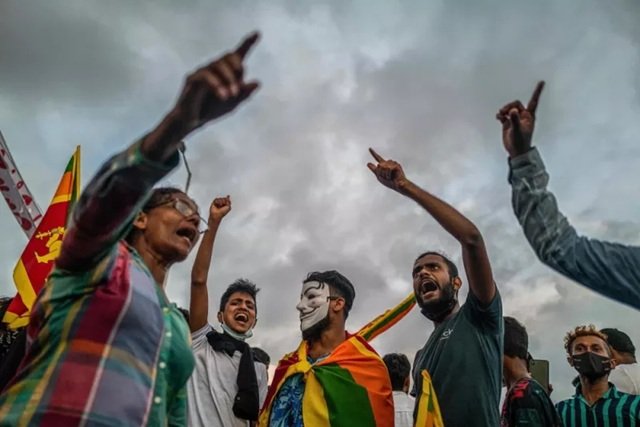
His support for the NPP emerged after a long period in which he had supported other political alternatives to authoritarian or Sinhala majoritarian-nationalist rule. He supported Chandrika Kumaratunga and the People’s Alliance in the early and mid-1990s. That was when he saw the People’s Alliance Chandrika led as an alternative to the UNP’s authoritarian political legacy of both J. R. Jayewardene and R. Premadasa. Later, in 2014–15, he supported the Yahapalanaya coalition jointly led by Maithripala Sirisena and Ranil Wickremesinghe for similar reasons. It was the time when the foundations for the Rajapaksa family’s oligarchic power were being laid. He says he eventually stopped supporting what he calls elitist political parties because he became convinced that they used liberal democracy instrumentally to obtain power while continuing the practices of corruption, authoritarianism, inequality and family domination. The Aragalaya of 2022 became the decisive turning point in his political analysis too. Aragalaya was like a peaceful rebellion by the people and for the people to end the corrupt and authoritarian elite rule of the traditional political class. He supported the protest movement and describes it as an important moment in South Asian political history because it demonstrated the emergence of ordinary citizens, particularly young people, as a new social agency for democratisation. “People, demos, are the true owners of democracy,” he says. “And democracy had been captured by the elites. Corrupt, self-serving elites.” The Sleeping Giant, the people, had woken up at last, shaking up and unsettling the old order. After Gotabaya Rajapaksa left office, there was a political vacuum for a short while. Ranil Wickremesinghe represented one possible alternative from the political right, but Uyangoda believed that the NPP was positioned to fill the space created by the collapse of the old political order. He says he began openly supporting the NPP around the middle of 2024. He saw the NPP as a genuine alternative to corrupt elite rule.
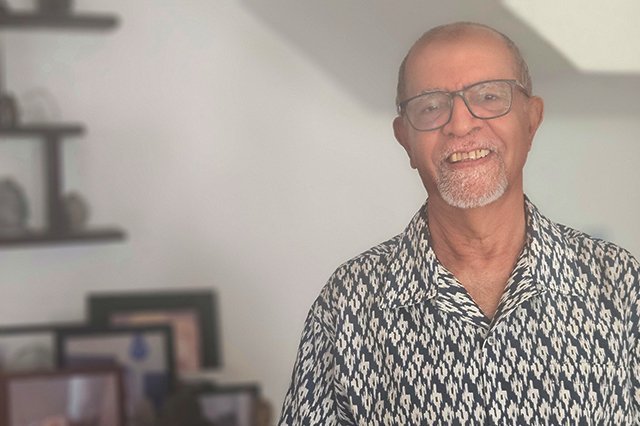
His assessment of the NPP is closely connected to his understanding of the JVP’s long history of transformation. He rejects the claim that the NPP is simply a disguised JVP waiting to reveal its hidden revolutionary intentions. “NPP is a deceptive reincarnation of the JVP,” is how he describes the argument made by some of its critics, who imagine a wolf in sheep’s clothing. Others, he says, now expect a serious conflict between the JVP and the NPP to cause the government to collapse. He considers both arguments evidence of an inability to understand the historical transformations of the JVP. “JVP has transformed itself several times over a long period of time,” he says. He points to the movement’s decision in the late 1970s to enter mainstream electoral politics, including its participation in the local government election and Wijeweera’s presidential candidacy in 1982. After the 1983 violence, the JVP was wrongly blamed for the violence of the UNP goons and banned, forcing it to go underground and contributing to its return to the politics of armed struggle. The 1988–89 period then produced what he calls a “very costly defeat”. After that defeat, a new JVP leadership recognised that armed struggle and revolution were not the means through which political power could be achieved. Uyangoda sees the eventual development of the NPP as the continuation of that transformation under a new generation of leaders. He believes many journalists, commentators and members of the intellectual establishment in Colombo have failed to understand the depth of that shift because they continued to interpret the JVP through the lens of its earlier revolutionary identity.
The crucial question for him now is whether the NPP can achieve systemic change while operating within a liberal democratic constitutional order. His answer is uncertain. He does not think the NPP can easily make the fundamental changes the state requires because the party is caught in the contradiction between its commitment to system change and the constraints of the political system through which it must govern. Yet he also sees evidence that the government has chosen to work within constitutional procedures rather than simply exercise the arbitrary powers available in the present constitution. He refers particularly to the government’s handling of the recent judicial and constitutional dispute, arguing that the president could have used the powers available to him in a more arbitrary way but instead allowed the constitutional process to operate and permitted the controversial issue to go before the Supreme Court. Whether people like or dislike the government’s decisions is a separate matter, he says. What matters to him is that the process was handled through constitutional mechanisms. He therefore finds it difficult to understand why lawyers and sections of the legal profession do not acknowledge that distinction. At the same time, he insists that the constitution itself is not fully liberal democratic. It contains authoritarian powers assigned to the President, but President Anura Kumara Dissanayake, in his assessment, has so far been reluctant to use those powers arbitrarily. This produces what he regards as the central contradiction of the present government. It is attempting to change the political system through institutions that, in his Marxist analysis, were constructed partly to protect the existing political, social and economic order.
Never abandon political hope for a better society and a better political system. And always be an idealist.
That contradiction leads Uyangoda to describe the current political struggle in unusually class-based terms. “Now what we find in Sri Lanka is a power struggle between the old ruling class and the new,” he says. “It’s almost like a class war, actually.” The question is not simply whether one political party will defeat another at an election. It is whether an emerging political class can exercise power sufficiently to implement reforms against the interests of the established political class that has controlled the state for decades. He sees the NPP’s anti-corruption programme, its commitment to fight the drug lords and pursue drug-related crime and its willingness to reopen investigations into serious allegations of corruption and human rights violations against figures connected with previous governments as part of this struggle. He refers to the continuing influence of powerful political families and says that figures from the old political establishment retain relationships with sections of the armed forces, police and bureaucracy. For him, pursuing investigations into corruption and serious human rights violations is therefore not an exercise in political revenge. “It’s an implementation of the promise that the NPP gave to the people at the election,” he says. “It is also a policy imperative to create a new democratic political culture, a key election promise of the NPP.” If the NPP has received a mandate to confront corruption and pursue accountability, and build a genuinely democratic and corruption-free political culture, he argues, it is obligated to act upon that mandate. Former political leaders and officials who are implicated in serious wrongdoing, he says, must face justice. That is also what the people expect.
His thinking about the ethnic conflict is equally connected to his understanding of the state. He has spent decades studying Sri Lanka’s ethnic politics and says that one of the central failures of the peace process was the underestimation of the enormous difficulty and complexity of achieving peace in a society that had been both deeply divided and heavily militarised. He worked closely with peace advocates, including Neelan Tiruchelvam, and became deeply engaged in the political debates surrounding the conflict and the conflict-resolution efforts. Looking back, he says the peace advocates failed to understand “the difficulty in achieving peace in a deeply divided society” and underestimated the “immensity” of the obstacles created by militarisation. His position on the Tamil ethnic problem developed around the belief that Tamil people had legitimate grievances against the Sri Lankan state and that the state itself had to be democratised. “Reforming the post-colonial ethnocratic state was the central task and challenge in all our conflict-resolution efforts.” He describes Sri Lanka as a majoritarian and ethnocratic state, arguing that successive governments have operated within a structure in which political power has been exclusively identified with the Sinhala majority. “Even as a democracy, ours is an ethnic-majoritarian democracy.” For him, the solution demanded not simply administrative reform but a fundamental restructuring of political power so that Tamils, Muslims and other communities have genuine access to the state and state power as communities of citizens with equal rights. “That is what the idea of ‘state reform’ I have been advocating entails,” he emphasises.
He is particularly critical of the assumption that Sri Lanka belongs primarily to its Sinhala Buddhist community. “Majoritarian nationalism refuses to accept that this society, Sri Lanka, as a nation-state, does not belong to the Sinhala Buddhists alone. It’s a plural society which requires pluralism as a guiding ideology. An ethnically and culturally diverse society which calls for diversity and multiculturalism as key political values.” He also insists on the idea of equal citizenship. “All Sri Lankan citizens, irrespective of their ethnic, community, or religious identity deserve equal treatment by the state.” Equal citizenship, in his understanding, requires not only that all citizens have equal rights, but also that the state itself reflects the ethnic, religious and linguistic plurality of society, with no group discrimination, open or hidden, based on community identities. This is why he argues that the spirit of federalism remains important even if the term itself has become politically exhausted and even divisive. He says the word “federalism” has led to divisions and suspicion between Sinhala, Tamil and Tamil Muslim communities. He therefore believes Sri Lanka should move away from the outdated and divisive political vocabulary while retaining the underlying principle and spirit of political unity in diversity as well as diversity in unity. “What does it mean? Actually, the spirit of federalism has to be reflected on the basis of your community or ethnic identity, with the actual pluralisation of the state, otherwise pluralism.” His preferred formulation is to reform and rebuild the state on the basis of democratic pluralism, including ethnic, religious and linguistic pluralism. “Differences should not lead us to divisions. Rather, they should bring all of us together as citizens in a Democratic Republic with diverse identities, not keeping us apart as enemies,” he says. This is where we need a new political vocabulary to reconceptualise what we conventionally understood as “ethnic politics in a nation-state”. Even the outdated term ‘nation-state’ needs to be abandoned. “We are supposed to be a democratic republic, aren’t we?” Besides, Uyangoda insists, ethnic politics needs to be connected with class politics, because ethnic emancipation without social emancipation is only an incomplete idea of human liberation. He believes that this kind of transformative political consciousness and imagination is now possible and he is optimistic that Sri Lanka, under the NPP leadership, has a political leadership capable of moving in that direction.
He is equally willing to identify the presence of what he regards as an uncomfortable truth within Tamil nationalism. He says Tamil people were victims not only of the Sri Lankan armed forces but also of Tamil militant organisations. “The violence that was exercised by Tamil militants to their own Tamil people, in the war,” he says, is a bitter truth that sections of Tamil political society would prefer to forget. He draws a parallel with the JVP, which he says has also been reluctant to publicly confront the violence associated with its own past. He believes that the trauma nevertheless remains within the communities affected by violence. This leads him to one of his most unorthodox arguments about reconciliation, which is that Sri Lanka may require what he calls “strategic forgetting” of bitter memories of the past. He distinguishes this from erasing memories. “It doesn’t mean eradication of the memories. It is strategic forgetting, because memories of a painful past interfere with our emotional capacity to forgive and reconcile.” His argument is that continuous political remembrance of past violence can prevent a society from moving beyond the past and seeking reconciliation with no desire for revenge. Bitter memories of ethnic and class violence often nourish the desire for vengeance and retributory justice. It does not promote reconciliatory justice. It indeed promotes the divisive politics promoted by ethnic entrepreneurs and politically selfish elites, even of one’s own ethnic community. Interestingly, and controversially too, he contrasts Sri Lanka with societies in which traditions of confession and forgiveness are more institutionalised and integrated with everyday consciousness. Sri Lankan, or for that matter South Asian, Buddhist and Hindu cultures, he suggests, do not possess the same institutional culture of confession and forgiveness found in Christian societies. His proposal is therefore not that the past should be denied but that political communities should sometimes deliberately and judiciously stop allowing the bitter and unreconciled memories of the past to dictate the terms of community life in the present and the future.
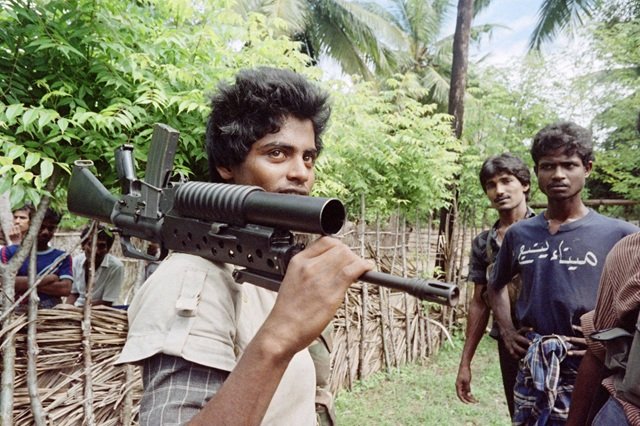
Uyangoda’s position on the LTTE requires particular care because his own answers contain a distinction that he makes at different points in the interview. At one point, when asked where his sympathies were misunderstood, his answer is transcribed as saying that he initially supported the LTTE and Tamil nationalist struggles, when it was just one of several Tamil militant groups. Later, however, he explicitly clarifies his position by saying, “I didn’t support the LTTE in later years, particularly after 1987, but I supported a negotiated settlement with the LTTE so that the war can be ended.” The distinction is important to his broader argument. He says that after 1987 he increasingly came to regard the war itself as the principal obstacle to peace and democracy. The war had militarised all sides to the conflict, all wanting military solutions. If democracy was to be protected and peace restored, he believed the war had to end, and that required a political settlement involving the Sri Lankan state and the LTTE and other militant groups. He contrasts this with the Sinhala nationalist position associated with the belief that there could be no political solution and that the conflict had to be settled militarily. The end of the war happened in 2009, but the military victory of the state has not produced a political settlement to the ethnic conflict. In his view, the absence of the war and the LTTE has, paradoxically, created a fresh opportunity for a new political settlement. According to Uyangoda, this political shift can be observed in Sinhala as well as Tamil society. Yet the political leaders who hold political power have ignored it. So, the old deadlock continues, and ironically the absence of the LTTE may have contributed to this protracted deadlock.
Meanwhile, the political leadership of the Tamil community is going through a painful change. The Tamil nationalist leaders of the older generation, with their upper-class and upper-caste backgrounds, have begun to lose popular support, despite the memories of an illustrious past. They might attempt to bring back the politics of hard-line ethnic identity politics, but Uyangoda thinks that the political consciousness and aspirations among the new generations have begun to change dramatically. He believes that new generations of Tamil and Muslim citizens have emerged without a corresponding emergence of new political leaderships with new political imaginations. His hope is for dialogue and conversation among the new leaders of the Sinhala, Tamil, Muslim and Malaiyaha Tamil societies to discover new frameworks of political accommodation that are defined by the union of both ethno-nationalist and class aspirations. Uyangoda observes that it is this fusion of ethnic and class politics in Sinhala, Tamil and Muslim societies that has enabled the NPP to establish a multi-ethnic and multicultural appeal across the country. He further comments that the NPP appears to be the sole political beneficiary of the demographic shifts in Sri Lankan Sinhala, Tamil and Muslim societies.
Uyangoda also believes that the military establishment remains an important factor determining the future of reconciliation. Still, the senior military leaders who experienced the war continue to believe that terrorism remains a security threat and that military power is the only reliable means of dealing with it. Uyangoda argues that it is psychologically difficult for those who fought the war to accept the full implementation of the 13th Amendment and the transfer of land-related powers to provincial institutions associated with Tamil political demands. He sees this resistance partly as due to the experience of several generations of military leadership whose political understanding had been shaped by the war and militaristic indoctrination. His answer is not simply to condemn that generation but to wait for a new generation of leaders, including within the military, who do not carry the same psychological burden and wounds of the conflict. Uyangoda argues that our civil society peace activists as well as the international custodians of Sri Lanka’s peace process don’t seem to realise that a protracted and extremely painful ethnic war requires a protracted peace and reconciliation process. He believes that new generations in Sinhala, Tamil, Muslim and Malaiyaha communities will inherit better opportunities to develop political relationships that are also not defined by the bitter memories of the war.
For Uyangoda, the possibility of such change depends less on academic sophistication than on political consciousness. When asked whether Sri Lanka possesses the academic rigour necessary for transformation, he answers that political consciousness is more important. He believes that such a consciousness already exists among Sinhala, Tamil, Muslim and Malaiyaha Tamil communities and that Sri Lankan politics has changed significantly since the early 2020s. He argues that the political consciousness of voters has moved beyond the old party structures and hard-line ethnic ideologies. In his assessment, people who previously supported the Rajapaksas will not easily return to them, while the traditional electoral bases of Ranil Wickremesinghe and the Samagi Jana Balawegaya are also insufficient to reproduce the old political order. Traditional Tamil parties, he says, are becoming smaller, while extreme Sinhala nationalism has lost much of the political role it once possessed. He describes the present moment as the most favourable historical moment Sri Lanka has had for changing its politics. Yet he also argues that the political language must change. He believes that concepts such as federalism, self-determination and even the 13th Amendment belong to earlier historical debates and have limited political validity among younger generations today. What matters now, in his view, is devolution and power sharing within a plural democratic Republic.
This argument about pluralism is also one of the places where Uyangoda acknowledges the strength of the opposition to his own position. He says the strongest intellectual challenge comes from traditional Marxism, which can regard pluralism as part of the liberal democratic mythology of bourgeois politics. Strong nationalists, meanwhile, can argue that pluralism threatens majority interests. He has personally experienced such hostility. Sinhala nationalists have accused him of assisting the LTTE, and he remembers seeing a poster that placed his photograph alongside that of Velupillai Prabhakaran. He says he did not object to the existence of such criticism because people have the right to express what they think. His objection is to nationalism itself when it refuses plurality and argues for homogeneity, and unity without diversity. Whether it is Tamil nationalism or Sinhala nationalism, he argues, nationalism becomes politically dangerous when it cannot accept the existence of multiple communities with equal political claims in contemporary nation-states. His alternative is not the removal of community identity but its incorporation into a plural democratic state.
That is also why he sees the transformation of the JVP into the NPP as historically significant. The movement that once believed the state had to be overthrown by force is now governing through elections, Parliament and constitutional institutions. Uyangoda does not consider this contradiction or shift to be evidence of a failure of the NPP. He regards it as an important political experiment at the present moment. Can a movement that has emerged from revolutionary politics use liberal democratic institutions to change a political system that itself contains structural protections for the existing elites? “They are working within the very system they want to change,” he says. “That’s why I am waiting and watching this process with great curiosity and deep concern. The old world may disappear relatively easily. But the birth of the new world can be quite painful,” he quips. Uyangoda says: “I think there’s a huge dilemma the NPP is grappling with.” His question is whether the liberal democratic constitution can hold while simultaneously being used to restore and deepen democracy, overcoming the limits of liberal democracy. He also notes that Sri Lanka’s constitution contains authoritarian features too. Yet he notes some significance in the fact that the present president has not used those powers arbitrarily. The government’s difficulty, in his reading, comes from its efforts to carry out structural changes within the limits of democratic constitutionalism.
The same tension informs his interpretation of the Aragalaya. He rejects the description of it as simply a youth protest. Youth were crucial, but he believes they were connected to other social movements and social groups. “We can’t call Aragalaya in Sri Lanka a mere Generation-Z protest,” he says. It was “a broad social movement”, a collective movement and a broad social class alliance. This is why he believes Sri Lanka offers lessons to protest movements elsewhere. Youth can initiate change and act as “harbingers” and “catalysers” of political transformation, but they cannot stop at bringing down a government through protest. “Youth are a necessary factor but it is not adequate for political change.” A protest movement must eventually develop a broad political movement and a broad social coalition. He points to experiences in Egypt, Bangladesh and elsewhere where protest movements created political vacuums that were subsequently occupied by other forces. The lesson, in his view, is that protesters need a programme with a political alternative. He sees the NPP’s presence as particularly significant because it was waiting side by side with the protest movement and was ready to occupy the political space that opened up after the collapse of the Rajapaksa regime. This coincidence, he argues, is what makes Sri Lanka an exception in comparative terms.
He sees the broader South Asian experience in similar terms. Protest movements in Sri Lanka, Bangladesh, Nepal, Indonesia and elsewhere represent, in his interpretation, a new type of people’s struggles for re-democratisation. The citizens involved may not use that theoretical vocabulary, but he believes the demand is fundamentally for refreshing our democratic imagination. They do not want to abandon democracy. They want a democracy that is truly and genuinely democratic. In Sri Lanka, he argues, citizens continue to trust democracy even though they have lost faith in the way political elites have practised and abused it. “Sri Lankan people are great believers in democracy. They trust democracy more than any other form of government.” But they now realise that what the politicians have offered them as democracy in the past is not the democracy they want. That distinction is central to his formulation of the country’s present crisis. “Sri Lanka has a very corrupt political system and a corrupt democracy. Sri Lankan citizens, particularly the youth, have inherited a de-democratised democracy.” He then identifies the challenge in equally direct terms. “The challenge today is to re-democratise Sri Lanka’s democracy.” The demand was visible in the Aragalaya, he says, and was reflected in the outcome of the 2024 elections. People did not want corruption to remain embedded within democracy. They did not want unaccountable representatives or governments. They did not want political power monopolised by one family or a handful of families, a small class of wealthy and privileged politicians. They wanted citizens as holders of sovereignty to become the owners of democracy rather than passive observers of how political and social elites misappropriate and abuse democracy.
“The challenge today is to re-democratize Sri Lanka’s democracy.”
His prediction about what happens next is nevertheless cautious in one respect. He believes the NPP will succeed, but says it must be watched because the coming months and the first six months of the next year are crucial because plots to destabilise the government are likely to proliferate. If the NPP fails in its reform offensive, he expects a restoration of the old political machine and what he describes as a revival of the old order, or the ancien régime. “What is happening now is like a counter-revolution against the NPP government and its popular mandate for change,” he says. “Slowly, the resistance of the ousted elites is taking place.” He does not think the old ruling class can easily return through electoral means. He says the political transformation that began visibly in 2022 represents the culmination of a much longer decline in the quality of Sri Lankan politics and democracy. “What happened in 2022? This explosion, this volcano that has been forming underneath.” He believes the old ruling class would find it extremely difficult to regain power through peaceful electoral means, although he cannot predict what might happen decades into the future. His concern is that if the restoration of the old order by peaceful means continues to be not possible, sections of the old political order in desperation might seek extra-electoral or extra-democratic routes to get power back. “We have to say prayers to God every morning and evening that the disempowered elites will not seek that path. Because they are so angry, so desperate, so impatient,” he says.
Yet his strongest emphasis remains on the political significance of ordinary citizens. He sees a division between sections of the Colombo elite, including some journalists serving a tiny class of new media moguls, on the one hand and the vast majority of ordinary people on the other. He argues that the political class of the elites had abandoned democracy long ago while continuing to present themselves as its guardians and true representatives. “They have constantly abandoned democracy, hurting democracy, wounding and abusing democracy. That is what elite capture has done to democracy.” For decades, he says, ordinary people accepted the promises made by the political elites, allowing themselves to be deceived. The experience of the past few years shows that the politics of deception has lost its appeal and validity. “Now Sri Lankan people cannot be deceived easily.” This is why he describes what has happened as a qualitative transformation rather than simply another change of government. “Sri Lankan politics has gone through a paradigm shift.” In his reading, political power has effectively moved away from the old elites and towards the demos, the ordinary citizens whom he believes were the real owners of democratic sovereignty all along.
When asked what he would say to the young man he was in 1971, after all the years that separate the revolutionary activist from the political scientist sitting in his Colombo home, his answer is strikingly simple. “Never abandon political hope for a better society and a better political system.” Then he adds, “And always be an idealist.” There is no attempt in that answer to erase the revolutionary young man he once was. The politics changed, the theory changed, his understanding of violence changed, his interpretation of democracy changed and his relationship with the state changed, but the belief that political systems can and should be made better remained. His prison years altered his understanding of the individual. His reading altered his understanding of the revolution. His academic work altered his understanding of the state. The ethnic conflict altered his understanding of pluralism and citizenship. The Aragalaya altered his understanding of the political agency of ordinary people. And the NPP has become, for him, the latest test of history: whether a political movement that emerged from the history of revolutionary opposition can transform itself sufficiently to govern while remaining committed to constitutional democracy.
“People, demos, are the true owners of democracy. And democracy had been captured by the elites.”
The question he leaves hanging over the present is not whether Sri Lanka should have democracy, because he believes the people have already answered that. They want democracy. The question is what kind of democracy they will accept, who will control it, how far the new political leadership will be allowed by its detractors to transform the state without abandoning democratic constitutionalism, and without resorting to violence. Or indeed whether the political class that has dominated Sri Lanka for decades can adapt itself to a new society in which the old assumptions about political power no longer carry any validity.