The United States and China should develop a common language for identifying and responding to artificial intelligence risks rather than trying to resolve their broader technology rivalry, a Chinese think tank affiliated with the Ministry of State Security has argued.
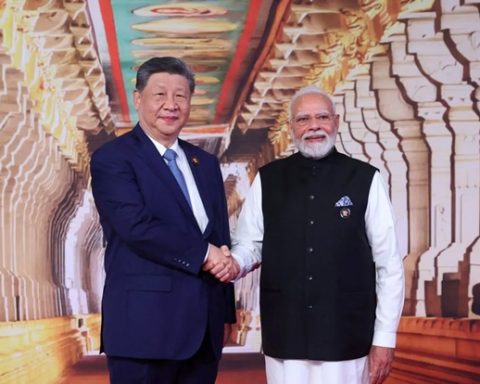
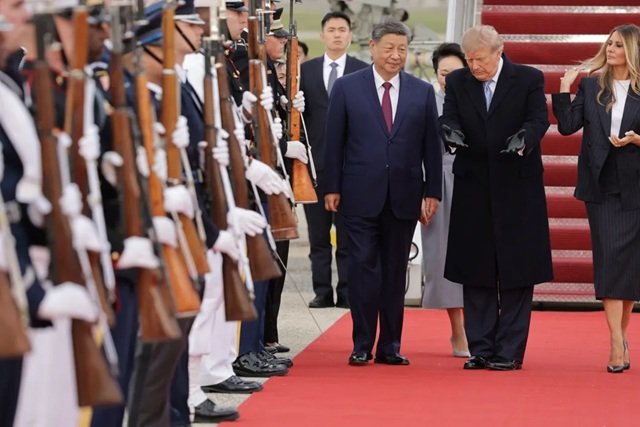
The recommendation from the China Institutes of Contemporary International Relations (CICIR) comes days after Chinese President Xi Jinping and US President Donald Trump agreed to establish a formal AI dialogue mechanism during their summit in Washington. The two leaders agreed to exchange views on the risks and benefits of AI and create a bilateral communication channel for AI-related incidents, with the next dialogue scheduled for November.
Liu Chong, director of CICIR’s Centre for Sci-Tech and Strategic Studies, said the dialogue should begin by establishing a shared understanding of emerging AI risks and gradually building trust between the two countries. In an article published on Monday, he argued that the rapid development of AI made it unlikely that a single threshold could permanently distinguish safe technology from unsafe technology.
Instead, Liu proposed a dynamic system based on “risk changes and response levels”, rather than attempting to establish an abstract “red line”. He said the fluid nature of what he described as “superintelligence risks” meant that international governance should initially focus on developing mutual understanding rather than attempting to create comprehensive rules.
“This is where China and the US first need to get on the same page,” Liu wrote.
The terminology itself has become part of the emerging dialogue. A White House statement following last week’s summit said the two leaders had agreed to use “superintelligence” rather than “artificial intelligence” for the technology under discussion. Beijing has said it respects the US choice of terminology and that continued communication will be necessary as the technology develops.
Liu said cooperation would not require the two countries to adopt identical industrial policies or share sensitive technology. “China and the US do not need to adopt the same AI industrial policies, nor do they need to share model parameters and core technologies,” he wrote.
Instead, he called for a common set of risk terms that could be understood by governments, companies and researchers in both countries. Such terminology would cover questions including what constitutes dangerous autonomy, when model behaviour should be treated as a security incident and when AI training should be slowed or halted.
The proposal comes as Washington and Beijing continue to compete over advanced technology, including US restrictions on China’s access to advanced chips and AI capabilities. CICIR also called for stronger oversight of frontier AI companies, arguing that a small group of leading firms “should not determine” the direction of AI governance.
Liu said the largely closed-source nature of US frontier AI models and limited transparency had increased concerns beyond the companies developing them. “US companies should take the lead in disclosing information about AI risks,” he wrote.
The issue has become particularly contentious as Anthropic chief executive Dario Amodei has argued that the US should preserve its technological lead over China and maintain restrictions on the sale of advanced AI chips and chipmaking equipment to Beijing. Chinese officials have rejected that approach and called instead for international cooperation on AI.
Liu said the central challenge was whether the two countries could preserve sufficient “trust space” for cooperation while technological competition continued or intensified. “The goal of dialogue should be to establish a minimum framework for managing risks that could survive even as the US-China technological competition continues or intensifies,” he wrote.
He also argued that global AI governance should extend beyond the management of risks between the two countries, with mature and widely applicable AI safety capabilities made accessible as public goods. “The governance of superintelligence must look beyond merely curbing the spread of offensive risks,” Liu wrote. “It must also actively promote the adoption of defensive safeguards.”