The latest issue of Merkur, the German journal, takes aim at one of the increasingly popular descriptions of contemporary capitalism: “neofeudalism”. The term has gained currency as political and economic power becomes concentrated among wealthy individuals, financial institutions and technology companies, while international institutions weaken, inequality expands and private actors exercise greater influence over public life. But the essay argues that before replacing familiar concepts such as capitalism, neoliberalism or fascism with another “ism”, it is necessary to establish what, precisely, has changed.
The question arises amid a series of unsettled developments: geopolitical shifts, weakening international institutions, widening social inequality, artificial intelligence, the growing influence of Silicon Valley technology entrepreneurs, uncertainty surrounding political leadership in Washington and the rise of right-wing populism. The resulting uncertainty has generated competing diagnoses. Is the West still experiencing post-democracy, or signs of fascism? Does neoliberalism remain an adequate description? And can a system marked by enormous inequalities and declining prospects for upward mobility still be understood through the traditional assumptions of competitive capitalism?
“Neofeudalism” attempts to answer by identifying three characteristics: increasingly rigid social inequality resembling class barriers; expanding private control over markets, political decisions and the public sphere; and the weakening of universally binding rules in favour of deals, self-regulation and private arbitration. The concept is not new. In 1962, Jürgen Habermas wrote about the “refeudalization” of the public sphere, arguing that modern public life was retreating towards the representation of privileged status and private power. More recent writers have applied the term to corporate hierarchies, precarious platform work, financialised capitalism and the dominant position of online platforms. David Graeber compared corporate management structures with courtly hierarchies, Jodi Dean described precarious service workers dependent on platforms as a new subproletariat, Michael Hudson focused on the dominance of finance, insurance and real estate, while Yanis Varoufakis and Cédric Durand have characterised digital platforms as feudal fiefdoms.
Yet the moral clarity of “neofeudalism” may be precisely what weakens it as an analytical concept. Feudal manorialism and industrial capitalism were structured around fundamentally different economic relationships. In feudal society, peasant households were largely subsistence-oriented and owed dues to lords who appropriated part of their production through extra-economic power. Industrial capitalism, by contrast, developed technologically advanced and specialised production, wage labour and market exchange. Capitalists, in the conventional model, obtain profits through economic processes and must reinvest to remain competitive.
The distinction becomes important when examining income. Classical economists identified three principal forms: wages for labour, profits for capital and rents derived from privilege. Rent, unlike profit, represents income secured through control of a scarce resource or privileged position. Land was the classic example. John Stuart Mill wrote that landowners could become richer “in their sleep, without work, without risk, without saving”. Modern capitalism, however, has also generated rents through market-dominating corporations, access to finite resources, infrastructure monopolies and intellectual-property protections.
Monopoly, therefore, does not automatically establish a new economic system. Marx regarded the tendency towards monopoly as an inherent feature of competition, while an owner who delegates management remains a capitalist. The essay nevertheless identifies a possible break when private monopolies begin to exercise powers previously associated with democratic institutions. Peter Thiel’s assertion that “competition is for losers” becomes significant in this context because monopoly, freed from competitive pressure, can pursue broader projects of social transformation while influencing public opinion, democratic processes and even legal arrangements through private arbitration.
Financialisation provides another example. The essay argues that private banks possess the privilege of creating money through lending, while the financial system has increasingly shifted from supporting long-term industrial development towards short-term financial returns. Companies have favoured share buybacks, dividends, asset sales and relocation over research and development. Adam Tooze’s calculations, cited in the essay, suggest that German car manufacturers possessed funds comparable to the sums allegedly used by the Chinese government to subsidise the development of electric mobility, but directed resources towards dividends rather than research and development. Only 10 per cent of British bank lending now goes to manufacturing, according to the figures cited, while 90 per cent finances property and financial investments.
Digital platforms present another form of rent extraction. Amazon, Google and Spotify can occupy positions in which users and businesses become dependent on infrastructure controlled by the platform itself. Amazon can simultaneously operate a marketplace and compete with businesses using it, while gaining privileged access to their data. Varoufakis summarises the relationship bluntly: “Digital platforms may look like markets, but they are fiefs.”
The argument ultimately returns to the difficulty of defining value itself. Thomas Piketty’s famous formula, “r > g”, describes the concentration of wealth when returns on capital exceed economic growth, but the essay asks where those returns originate. A substantial portion, it argues, comes from asset inflation and other forms of rent rather than expansion of real production. Neoclassical economics, meanwhile, tends to treat payments as expressions of value creation, making rents difficult to distinguish from profits.
That distinction has always been political. Physiocrats defended land as the source of wealth; classical economists placed labour at the centre; Marx used labour theory to challenge capitalist ownership; and neoclassical economics developed subjective value theory, presenting exchanges between labour and capital as mutually rewarding. Even the classification of financial services as productive contributions to gross domestic product reflects this contest over what counts as value.
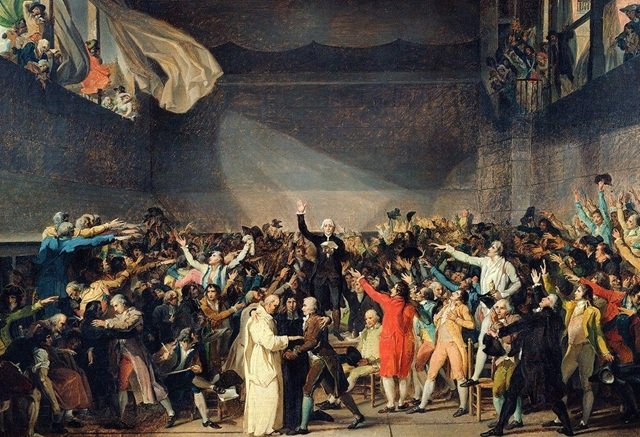
History complicates the argument further. Capitalism emerged partly through feudal structures, including credit financing for wars of conquest, while sections of the old landed elite became rentiers, investors and participants in imperial enterprises. The French Revolution abolished or transformed feudal privileges only cautiously because its defenders of private property feared that attacking inherited rights too radically could also undermine modern property itself.
The essay therefore cautions against treating “neofeudalism” as a simple replacement for capitalism. The deeper continuity may be the persistence of inequality under changing institutional forms. Its final historical reference comes from Lampedusa’s Il Gattopardo: “If we want everything to stay the same, then everything has to change.” Knowing that modern capitalism developed from, and retained elements of, feudal society may make the language of its “return” less straightforward than it first appears.