King Khalid International Airport in Riyadh was reportedly struck on Saturday, 10 October 2026, killing 12 people and injuring 309 others. The attack has been attributed in the supplied account to Ansarallah, the Houthi movement in Yemen, which is described as operating with Iranian direction and support. The escalation comes amid a renewed phase of the Yemen war, following a Saudi-led military offensive referred to as “Operation Yemen Dawn”. The offensive was launched in response to earlier clashes involving flights, airport access and blockades.
Following the reported killing of Iran’s religious leaders on 28 February 2026, the Islamic Revolutionary Guard Corps (IRGC) is said to have assumed a central role in the country’s strategic decision-making. Ansarallah is a key member of Iran’s so-called Axis of Resistance, a network of regional partners and allied armed groups through which Tehran projects influence. The supplied account argues that the IRGC is using attacks by its partners and proxies to strengthen Iran’s regional position amid the wider conflict involving the United States and Israel.
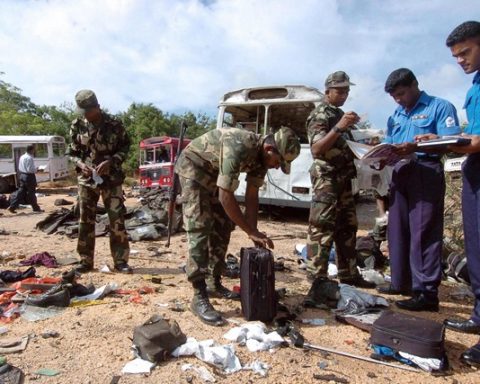
Saudi Arabia’s General Authority of Civil Aviation (GACA) reportedly confirmed that the attack on King Khalid International Airport caused 12 deaths and left 309 people injured. The reported fatalities included four Saudi citizens, two Bangladeshi nationals, and one citizen or national each from the United States, Egypt, Jordan, Syria, Palestine and Sudan. The strike reportedly caused extensive damage to passenger facilities, particularly the complex housing Terminals 3 and 4, which serve domestic flights. Airport operations were temporarily suspended, flights were diverted, and the affected complex was evacuated. GACA advised travellers to check directly with their airlines for updates before travelling to the airport.
The attack comes amid a broader escalation involving Ansarallah. According to the supplied account, the group had claimed responsibility for separate strikes on the same airport earlier in the week, reportedly killing three people. The latest incident raises concerns about further retaliation and the possibility of additional attacks causing significant casualties. Ansarallah, one of Iran’s most prominent regional partners, has targeted Saudi Arabia in response to Riyadh’s continued support for Yemen’s internationally recognised government. The extent of Iranian direction, however, should be distinguished from the group’s own strategic calculations and should be established through evidence rather than assumed.
US Secretary of State Marco Rubio reportedly condemned the airport attack and said the administration was in close contact with Saudi partners following the death of an American citizen. Meanwhile, five US Air Force aerial refuelling aircraft reportedly crossed the Atlantic as the Pentagon prepared to reinforce its military posture against Iran and Ansarallah. Such aircraft, including the KC-135 Stratotanker, serve as airborne refuelling platforms, extending the operational range of combat aircraft and supporting sustained military operations. The supplied account also claims that seven KC-135 aircraft had been destroyed or damaged during the US–Iran war, a figure that requires independent verification.
The reported military preparations suggest that Washington is considering a wider range of options as attacks on regional infrastructure intensify. Following the death of an American citizen in the Riyadh airport attack, President Donald Trump was asked what would happen next. He reportedly replied: “You’re going to find out.” The remark offered no specific indication of the administration’s next move but added to uncertainty over whether the United States would resume direct military action against Iran or intensify operations against its regional partners.
The US Embassy in Riyadh reportedly warned American citizens to avoid King Khalid International Airport and the surrounding area following the attack. US government employees were also said to require special permission to use the airport. The reported damage to Terminal 3, including the collapse of sections of its ceiling after a missile struck the roof, illustrates the potential consequences of attacks on civilian transport infrastructure. The incident also raises questions about airport security, the protection of international travellers and the wider risks to commercial aviation as regional hostilities intensify.
Iran’s regional strategy relies on a combination of military capabilities, partnerships with armed groups and its geographical position near critical maritime routes. The Strait of Hormuz, through which a substantial share of the world’s seaborne oil trade passes, is particularly important to global energy security. Iran’s neighbours, including Saudi Arabia, host US military facilities, reinforcing Tehran’s perception that it faces a regional security environment shaped by American military power. Through its regional partners, Iran can exert pressure on rival governments and commercial interests beyond the immediate areas of direct confrontation. However, the strategic objectives of these partners do not necessarily coincide in every respect with those of Tehran.
The renewed hostilities in Yemen have been driven by the struggle for territorial control and influence between Ansarallah and the internationally recognised government, which receives Saudi support. According to the supplied account, Saudi Arabia and allied forces launched a major offensive in October 2026 to reverse Ansarallah’s military gains. The confrontation intensified after Saudi Arabia reportedly bombed Sana’a airport in July 2026 to prevent an Iranian aircraft carrying officials and IRGC personnel from landing. Ansarallah subsequently retaliated against Saudi transport networks and infrastructure. Clashes involving airports and runways were followed by restrictions on maritime movement in the Red Sea and a series of economic demands.
Ansarallah has sought to increase pressure on its opponents by targeting infrastructure and commercial routes. Its reported demands include higher public-sector salaries in Yemen, the full reopening of Yemeni ports and airspace, and a share of the country’s oil revenues. These demands reflect the connection between the military conflict and Yemen’s prolonged economic and political crisis. Saudi Arabia, meanwhile, seeks to protect its security interests and support the internationally recognised government. The confrontation has consequently become part of a wider contest involving regional alliances, Iranian influence and the security of international trade.
Commercial shipping has also come under threat. On 9 October 2026, the Panama-flagged supertanker GEM NO. 2, reportedly carrying two million barrels of Saudi crude oil, was struck by an unidentified projectile off the coast of the United Arab Emirates at approximately 10:00 GMT. The vessel, classified as a very large crude carrier (VLCC), was reportedly anchored about 13 nautical miles west of Al Jazeera in the UAE. All 22 Indian crew members were said to be safe, although the incident caused a fire on board that the crew managed to extinguish.
The United Kingdom Maritime Trade Operations (UKMTO) and maritime risk-monitoring organisations reportedly described the incident as an attack involving an unidentified projectile or drone. Iranian state-linked sources, by contrast, alleged that the vessel had struck a naval mine. No state or armed group had formally claimed responsibility in the account provided. Although regional tensions have fuelled suspicions of Iranian involvement, responsibility for the attack remains unconfirmed. The incident nevertheless highlights the vulnerability of commercial shipping beyond the Strait of Hormuz itself. A tanker operating outside the strait may still face substantial risks if attacks extend into neighbouring waters.
Other reported incidents point to a wider pattern of maritime insecurity. Between 1 and 11 October 2026, nine vessels, mostly crude-oil tankers, were reportedly struck in the Strait of Hormuz or off the coast of Oman. The account also refers to at least 12 tanker attacks during the peak week ending 4 October, although these figures require clarification to establish whether they refer to separate incidents or overlapping reporting periods. On 7 or 8 October, the Antigua and Barbuda-flagged oil and chemical tanker Acers was reportedly hit by multiple projectiles approximately 51 nautical miles from Madinat al-Shamal, off the coast of Qatar. A separate report described a major fire aboard a vessel in the Strait of Hormuz, allegedly after it failed to comply with Iranian maritime regulations. The circumstances of that incident, including the cause of the fire, require further confirmation.
These developments suggest that the strategic focus of the Middle East conflict is extending beyond direct attacks on military installations and command centres. The war that began with US and Israeli strikes on Iran on 28 February 2026 has increasingly affected maritime transport, energy infrastructure and the broader global economy, according to the account presented here. The Strait of Hormuz remains a critical pressure point, while the Red Sea and the Bab al-Mandab Strait have become increasingly important to the confrontation involving Saudi Arabia and Ansarallah. The conflict is therefore acquiring an additional dimension: the use of vulnerable transport networks and maritime chokepoints to impose economic and strategic costs on adversaries.
A military victory or a limited naval truce alone is unlikely to resolve these interconnected disputes. A durable settlement would require progress towards ending the wider regional conflicts involving Iran and Israel, reducing the repercussions of the war in Gaza, and reaching a political settlement to Yemen’s civil war. It would also require credible security arrangements for shipping through the Bab al-Mandab Strait and the surrounding waters. These issues cannot easily be separated because the incentives and capabilities driving attacks on shipping are closely connected to the wider regional confrontation.
Saudi Arabia’s support for Yemen’s internationally recognised government remains central to the conflict. The government’s reported October 2026 offensive, referred to in the supplied account as “Operation Dawn of Yemen”, seeks to reverse Ansarallah’s control over Sana’a and parts of the Red Sea coast. The future of maritime security will depend partly on the outcome of this renewed fighting and on whether Yemen’s state institutions can recover sufficient territorial control to enforce security arrangements. Ansarallah’s position in coastal areas and islands around the Bab al-Mandab Strait gives it the potential to threaten one of the principal routes connecting the Indian Ocean with the Red Sea and the Mediterranean.
Any lasting settlement would therefore require more than temporary assurances. It would need enforceable security guarantees, measures to curb illicit weapons transfers, monitoring arrangements and cooperation among regional powers, including Saudi Arabia, as well as international bodies such as the United Nations. Previous arrangements, including short-lived agreements in 2025 and selective understandings that offered protection to certain national shipping interests, have been criticised for leaving wider maritime threats unresolved. An inclusive diplomatic framework would be more likely to address the underlying sources of insecurity than separate agreements that protect particular states or vessels while leaving other shipping exposed. Given the scale of the disputes, a comprehensive ceasefire remains difficult to secure in the immediate term.
The prospect of renewed US military action against Iran adds another layer of uncertainty. In a Truth Social post dated 8 October 2026, Trump reportedly stated that the United States “will not be attacking Iran at any time prior to the Midterm Elections”, while claiming that the two countries were engaged in “productive discussions”. Less than 24 hours later, on 9 October, he appeared to soften that position. Asked by reporters whether military action was linked to the election timetable, he reportedly replied: “We may. I mean, we’ll see.” These statements indicate that the administration had not ruled out further military action, but they do not establish that strikes would necessarily follow the elections.
Trump has also reportedly accused Iran’s leaders of trying to prolong the confrontation until November in the hope of damaging Republicans politically. According to the supplied account, he has said that he expects to “win the war after the vote”. Administration officials were reported on 7 October to have said that the White House had previously asked the Pentagon to prepare military options against Iranian targets. Meanwhile, the United States has maintained a naval blockade, although direct military exchanges had reportedly become less frequent in the weeks leading up to October. Diplomatic efforts stalled in late September after Trump rejected an Iranian proposal to reopen the Strait of Hormuz in exchange for the lifting of the US blockade on Iranian ports.
Whether the conflict escalates after the US midterm elections on 3 November 2026 will depend on several factors, including Washington’s decisions, Tehran’s response, the actions of regional partners and the prospects for renewed diplomacy. Ansarallah’s military operations could further complicate attempts to contain the confrontation, particularly if attacks continue against Saudi infrastructure and international shipping. The essential question is whether the conflict can be contained through negotiated security arrangements or whether pressure on regional transport networks will draw additional states into direct military action. The emerging pattern is one in which the struggle for strategic advantage increasingly extends beyond conventional battlefields to airports, oil tankers, energy supplies and maritime chokepoints, exposing the wider global economy to the consequences of a prolonged regional war.