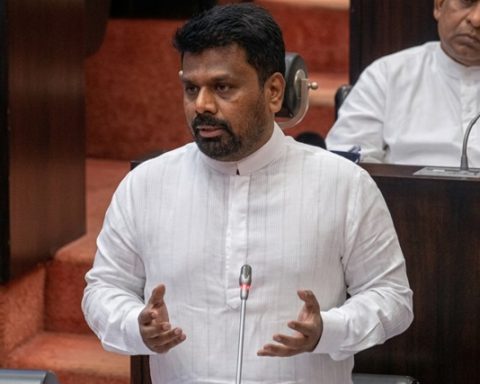
Sri Lankan President and Finance Minister Anura Kumara Dissanayake presented a Rs 2 trillion public investment programme and a second round of income tax reductions in the Government’s 2027 Budget on 12 November, alongside higher public sector allowances and an additional Rs 260 billion for reconstruction following Cyclone Ditwah.
Presenting the third Budget of the National People’s Power (NPP)-led Government in Parliament, Dissanayake said its principal objective was “to move from economic stability towards transformation”. The proposals include raising the monthly income tax-free threshold, expanding infrastructure investment, increasing welfare allocations and providing concessionary financing for businesses. The additional reconstruction spending is expected to widen the fiscal deficit to 4.5% of GDP.
Under the tax proposals, the monthly income tax-free threshold will increase from Rs 150,000 to Rs 162,500 from April 2027. The rate applicable to the first income slab after the 6% band will fall from 18% to 12%, while the highest rate of 36% will apply only to monthly income exceeding Rs 433,000, compared with the existing threshold of Rs 358,000. Individual taxpayers are expected to save between Rs 750 and Rs 15,750 monthly, reducing Government revenue by Rs 16 billion.
Other tax concessions include removing Value Added Tax (VAT) from books, exercise books, dictionaries and children’s colouring books, abolishing the Tourism Development Levy and reducing CESS rates on 800 import tariff lines by 25%. The Special Commodity Levy on imported sprats will fall from Rs 100 to Rs 10 per kilogramme, while the levy on Maldive fish will decline from Rs 302 to Rs 10. The levy on dried chillies will also be reduced by Rs 50 per kilogramme. However, the levy on imported sugar will increase by Rs 10 to protect domestic producers.
The Government will simultaneously expand taxation to cover capital gains from cryptocurrencies, telecommunications licences and high-value gems and jewellery. Income from online advertising and cloud services will also be taxed according to where payments are made.
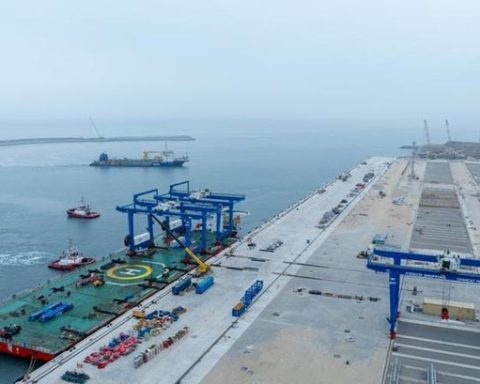
Infrastructure accounts for a major share of the proposed expenditure. The Government has allocated Rs 80 billion to begin electrifying the Kelani Valley, Main and Coastal railway lines, a programme expected to cost more than Rs 1,200 billion. Another Rs 30 billion will fund the Kurunegala-to-Galewela section of the Central Expressway, while Rs 27 billion is allocated for the Ruwanpura Expressway. A total of Rs 487 billion has been earmarked for highways, expressways and railways. Overall capital expenditure is projected at Rs 2 trillion, equivalent to 5.12% of GDP.
The Budget also provides for substantial increases in public sector allowances. The monthly Disturbance, Availability and Transport (DAT) allowance for medical officers will rise from Rs 70,000 to Rs 95,000, while nurses’ special duty allowance will double to Rs 12,000. University academics, High Court judges and judicial officers will receive an additional Rs 25,000 monthly. Most increases will be implemented in two stages, beginning in July 2027 and continuing in 2028.
Pensioners who retired between 2020 and 2024 will receive an interim monthly allowance of Rs 2,500 from July 2027. The Government has also allocated Rs 230 billion for social protection programmes, including Aswesuma, while monthly allowances for kidney patients and persons with disabilities will increase from Rs 10,000 to Rs 12,500.
The fiscal deficit is estimated at Rs 1,493 billion, or 3.8% of GDP, before incorporating the additional Rs 260 billion supplementary estimate for Cyclone Ditwah reconstruction. With that provision, the deficit will reach Rs 1,753 billion, or 4.5% of GDP, compared with 3.7% in 2026. Revenue is projected at 15.8% of GDP, while gross borrowing requirements are estimated at Rs 3,800 billion.
Dissanayake said part of the Rs 500 billion previously approved by Parliament for reconstruction had remained unused, citing several reasons, including the war in the Middle East. The additional estimate is intended to finance the recovery programme.
The Budget also addresses Sri Lanka’s future engagement with the International Monetary Fund, whose current Extended Fund Facility programme concludes in March 2027. A Cabinet-appointed committee headed by the Deputy Minister of Finance and Planning will assess whether another programme is necessary and what form it should take.
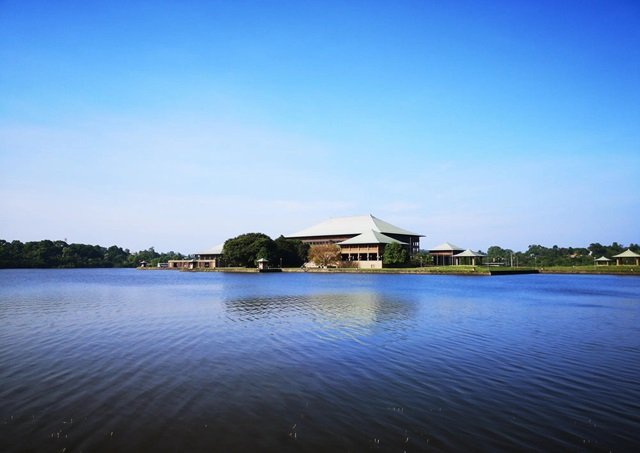
Parliament will now debate the Appropriation Bill.