More than halfway through 2026, the West Asia crisis continues to expose deep vulnerabilities in the global energy system, with Asia bearing a disproportionate share of the risk. The International Energy Agency’s August Oil Market Report makes clear that the shock is far from over, while the geography of energy dependence raises a more fundamental question: can a global energy-security system designed for a different era adequately protect the countries now most exposed to disruption?
The answer is increasingly difficult to ignore.
Asian economies remain heavily dependent on energy supplies moving through the Strait of Hormuz. Before the conflict, Japan obtained 94 per cent of its crude oil from West Asia. For the Philippines, Vietnam, Thailand and South Korea, the corresponding figures were 97, 87, 74 and 69 per cent.
India faces a different but equally significant vulnerability. It imports about 60 per cent of its liquefied petroleum gas consumption, with 90 per cent of those supplies coming through the Strait of Hormuz. In 2024, 84 per cent of crude oil and 83 per cent of liquefied natural gas moving through the Strait went to Asian markets.
The numbers reveal a striking imbalance. The principal energy route at the centre of the crisis is overwhelmingly important to Asian markets, yet the international system responsible for energy security does not reflect Asia’s exposure.
The International Energy Agency, a central pillar of that system, has 32 members, but only three are from Asia. European members have also been more cautious about releasing emergency reserves, viewing the crisis as primarily Asian. For countries facing immediate supply pressures, that creates a structural problem: the region carrying much of the risk does not necessarily possess the reserves, institutional influence or collective mechanisms required to manage it.
The shortage of strategic reserves makes the vulnerability more acute. Many Asian countries lack the financial resources to develop their own emergency stockpiles. India’s oil reserves cover only nine to 10 days of net imports, with another 64 days available through operational refinery stocks, according to analysis from the Council on Energy, Environment and Water.
Elsewhere, reserve levels in Vietnam, Indonesia, Cambodia and Laos stand at 65, 25, 30 and 40 days respectively. Several other countries in the region have no government reserve system at all.
The problem extends beyond crude oil. Asia’s exposure to liquefied natural gas is similarly pronounced. Dependence on LNG through the Strait of Hormuz reached 27 per cent in 2025, compared with 9 per cent for Europe. For Pakistan, Bangladesh, India, Singapore and Taiwan, the figures were 99, 60, 59, 46 and 34 per cent respectively.
LNG storage presents another complication. Reserves are limited to a few weeks because of boil-off losses during storage and a lack of underground gas-storage capacity.
The consequences are already visible. LPG shortages in India and shortages of gasoline and diesel in the Philippines and Vietnam have resulted in panic buying and long queues at service stations. What is emerging, therefore, is not simply a disruption to international commodity markets but an Asian energy crisis with consequences extending from household consumption to national economic resilience.
Yet the response is beginning to shift from individual national measures towards regional cooperation.
India and Japan have emerged as important participants in that effort. In July 2026, Indian Prime Minister Narendra Modi and Japanese Prime Minister Sanae Takaichi agreed to a new partnership on energy resilience, focusing on strategic petroleum reserves and resilient supply chains.
Japan’s POWERR Asia Initiative, announced in April 2026, pledged 1.5 trillion yen (US$10 billion) to help Asian countries purchase expensive energy and build emergency oil reserves. At the Asia Zero Emission Community Online Summit that month, a broader vision of regional cooperation also began to take shape.
India has meanwhile responded to the crisis through a combination of domestic production, infrastructure and diplomacy. It boosted domestic LPG production and diverted industrial gas towards LPG manufacturing, producing 54,000 metric tonnes of LPG within a week.
The government also rolled out piped natural gas connections for more than 1.1 million households in a short period, helping stabilise domestic demand while avoiding fuel rationing. State-owned oil marketing companies incurred losses of around US$7.8 billion to shield consumers and farmers from global price spikes.
Diplomatically, India expanded its energy sources from 25 countries to around 40. Today, 70 per cent of its crude imports come from routes outside the Strait of Hormuz, demonstrating how diversification can reduce exposure to a single strategic chokepoint.
But oil and gas are only part of the problem. Any Asian energy-security system must also address electricity resilience, bringing the Asean Power Grid into the centre of the discussion.
In October 2025, Asean energy ministers endorsed an Enhanced Asean Power Grid Memorandum of Understanding and launched the APG Financing Initiative, backed by a US$10 billion commitment from the Asian Development Bank and World Bank.
Eight interconnection projects are already underway across Laos, Thailand, Cambodia, Vietnam, Malaysia, Singapore, Indonesia and Brunei. The Laos-Thailand-Malaysia-Singapore Power Integration Project has entered its second phase, with multilateral and multidirectional power trading under way and electricity supplies to Singapore doubling to 200 megawatts.
The Asean Power Grid demonstrates what regional cooperation can achieve through physical infrastructure, although it remains a work in progress. The Asia Zero Emission Community, with 11 member countries including Japan, Australia and most Asean nations, provides a wider political framework.
Bringing the two together could create a broader Asian governance architecture capable of coordinating financing, standardising regulations and ensuring that regional energy integration benefits countries most exposed to disruption.
Such an architecture would require four central elements: Asian-led decision-making; financial and technical assistance to build emergency oil reserves; stronger resilience in LPG and LNG infrastructure, including receiving capacity and storage; and a mechanism for mutual support in supplying energy and oil products during crises.
Japan and India are positioned as natural partners in such an effort. Japan brings advanced capital and technology, while India brings scale, a supportive regulatory environment and experience in international initiatives. India is already an energy lifeline for Nepal and Bhutan, anchoring regional power integration.
The crisis has therefore exposed more than the vulnerability of individual countries. It has revealed a mismatch between where energy risks are concentrated and where global energy-security decisions are made.
Asia has been a rule-taker in the energy conversation for too long. The Asean Power Grid demonstrates what can be achieved through cooperation on infrastructure, while the Asia Zero Emission Community demonstrates the potential of cooperation on policy.
The challenge now is to connect the two.
The argument is no longer simply about securing supplies during the next disruption. It is about whether Asia can build an energy-security system that reflects the realities of the region most exposed to the crisis.
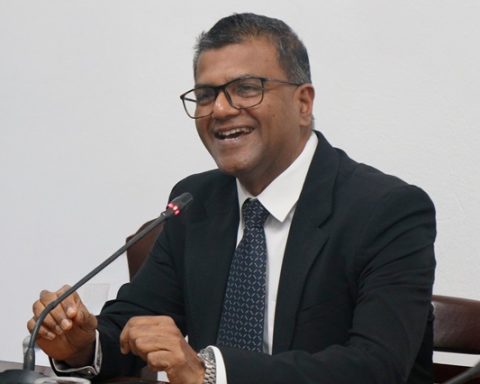
Tatsuya Terazawa is chairman and chief executive officer of the Institute of Energy Economics, Japan, and Dr Arunabha Ghosh is founder and former chief executive officer of the Council on Energy, Environment and Water.