


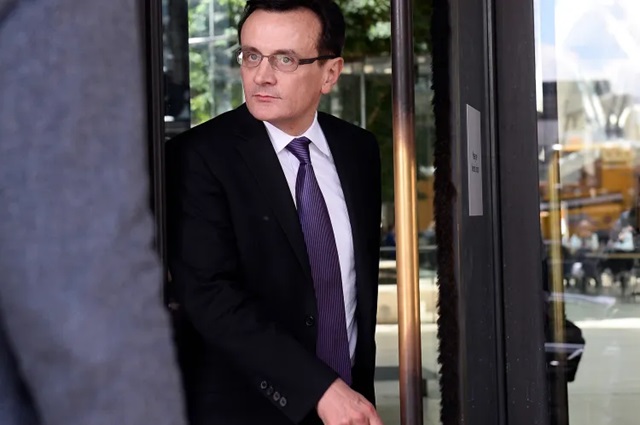
Sir Pascal Soriot, chief executive of AstraZeneca, has expressed a private desire to move the company’s primary stock market listing from London to the United States, according to sources cited by The Times UK. The move, if pursued, would be a major blow to the London Stock Exchange and the UK’s life sciences sector, where AstraZeneca currently holds the position of the most valuable publicly listed company, with a market capitalization of around £157 billion.
Soriot, who has led AstraZeneca since 2012, is said to be increasingly frustrated with the UK regulatory environment, particularly restrictions imposed by the National Institute for Health and Care Excellence (Nice) on new medicines such as the breast cancer drug Enhertu. He is also reportedly discontent with pricing controls under an NHS sales rebate scheme, which some industry figures argue stifles innovation and discourages investment.
While AstraZeneca has declined to comment on the reports, insiders familiar with Soriot’s thinking say that he has not only discussed moving the company’s listing but has even floated relocating its corporate domicile. Such a decision would likely face pushback from the company’s board and the UK government, which reportedly has not been informed.
The idea of a listing move comes at a time when other major UK-based companies with strong US operations — including Ashtead, Flutter, CRH, and Ferguson — have also shifted their primary listings to American exchanges in search of larger capital markets and investor bases.
AstraZeneca, which was formed in 1999 through the merger of the UK’s Zeneca and Sweden’s Astra, already trades American depositary receipts (ADRs) in the US. Under Soriot’s leadership, the company has transformed its drug pipeline and financial standing, rebuffing a £69 billion takeover attempt by Pfizer in 2014 and heavily investing in both the US and China.
Although AstraZeneca committed over £1.1 billion to a research and development center in Cambridge, the company has since pulled back on some UK-based investments. It scrapped plans in January for a £450 million expansion of its flu vaccine plant in Liverpool due to delays in government funding, and previously chose Ireland over Britain for a $360 million manufacturing plant due to more favorable tax conditions.
AstraZeneca’s US investments have grown significantly, accounting for over 40% of its $54 billion revenue last year. In March, it announced a $2.5 billion investment in Beijing and plans for a new R&D hub there. In April, Soriot warned that unless Europe improves access and incentives for pharmaceutical innovation, jobs could shift toward the US.
Despite the uncertainty around the company’s future listing, AstraZeneca shares were trading up 0.8% at £102.02, representing a 20% gain over five years but a 24% drop from a peak last summer. As reported by The Times UK, any formal move to the US would represent a strategic pivot and potentially reshape the global pharmaceutical landscape.












