


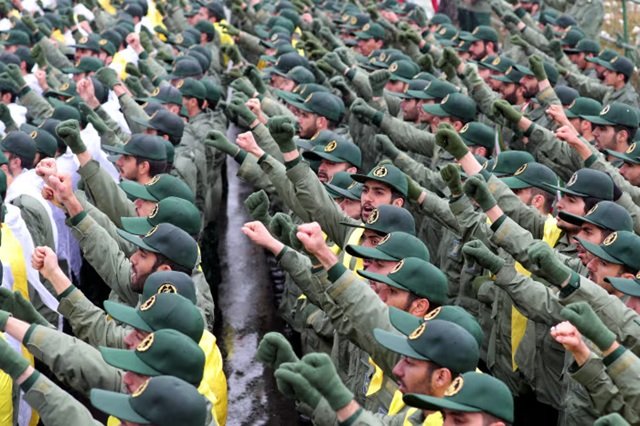
Iran’s Islamic Revolutionary Guard Corps (IRGC) has issued an unusually direct appeal to the American public, academics, students and journalists, declaring that Iran has prevailed in the seven-month war with the United States and Israel while urging Americans to challenge the political leadership in Washington.
The 25-page open letter, issued on 29 September, argues that the conflict should be judged by whether Washington and Tel Aviv achieved their declared objectives. According to the IRGC, their initial aims included regime change and the partition of Iran, but neither was achieved. The letter says the United States subsequently announced a succession of changing objectives, ranging from seizing Kharg Island and controlling Iranian oil to destroying the country’s nuclear, missile and energy infrastructure and taking control of the Strait of Hormuz.
The IRGC claims that thousands of American and Israeli bombs and missiles damaged government and residential buildings, parts of Iran’s nuclear infrastructure and a limited number of air-defence sites, but failed to achieve the declared objectives. It further claims that Iranian attacks destroyed more than 350 primary facilities and structures at US bases in the Persian Gulf region, reduced the operational capability of 18 bases to nearly zero and destroyed or neutralised more than 200 strategic drones, 12 tanker and transport aircraft, 30 fighter jets, at least one AWACS aircraft, dozens of helicopters and radar and air-defence systems. These figures and assessments are presented by the IRGC as evidence of victory.
The letter also seeks to redefine one of the most recognisable slogans associated with the Islamic Republic. It says “Death to America” is not directed at American citizens but at what it describes as the political elite controlling Washington. “The true meaning of ‘Death to America’ is ‘Death to the crimes perpetrated by the American elite’,” it states. The IRGC argues that Iranians and Americans are both victims of policies pursued by successive US administrations and says Iran bears no hostility towards “the hardworking and honest people of America”.
To support that argument, the letter points to domestic problems in the United States, including its claim that Americans constitute about 4 per cent of the world’s population but account for 20 per cent of the world’s prisoners. It also cites more than 1,300 Americans allegedly shot and killed by police each year and says 40 million Americans live below the poverty line. The IRGC attributes these conditions to political priorities that, it argues, favour wealthy interests, military spending and support for Israel over the welfare of ordinary Americans.
Much of the document is devoted to a historical account of US-Iranian relations from 1953 onwards. The IRGC identifies the CIA-backed coup against Prime Minister Mohammad Mosaddegh as the beginning of a 73-year history of American interference. It accuses Washington of supporting Shah Reza Pahlavi, helping establish SAVAK, backing Saddam Hussein during the eight-year Iran-Iraq war and supplying support for the use of chemical weapons. It also recalls the destruction of Iran Air Flight IR655 on 3 July 1988, when 290 people aboard were killed by missiles fired from an American warship.
The letter extends its accusations to the period after the 1979 Islamic Revolution, alleging that Washington supported armed groups, economic sanctions and psychological campaigns aimed at destabilising the Islamic Republic. It also accuses the United States of creating ISIS, while crediting General Qasem Soleimani and Iran’s regional allies with defeating the group before Soleimani was killed in a US strike in Iraq.
The document presents the June 2025 12-Day War as another failed attempt to defeat Iran. It says more than 1,000 Iranians, including 120 children, were killed during that conflict. It then describes unrest in January 2026 as a US-Israeli attempt to exploit economic hardship and claims that more than 2,300 Iranians were killed in the resulting violence.
The current war, according to the letter, began on 28 February 2026 with a US-Israeli assault that killed Supreme Leader Imam Sayyid Ali Khamenei and members of his family, including his 14-month-old granddaughter. The IRGC says more than 3,600 Iranians, including 400 children, have since been killed, while eight universities, three hospitals and eight schools have been bombed.
The letter also accuses Washington of supporting Israel’s actions in Gaza and cites a Palestinian death toll of 73,900, including 21,700 children, alongside the destruction of more than 315,000 homes. It praises Aaron Bushnell, an American Air Force serviceman who died after self-immolating outside the Israeli Embassy in Washington in protest over the war.
The IRGC portrays Iran’s resilience as rooted not principally in weapons but in the Quran, national unity and religious leadership. It describes Imam Sayyid Mujtaba Khamenei, presented in the letter as Iran’s new supreme leader, as a “God-fearing, compassionate, and kind man” and attributes Iran’s wartime performance to his leadership.
The letter ends with a direct political appeal to Americans. It calls on them to change the country’s direction, reduce military commitments abroad, end aid to Israel and close overseas US bases. Its final message is explicit: “We can live together in peaceful coexistence. Remove from power the evil, deceitful, and violent politicians who are responsible for America’s current state. Entrust your affairs to the wise, not the wily. Make sure your politicians understand that the world has changed.”









