South Korea’s central bank kept its benchmark interest rate unchanged at 3% on Thursday, pausing after two consecutive increases as policymakers assessed persistent inflation, rising housing prices and uncertainty surrounding the global economy. Economists polled by Reuters had expected the decision, which does not necessarily signal an end to the tightening cycle.
The Bank of Korea (BOK) said it would assess the effects of its previous rate increases while monitoring developments in domestic and external risks. It cited growing uncertainty surrounding the conflict in the Middle East and monetary and fiscal policies in major economies as factors affecting its policy decisions.
The pause came as inflation remained above the central bank’s 2% target. Consumer prices in Asia’s fourth-largest economy rose by 2.9% in September, marking the 13th consecutive month in which inflation had remained at or above the target.
Last week, BOK Governor Shin Hyun Song said at the annual meetings of the International Monetary Fund and World Bank that monetary policy would remain restrictive until the central bank was confident that inflation was returning towards its target. “Inflation has really picked up, both from the cost-push and the demand-pull,” Shin said, pointing to pressures arising from both production costs and demand.
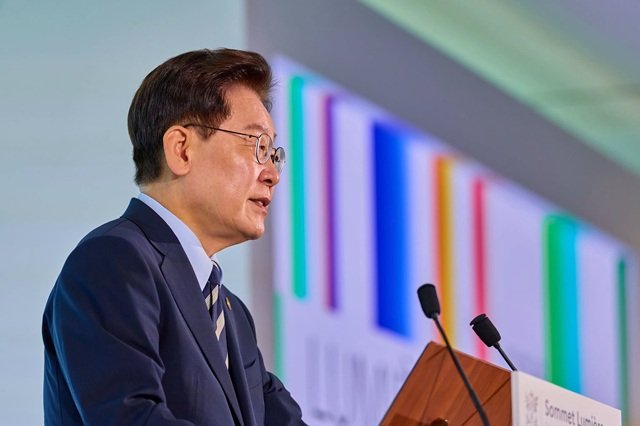
The central bank’s decision also came amid renewed attention to South Korea’s housing market. President Lee Jae Myung has reportedly called for an “all out effort” to increase housing supply, placing the issue at the centre of the government’s response to rising property prices.
In its statement on Thursday, the BOK said housing-related loans had continued to increase and that the pace of house price growth in Seoul and surrounding areas had accelerated again. The comments highlighted the challenge facing policymakers as they balance inflation control and financial stability against concerns about housing affordability and the supply of homes.
Higher interest rates can help restrain demand and borrowing, but the central bank’s latest decision suggests it is still assessing the effects of its previous moves alongside developments in the property market and wider economy. The government’s drive to expand housing supply adds another dimension to the policy environment, although the source material does not indicate that the president’s call directly determined the rate decision.
Despite Thursday’s pause, some economists expect the tightening cycle to continue. Gareth Leather, senior Asia economist at Capital Economics, said the decision did not mean that further increases were off the table, given the strength of the economy and persistent inflation. He expects the BOK to raise rates again at its meeting next month.
South Korea’s economic performance has been supported substantially by exports of semiconductors, as demand for chips used to power artificial intelligence technologies continues to grow. Export figures for September showed a sharp acceleration, with total exports rising by a record 83.7% year on year and semiconductor shipments increasing by 263% compared with the same month in 2025.
The export performance has provided an important source of support for an economy facing continued price pressures. Strong overseas demand for semiconductors has helped underpin growth, while the persistence of inflation has limited the scope for monetary policymakers to relax their restrictive stance.
South Korea’s gross domestic product expanded by 3.8% in the first quarter of 2026 and 3.7% in the second quarter, with growth exceeding expectations in both periods. The International Monetary Fund has projected that the economy will grow by 3.3% over the full year.
Financial markets registered modest movements following the central bank’s decision. The benchmark Kospi share index was trading 1.23% lower, while the South Korean won strengthened marginally against the US dollar to 1,326.1.
The latest decision leaves the policy rate at 3% while the central bank continues to assess inflation, housing-related lending and external economic risks. With consumer price growth still above target and semiconductor exports providing substantial support to economic activity, the prospect of another rate increase remains open, according to Capital Economics’ Leather.