The Bangladeshi journalist-turned-YouTuber on exploring the planet’s extremes, building a cross-border audience through liberal storytelling, and showing the world a different side of Bangladesh.
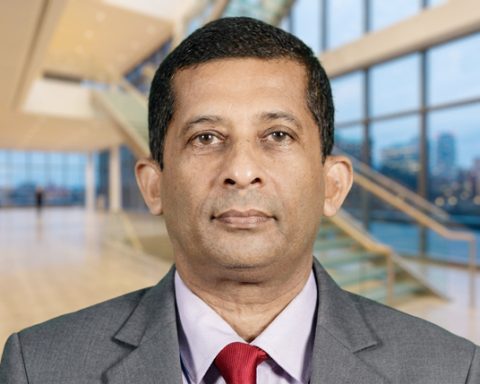
Salahuddin Sumon is more than a travel content creator. A former BBC News Bangla journalist who spent years working in national and international media, he has brought a journalist’s eye for detail and a storyteller’s instinct to digital travel filmmaking. Today, with millions of followers across platforms, his audience extends well beyond Bangladesh, particularly into India’s Bengali-speaking communities. From Antarctica and the Arctic to Svalbard, the high-Arctic archipelago, as well as Tibet and Mongolia, his journeys are driven by a desire to discover the unfamiliar and share it with audiences in a more engaging, informed and human way. He speaks to our Special Correspondent in New Delhi, Ayanjit Sen.
Q. You spent years working in journalism before becoming a full-time digital content creator. How has that journey shaped who you are today?
ANS – My background in journalism has shaped almost everything I do as a content creator. Working in national and international media taught me how to research a subject, identify the heart of a story, verify information and present it in a way that connects with an audience.
When I began creating travel content, I did not want to make videos that simply showed beautiful places. I wanted to tell stories: to explain the history of a destination, explore its culture, introduce its people and uncover details that viewers might not discover on their own.
Journalism also taught me the importance of credibility and responsibility. I believe audiences deserve more than attractive images; they deserve reliable information and meaningful storytelling.
For me, moving from journalism to YouTube was not a departure from storytelling. It was an opportunity to practise it in a different medium, with greater creative freedom and a direct relationship with my audience.
Q. You recently travelled to Antarctica and the Arctic, including Svalbard in the High Arctic. What did these expeditions mean to you personally?
Antarctica had fascinated me since childhood. I first learnt about it in school textbooks, and for years it remained a distant dream. When I was at university, I would open Google Maps late at night and zoom in on the Antarctic Peninsula and the mainland, imagining what it might be like to stand there one day.
The cost of reaching Antarctica once made that dream seem almost impossible. Finally setting foot on the continent was therefore a deeply emotional experience.
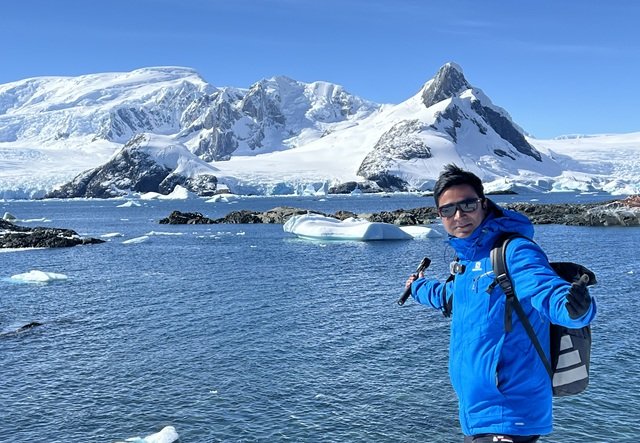
I was surrounded by immense glaciers, snow-covered mountains and frozen landscapes. Penguins moved across the ice, while seals and whales appeared in the surrounding waters. The humpback whales were particularly extraordinary. Watching them breach the surface and seeing their enormous tails rise from the water beside our expedition boats are moments I will never forget.
That same year, I travelled to the Arctic, reaching Svalbard, a remote archipelago in the High Arctic at around 78 degrees north. When I visited, the sun remained above the horizon around the clock. There was no darkness, even at two in the morning. Experiencing the midnight sun in such a remote part of the world was extraordinary.
I also travelled to Iceland, where the landscapes offered another remarkable perspective on the power of nature.
Travelling to both polar regions in the same year was a personal milestone. As a journalist and filmmaker, I am always looking for ways to communicate the feeling of being somewhere extraordinary. But some experiences are difficult to capture fully on camera. You can show people the landscape, yet the silence, the scale and the feeling of standing at the edge of the world are harder to convey.
That challenge is part of what keeps me creating.
Q. What draws you to remote destinations such as Tibet and Mongolia?
I am drawn to places that people are curious about but know relatively little about. My aim is to take viewers somewhere they might never have imagined visiting and help them understand it through a compelling story.
Tibet was one such destination. Many Bengali-speaking viewers were unfamiliar with the practicalities of travelling there or the experiences the region could offer. Documenting the journey allowed me to introduce them to a place that had previously seemed distant and inaccessible.
Mongolia offered another opportunity to challenge familiar perceptions. For many people, the country was associated primarily with Genghis Khan and the Mongol Empire. Through my videos, viewers could discover its vast landscapes, nomadic traditions and the lives of its people.
My journalistic background encourages me to look beyond the obvious. I want to know why a place matters, how people live there and what makes its culture distinctive.
I also have a responsibility to my audience. If I am taking them somewhere unfamiliar, I want them to return with a better understanding of the destination, not merely a collection of images.
Q. Your audience extends beyond Bangladesh, with a particularly strong following among Bengali speakers in India. Why do you think your content resonates across borders?
Although I am a Bangladeshi creator, my audience is not confined to Bangladesh. I have a substantial following in India’s West Bengal and viewers across the Bengali-speaking diaspora in the Middle East, Europe, North America, Australia and elsewhere.
I think language is an important part of that connection. Bengali speakers across national borders share a language and many cultural references, but I believe the appeal of my content goes beyond that.
I try to approach travel with an open mind. I am interested in different cultures, beliefs and ways of life, and I do not believe that one society has a monopoly on wisdom or humanity. Perhaps this liberal outlook, combined with my journalistic approach, helps viewers from different backgrounds feel comfortable with my work.
I also try not to tell people what they should think. I prefer to take them somewhere, introduce them to the people who live there and allow them to see the experience for themselves.
When I travel abroad, meeting Bengali-speaking viewers is often a wonderful surprise. Their warmth reminds me that cultural connections can transcend political boundaries.
Ultimately, I believe audiences respond to sincerity. They can sense when a creator is genuinely curious about the world rather than simply producing content for views.
How did your years in mainstream journalism influence the professional quality of your YouTube videos?
Journalism gave me a foundation that I continue to rely on every day.
A good travel video requires much more than a camera and an interesting location. It needs research, a clear narrative, accurate information, thoughtful interviews and an understanding of what makes a story worth telling.
My years in the newsroom taught me to ask questions. Why is this place important? What is its history? How do local people experience it? What might viewers misunderstand about it? These questions shape how I prepare for a journey and how I tell its story afterwards.
I also learnt to think about the audience. A journalist cannot assume that viewers already understand the background to a story. The information has to be presented clearly, with the right context and in a way that holds their attention.
I bring that discipline to my digital work. I want my videos to be engaging, but I also want them to be informative and credible.
There is an enormous opportunity for Bangladeshi creators to produce work that meets international storytelling standards while remaining rooted in their own language and culture.
Q. Social media has changed how people discover the world. What role have Bangladeshi travel creators played in that transformation?
Travel has become much more visible and accessible to Bangladeshis over the past few years. People who once knew international destinations mainly through television programmes, newspapers or travel brochures can now experience them through videos made by fellow Bangladeshis.
That changes the relationship between the audience and the destination. When viewers see someone from their own country navigating unfamiliar places, discussing costs and explaining practical challenges, travelling abroad can feel more achievable.
I believe Bangladeshi travel creators have helped broaden people’s horizons. We are introducing audiences to new cultures, different lifestyles and destinations they might never previously have considered.
There is also a deeper impact. Travel content can challenge stereotypes and encourage people to approach other societies with greater curiosity and understanding.
For me, the most rewarding part is knowing that a video can do more than entertain. It might inspire someone to travel, teach them something about another culture or encourage them to reconsider an assumption they have held for years.
That is the potential of digital storytelling.
You have travelled extensively around the world. How do you think international audiences perceive Bangladesh compared with its reality?
I believe there is a considerable gap between the Bangladesh that exists and the Bangladesh that much of the outside world sees.
International news coverage often focuses on politics, natural disasters, overcrowding, traffic and poverty. These are legitimate subjects, but they do not represent the whole country.
Bangladesh also has extraordinary river landscapes, rich cultural traditions, distinctive regional cuisines and communities whose hospitality can leave a lasting impression on visitors.
Our challenge is that we have not always communicated this diversity effectively to international audiences.
I would like to see more high-quality documentaries and travel films about Bangladesh distributed internationally. We need to tell stories about our rivers, villages, wetlands, forests, food, music and everyday life.
The countryside, in particular, remains an underexplored tourism opportunity. The landscape changes with the seasons, and rivers shape both the geography and the culture of the country. With responsible planning, local communities could benefit from tourism that introduces visitors to these experiences.
We should not hide our problems or pretend that everything is perfect. Instead, we should present a fuller picture of the country, acknowledging its challenges while showing its beauty, resilience and potential.
That is where content creators can make a difference.
Q. Why should international travellers consider Bangladesh as their next destination?
Bangladesh offers something that travellers increasingly seek: the opportunity to experience a place beyond its familiar tourist image.
Cox’s Bazar, the Sundarbans, Saint Martin’s Island and other established destinations have obvious appeal. But I believe some of the country’s most distinctive experiences can be found in its countryside.
There are riverside villages, traditional boat crossings, seasonal landscapes, regional food cultures and ways of life shaped by the water. Winter brings mist-covered landscapes in the north, while the monsoon transforms parts of the south into a vast world of waterways and lush greenery.
For an international visitor, these experiences can offer a different perspective on South Asia.
Bangladesh is also a country where human encounters can become an important part of the journey. Conversations with local people, sharing regional food and observing everyday life can be just as memorable as visiting a famous landmark.
Of course, the country needs to continue improving tourism infrastructure, visitor information, safety and accessibility. Responsible tourism should also ensure that local communities benefit from the visitors who come to experience their homes and traditions.
But I believe Bangladesh has much more to offer international travellers than its current global profile suggests.
Q. Has travelling changed your understanding of humanity and your own country?
More than anything else, travelling has taught me that ordinary people everywhere can be extraordinary.
I have visited places with vastly different climates, cultures, religions and living conditions. Yet I have repeatedly encountered kindness and generosity in circumstances where I might not have expected them.
These experiences have made me more open-minded. They have also reminded me that the world is too complex to understand through headlines, stereotypes or second-hand accounts alone.
As a journalist, I learnt to ask questions before reaching conclusions. As a traveller, I have learnt the importance of listening to people whose lives are different from mine.
Travelling has also made me think differently about Bangladesh. It has helped me recognise both what we have to offer and what we can learn from other societies.
I do not believe that success should be measured only by professional achievements, money or recognition. Many people aspire to become distinguished doctors, engineers or politicians. My personal ambition is simpler: I want to become a good human being.
That is something I continue to work towards.
For me, the greatest value of travel is not the number of countries I have visited. It is how those journeys have changed the way I see other people.
What is your vision for the future of travel content creation, and what would you like the world to understand about Bangladesh?
I believe the future of travel content creation lies in combining professional storytelling with authenticity.
Creators now have the ability to reach millions of people without relying entirely on traditional broadcasters or publishers. That creates extraordinary opportunities, but it also brings responsibility. We need to be accurate, thoughtful and respectful towards the places and people we portray.
My background in journalism has shaped my belief that content should offer more than entertainment. It should help people understand the world.
I also want to see Bangladeshi creators reach audiences beyond the Bengali-speaking community. Translation, dubbing and other digital tools can help our stories travel across linguistic boundaries.
For Bangladesh, this is particularly important. We have remarkable landscapes, cultural traditions and human stories that deserve a wider audience. We need to invest in telling those stories well and making them accessible internationally.
My message to the world is simple: do not judge Bangladesh solely by the headlines.
Look beyond the familiar images of congestion, political difficulties and natural disasters. Discover the country’s rivers, countryside, food, heritage and people. Acknowledge its challenges, but give its possibilities an equal chance to be seen.
I want my work to contribute to that broader understanding.
I have travelled to some of the most remote places on Earth, but the purpose has never been simply to collect destinations. It has been to discover stories, understand people and share what I learn. If my work can help audiences see the world with greater curiosity and see Bangladesh with a more informed perspective, then I believe I am doing something worthwhile.