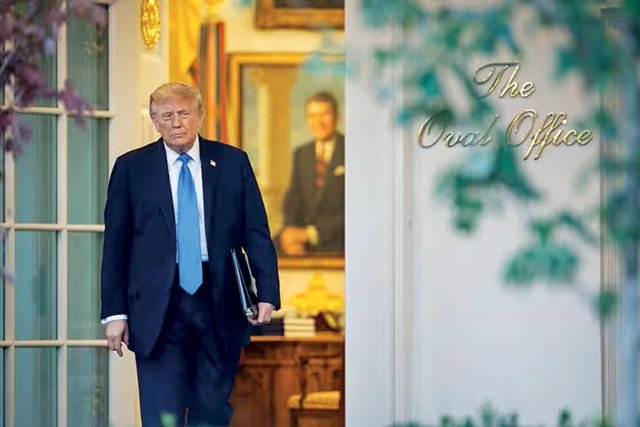
That was exquisite, but not surprising. The result was a manifestation of frustration and anger towards Trump, and it cannot be mistaken for a deeper endorsement of the Democratic Party. An electorate can reject a president without embracing his opponents, punish a government without believing that its critics possess the answers, and defend constitutional limits without recovering faith in the political system itself. The Democratic victory was first and foremost a rebuke, not a national conversion to Democratic ideology. Barack Obama’s return to the campaign trail, particularly his forceful appearances in Ohio and Michigan and his rally in Georgia, helped give that frustration a recognizable political language.
Democrats captured both chambers of Congress, made substantial gains in states and districts that had appeared safely Republican, and exposed the limits of Trump’s personal intervention in electoral contests. The result reflected accumulated dissatisfaction with rising living costs, the consequences of the war with Iran, tariffs, allegations of corruption and the increasingly personalized conduct of the administration. It also exposed the weakness of the assumption that political loyalty can indefinitely protect a government from the consequences of its decisions. Yet it would be intellectually careless to describe this as the restoration of American democracy or the beginning of a settled Democratic era. Voters have not handed the Democrats a blank cheque. They have given them an opportunity, and that opportunity carries an obligation to demonstrate that government can do more than change the occupants of political offices.
Trump may face a Congress capable of investigating his administration, obstructing parts of his legislative programme and scrutinizing the conduct of his associates. His political authority has suffered a serious blow. But the phenomenon that made him possible cannot be measured by the number of Republican seats lost in a midterm election. This is precisely where the argument advanced in my earlier essay, Trump Plague, remains relevant. Trump is not merely an individual with an unusual appetite for attention, revenge and personal enrichment. He represents a political disposition in which loyalty takes precedence over principle, public institutions become instruments of private advantage, facts are treated as negotiable and the spectacle of confrontation becomes a substitute for political achievement. The defeat of its most visible representative does not necessarily dismantle that disposition. It can survive through other politicians, corporate interests, media systems and political movements that have discovered the advantages of operating without the restraints once associated with public responsibility.
As Slavoj Žižek has argued, Trump should be understood as a symptom of the failure of mainstream liberal democratic capitalism, rather than as an inexplicable interruption of an otherwise healthy political order. That diagnosis deserves serious consideration, although it does not excuse Trump’s conduct or diminish his responsibility for it. The important question is why a political system with immense resources, established institutions and a long democratic tradition repeatedly produces conditions in which a man of this kind can command such support.
The answer cannot be reduced to misinformation, racial resentment or the personal prejudices of voters. It also concerns the material and political failures of a system that permitted enormous wealth to accumulate while large sections of the population experienced declining security, weakening public services and diminishing influence over decisions affecting their lives. The beneficiaries of globalization were not distributed evenly. The political establishment frequently defended the system as inevitable while appearing unable, or unwilling, to correct its most damaging consequences. Trump exploited that contradiction. He offered a crude and often fraudulent explanation for genuine grievances, then presented himself as the instrument of their resolution.
The Democrats have not yet demonstrated that they possess a convincing answer to this crisis. Their electoral coalition includes progressives, centrists, organized labour, affluent professionals, minority communities and voters whose principal motivation was simply to remove Trump’s party from power. But, their opposition to Trump is not a common political philosophy. The party may investigate the administration, expose abuses and impose legislative restraints, but these actions will not by themselves produce affordable housing, accessible healthcare, secure employment or a more equitable distribution of wealth. Nor will they resolve the profound distrust that has developed between citizens and political institutions. The Democrats would make a serious mistake if they interpreted the election as proof that the country has returned to the political assumptions of the Obama or Biden years. Those administrations were themselves products of a system whose failures helped create the conditions for Trump’s rise.
There is also a larger contradiction that American electoral commentary frequently avoids. The United States may punish a president for domestic disorder while continuing to maintain a global military structure that places extraordinary demands on public resources and sustains a foreign policy built around permanent strategic primacy. A 2024 Congressional Research Service study identified at least 128 overseas bases in 51 countries under its own definition, while the Pentagon’s accounting cited in the report listed 511 overseas military sites.
Broader independent estimates place the number of American overseas base sites at approximately 750–800, depending on what is counted. These are not interchangeable categories, but even the narrower official figures reveal the scale of the commitment. The question is not whether every overseas installation is unnecessary or whether military alliances have no legitimate purpose. It is whether the United States can continue to justify the financial, political and human costs of maintaining such an extensive global military presence while failing to address fundamental needs within its own society.
This contradiction cannot be resolved by changing the president or the congressional majority. It requires a more fundamental examination of what American power is intended to achieve. A country cannot credibly present itself as the indispensable guardian of international order while applying international principles selectively, treating human rights as an instrument of geopolitical convenience and demanding restraint from adversaries that it does not consistently practise itself. The point is that those standards lose credibility when they change according to the identity of the government being judged.
The latest election does not erase that disgraceful record. It may change the tone of Washington’s politics, but the deeper question is whether either party is prepared to reconsider the assumptions that have shaped American economic and foreign policy for decades. Without that reconsideration, the country will continue to move between competing versions of the same strategic priorities, while presenting each electoral change as a historic departure.
The global crisis is considerably larger than the American contest. Climate disruption, war, debt, forced migration, technological concentration, the weakening of public institutions and the growing inability of international organizations to manage collective problems cannot be resolved by a change in the composition of the United States Congress. Nor can they be addressed through the familiar division between a supposedly responsible West and an irresponsible rest of the world. There is no credible international order without consistency, and no meaningful commitment to human dignity that disappears when it becomes inconvenient. The world is an uncertain period in which established alliances are being tested, institutions are losing authority and technological and military capabilities are advancing faster than the political arrangements intended to control them. The central problem is not simply the absence of leadership. It is the absence of an honest political commitment to shared rules.
That is why the Democratic victory should be treated neither as a rescue of America nor as the end of the Trump era. It is a temporary interruption of one political trajectory and a warning to those who assumed that power could be exercised without consequence. Trump may be weakened, but the political and economic conditions that sustained him remain. The blue moon over Trump’s La La Land may have brought a moment of political clarity. It has not yet brought a new political reality, unfortunately.
This column was originally published in The Sunday Island, a Colombo-based weekly newspaper.