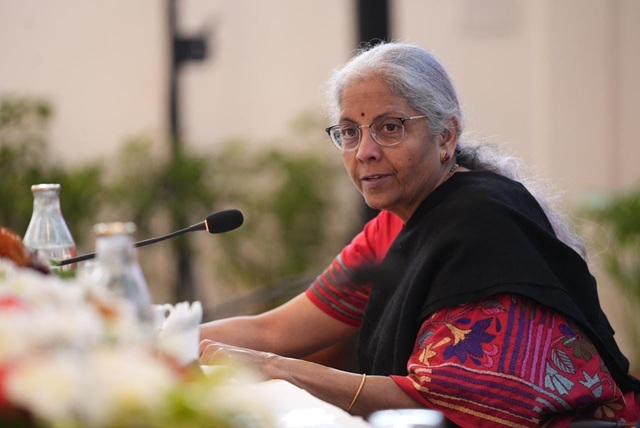
Indian Finance Minister Nirmala Sitharaman is set to present the Union Budget 2026 on Sunday, February 1, marking her ninth consecutive budget and the 88th Union Budget since India’s Independence. Expectations are high as the government looks to sustain long-term structural growth while reviving domestic demand in an increasingly volatile global environment.
According to brokerage firm Bajaj Broking, the government’s overarching strategy appears focused on balancing fiscal prudence with growth-supportive measures. This approach follows recent policy steps such as GST rationalisation and significant income tax relief announced in the previous Budget. With geopolitical instability and tariff-related disruptions clouding the global outlook, policymakers are expected to carefully align ambitious infrastructure plans with short-term measures to cushion the economy from external trade shocks.
The defence sector is expected to be one of the biggest beneficiaries, with spending projected to rise by around 20% year-on-year. Analysts attribute this to ongoing geopolitical tensions, the need for military modernisation, and a sustained push for indigenisation. Capital expenditure is likely to remain dominant, reflecting a continued shift away from imports toward domestic manufacturing of long-cycle defence platforms.
Several key defence programs, including Tejas Mk-2, QRSAM and MRSAM, are currently in advanced stages of platform finalisation and are expected to receive execution approvals soon. This could provide multi-year revenue visibility for domestic defence manufacturers, strengthening the sector’s medium- to long-term outlook.
Railways are also expected to remain a central pillar of Budget 2026, though allocation increases may be more measured compared to the sharp hikes seen in previous years. The government is likely to maintain its emphasis on track expansion, electrification, signalling upgrades, station redevelopment and improving freight efficiency, all seen as critical to boosting logistics performance and economic productivity.
Infrastructure and real estate are set to continue as key focus areas given their outsized role in job creation, investment momentum and overall economic growth. Brokerage estimates suggest the government will sustain elevated capital expenditure levels, building on the INR 11.21 trillion capex announced in the FY 2025–26 Budget, to accelerate infrastructure build-out and urban development across the country.
The information technology sector is expected to gain from measures aimed at accelerating domestic capacity creation and digital adoption. Analysts anticipate fiscal incentives, rationalised power tariffs, faster approvals and easier access to land, alongside tax relief, duty waivers and green energy benefits. With India’s digital economy projected to grow from about 12% of GDP toward nearly 20% by FY30, continued investment in digital public infrastructure, artificial intelligence and cloud computing is seen as a key priority.
The auto sector is also viewed as a potential growth catalyst in Budget 2026. Bajaj Broking believes targeted policy support could help the sector emerge as a major driver of economic expansion. Expected measures include enhanced incentives for electric vehicle manufacturing and exports, strengthening of domestic component ecosystems to reduce import dependence, and focused support for technology adoption and research and development.
Overall, Budget 2026 is widely expected to signal policy continuity while sharpening the focus on sectors that can deliver sustained growth, resilience and global competitiveness. As Sitharaman prepares to deliver a record-setting budget speech, markets and industry alike will be watching closely for signals on how the government plans to navigate global uncertainty while reinforcing India’s long-term economic trajectory.