


by Durga Velayudham
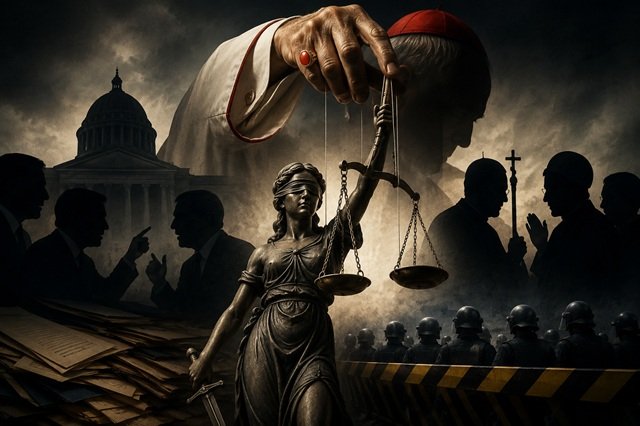
The Easter Sunday investigations have ceased to be merely a search for criminal responsibility. They have become a constitutional test of whether Sri Lanka remains governed by the rule of law or by organised influence. Every institution that has sought to shape, direct or pressure the investigative process—political, religious or otherwise—must accept the same scrutiny it demands of others. Justice cannot begin by choosing its targets. It must first establish whether the process itself has been compromised.
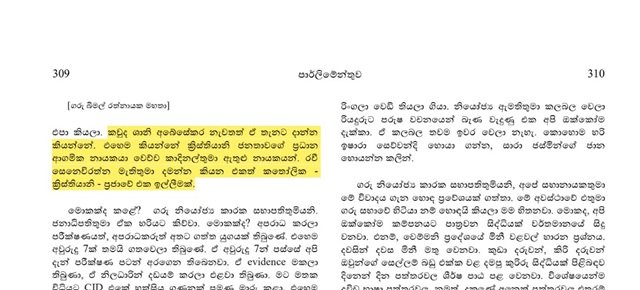
Minister Bimal Rathnayake recently abandoned the carefully cultivated ambiguity surrounding the investigations. In Parliament, he stated that calls for the reinstatement of Shani Abeysekera and the appointment of Ravi Seneviratne were supported by Cardinal Malcolm Ranjith and members of the Catholic community. Whether that assertion is accepted or disputed is not the central issue. The constitutional question is whether appointments to the highest ranks of law enforcement should become the subject of organised lobbying by influential institutions. If they do, the independence of those appointments becomes a legitimate matter of public concern.
This is not an argument about religion. It is an argument about power. Religious leaders, like every citizen, enjoy the right to express their views. They do not enjoy immunity from scrutiny when they seek to influence criminal investigations, policing or prosecutorial decisions. Public confidence is undermined whenever there is a reasonable perception that investigative decisions may reflect organised pressure rather than evidence.
The principle is simple. Political interference with criminal investigations is incompatible with the rule of law regardless of its source. It makes no constitutional difference whether pressure comes from ministers, opposition politicians, religious authorities or civil society organisations. Investigations must remain insulated from every form of external influence if they are to command public confidence. Attempts to shape investigative priorities, personnel or outcomes deserve rigorous scrutiny.
The first constitutional question is therefore not who bears criminal responsibility for the Easter Sunday atrocities. It is whether those who sought to influence the machinery of justice respected the constitutional boundaries that protect its independence. A justice system subjected to sustained external pressure cannot credibly investigate others until it demonstrates its own institutional integrity.
Lord Bingham observed that questions of legal right and liability should ordinarily be resolved by the application of law rather than the exercise of discretion. That principle is especially important where criminal investigations become surrounded by campaigns demanding particular appointments, investigative directions or prosecutorial outcomes. Courts exist precisely because criminal responsibility cannot be determined by the loudest voices or the greatest political pressure.
The law also rejects apparent bias. Justice must not only be done; it must be seen to be done. Public confidence is damaged not only by actual interference but by circumstances capable of creating a reasonable perception that investigative decisions have been influenced from outside the justice system. Once that perception takes hold, confidence in every subsequent decision begins to erode.
No second thought, the victims of the Easter Sunday attacks and their families deserve the full truth. But that truth cannot be determined through political narratives, public campaigns or institutional influence. Criminal liability is established only by admissible evidence tested before an independent court. It is never established by repetition, public expectation or moral certainty.
Successive governments have attracted criticism for delay, incompetence and alleged misconduct in the investigations. Those allegations deserve careful examination where supported by evidence. The same standard, however, must apply to every institution that has sought to influence public expectations. Accountability is indivisible. If governments, intelligence agencies, police officers and prosecutors are expected to answer difficult questions, influential religious institutions and campaigners must also accept scrutiny of their own conduct. Constitutional accountability does not recognise exemptions based on moral authority or public sympathy.
Religious institutions derive their authority from conscience rather than coercive power. Their influence is strongest when it remains distinct from the machinery of the State. Once religious authority becomes closely associated with investigative outcomes, police appointments or prosecutorial strategies, it inevitably invites constitutional scrutiny. Neither the Church nor the State benefits when that distinction disappears.
The same principle applies to politicians. No minister, parliamentarian or political party has any constitutional mandate to influence criminal investigations. Governments administer the law; they do not determine its conclusions. Political interference, whether direct or indirect, weakens the institutions upon which constitutional democracy depends.
Constitutional decline rarely begins with dramatic assaults on judicial independence. It begins with smaller compromises that gradually become accepted as normal—a public campaign here, pressure over an appointment there, political intervention elsewhere. Eventually the distinction between independent justice and managed justice disappears. Democracies seldom lose institutional independence overnight. They surrender it incrementally.
Sri Lanka deserves an Easter Sunday investigation that commands confidence across every political, religious and ethnic community. That confidence cannot be secured through organised campaigns for influence, nor through political vendettas, selective justice or the search for convenient scapegoats. Judicial independence requires criminal proceedings to remain insulated from executive priorities, partisan interests and public pressure alike.
The prolonged detention of suspects without the timely presentation of substantial admissible evidence also raises legitimate constitutional concerns. Even where detention has been authorised by a court, prosecutors remain under a continuing duty to justify it by reference to evidence rather than expectation. If a prosecution ultimately fails because sufficient evidence cannot be produced, the inevitable question is whether prosecutorial discretion has been exercised consistently with the rule of law. Those questions must be answered by independent courts, not by political rhetoric or public campaigns.
The legitimacy of any prosecution depends on one question alone: can guilt be proved beyond reasonable doubt before an independent court? The justice system loses credibility when it appears to satisfy political expectations rather than legal standards. Courts exist to determine criminal responsibility on evidence, not to endorse public narratives or validate institutional pressure. Justice administered to achieve political approval is not justice at all. It is power disguised as legal process, and constitutional democracies have always recognised the danger of confusing the two.









