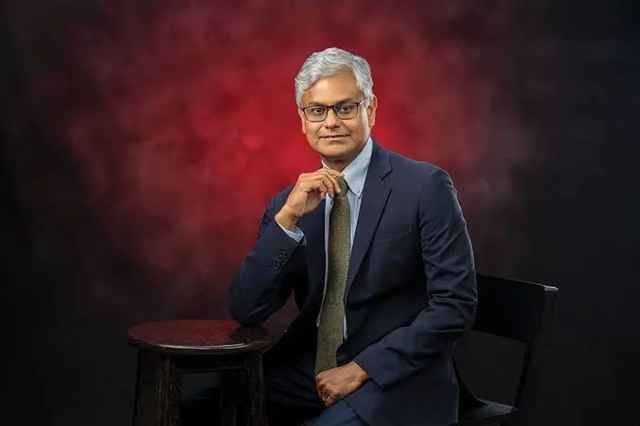
The Ceylon Chamber of Commerce has re-elected Krishan Balendra as Chairperson for the 2026/27 year, reinforcing the organisation’s continued focus on a more solutions-oriented role in Sri Lanka’s economic development landscape. The decision was announced at the Chamber’s 187th Annual General Meeting held on June 25, with Britain’s High Commissioner to Sri Lanka, His Excellency Andrew Patrick, attending as Chief Guest.
Balendra, who also serves as Chairperson of John Keells Holdings PLC, returns to lead the country’s oldest business chamber after completing his first year in office, during which he said the organisation shifted its focus from identifying economic challenges to developing practical recommendations through engagement with government, businesses, development partners and international stakeholders.
The newly elected 2026/27 leadership team includes Vice Chairperson Bingumal Thewarathanthri, Chief Executive Officer of Standard Chartered Bank Sri Lanka, and Deputy Vice-Chairperson Vinod Hirdaramani, Chairman of Hirdaramani Group. Board members appointed for the year include Jayanthi Dharmasena, Managing Director of Hayleys Agriculture Holdings Ltd.; Kasturi Chellaraja Wilson, Chief Operating Officer and Head of APAC at 5Hour International Corporation Singapore; Shibani Thambiayah, Managing Director of Renuka Hotels PLC; Supun Weerasinghe, Director and Group CEO of Dialog Axiata PLC; and Shiran Fernando, Secretary-General and CEO of the Ceylon Chamber.
Rohana Dissanayake, Group Chairman and Managing Director of David Pieris Motor Company Pvt. Ltd., will also join the Board, replacing Bernhard Stefan, Managing Director of Nestlé Lanka PLC, who has relocated overseas.
Addressing the gathering, Balendra highlighted the Chamber’s policy engagement during the past year, including its participation in the Budget 2026 process. He said 18 recommendations presented by the Chamber were incorporated into the national budget, covering areas including trade facilitation, investment promotion, digitalisation, infrastructure development and improving the ease of doing business.
The Chamber’s advocacy efforts also extended to international trade challenges affecting Sri Lankan exporters. Balendra noted that the organisation represented private sector perspectives through Presidential Committees addressing tariff-related concerns and worked to support measures aimed at protecting export competitiveness and strengthening trade resilience.
The Chamber also engaged with authorities on amendments to the Inland Revenue Act, raising concerns on provisions related to thin capitalisation, issues affecting the insurance sector and restrictions on the admissibility of evidence. According to Balendra, discussions with relevant authorities resulted in revisions that addressed key private sector concerns before the amendments were passed by Parliament.
During the year, the Chamber continued its involvement in discussions surrounding Sri Lanka’s economic reform process, including engagement with international financial institutions during multiple International Monetary Fund review missions. The organisation said it worked to ensure that member perspectives remained part of discussions on economic stabilisation efforts.
A significant test of the Chamber’s expanded advocacy approach came earlier this year when geopolitical tensions in the Middle East raised concerns over potential effects on fuel prices, shipping routes, freight costs and export competitiveness. Balendra said the Chamber responded by providing policymakers with recommendations developed through input from members and policy advocacy committees. Several measures were subsequently implemented by the Government through enhanced coordination between agencies and efforts to maintain trade flows.
Beyond immediate economic challenges, the Chamber continued work on long-standing structural issues affecting trade efficiency. It collaborated with Sri Lanka Customs, the Ministry of Finance and the Sri Lanka Ports Authority on matters including export clearance delays, VAT refunds, port congestion and cargo inefficiencies. The organisation also contributed to discussions on reforming the Customs Ordinance and implementing a National Single Window system designed to improve trade processes.
Alongside policy advocacy, the Chamber expanded its international and business support activities during the year. It strengthened partnerships across more than 20 countries, conducted over 60 workshops and technical discussions, and supported more than 1,800 small and medium enterprises through training, advisory services and market access initiatives. Through 20 inbound and outbound trade delegations, the organisation also facilitated opportunities for Sri Lankan businesses to connect with international markets.
The Chamber’s agenda also included sustainability-focused initiatives, with participation in climate policy discussions, support for businesses exploring climate finance and carbon markets, and the launch of programmes such as the National SME Forum and the inaugural DEI Champion Awards.
Its flagship Sri Lanka Economic Summit introduced a dedicated investment focus in 2025, bringing together more than 850 participants, including over 100 international delegates from 20 countries. Discussions centred on post-Cyclone Ditwah recovery, private sector-led rebuilding, resilience and sustaining investment momentum. The Chamber also continued its Best Corporate Citizens Sustainability Awards, with the 22nd edition recognising corporate sustainability efforts.
Looking ahead, Balendra said the Chamber would continue implementing a new three-year strategy aimed at strengthening its role as an ecosystem enabler and supporting economic transformation. The organisation’s priorities include deeper engagement with members, stronger global partnerships, expanded SME support, increased export promotion and efforts to attract investment.
With the new Board now in place for 2026/27, the Ceylon Chamber of Commerce enters its next year under Balendra’s leadership with a stated focus on continued collaboration between business, government and stakeholders as it works to support Sri Lanka’s economic priorities.