China has accused the United States government of orchestrating a massive cyberattack that allegedly led to the theft of more than $13 billion worth of bitcoin, in a move that could further inflame already fraught relations between the two global powers. According to a report released Sunday by China’s National Computer Virus Emergency Response Center (CVERC), Washington was behind the December 2020 hack that drained 127,272 bitcoin from LuBian, one of the world’s largest cryptocurrency mining companies. The report identified the stolen funds as belonging to Chen Zhi, the Chinese-born Cambodian billionaire and founder of Prince Group.
The CVERC report, published on its official WeChat account, portrays the incident as a state-sponsored operation rather than a conventional cybercrime. Investigators noted that the stolen bitcoin remained untouched for four years, suggesting the theft was a “precise operation orchestrated by a national hacking organization” rather than a profit-driven crime. The number of tokens mentioned by the Chinese agency nearly mirrors the amount recently cited by the U.S. Department of Justice in its own announcement of bitcoin forfeiture.
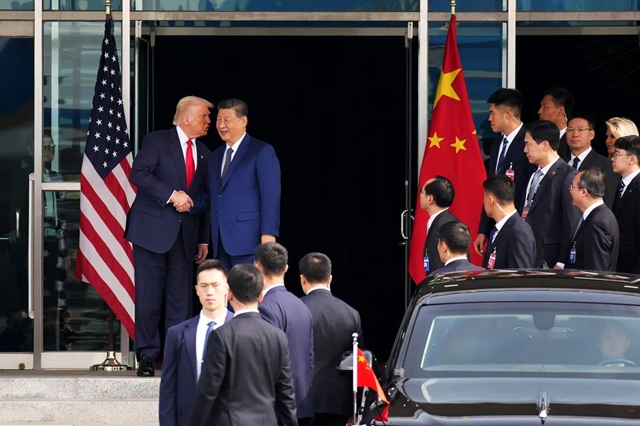
The accusations come at a sensitive moment in U.S.-China relations. Despite agreeing on October 30 to extend their trade truce for another year, Presidents Xi Jinping and Donald Trump have found their governments sparring over new digital and cyber frontiers. Cryptocurrency, officially banned in China since 2021, has now emerged as an unlikely flashpoint in the broader geopolitical struggle.
The U.S. Justice Department indicted Chen in October on charges of wire fraud and money laundering, accusing him of running forced labor scam centers in Cambodia through his business empire. Alongside the indictment, the DOJ announced the seizure of 127,271 bitcoin—the largest cryptocurrency confiscation in history. Federal prosecutors have declined to disclose how they gained access to the digital assets, a detail that has fueled China’s suspicions. Following the announcement, bitcoin’s price dropped more than ten percent.
Prince Group, through its U.S. law firm Boies Schiller Flexner, issued a statement rejecting all allegations of wrongdoing by either the company or its founder. It described the forfeiture as an “unlawful seizure of assets” and declined to comment on Chen’s current whereabouts. The billionaire has not been seen publicly since the U.S. indictment was announced.
The controversy has also reignited discussion about the challenges of cross-border enforcement in the digital era. Prince Group’s network spans multiple jurisdictions, complicating efforts to trace and recover funds. Hong Kong authorities have frozen about 2.75 billion Hong Kong dollars ($350 million) in assets linked to the conglomerate, while investigators in Taiwan and Singapore have seized hundreds of millions more, including luxury cars and a yacht.
Adding to the swirl of cryptocurrency scandals, a London court this week sentenced Chinese national Qian Zhimin to more than 11 years in prison for running a massive Ponzi scheme that defrauded 130,000 investors. British police seized 61,000 bitcoin from Qian, but Chinese victims are expected to face lengthy legal battles to reclaim their money.
As digital assets become a new arena for geopolitical and legal confrontation, the CVERC’s explosive claims mark a dramatic escalation in the shadow conflict between Washington and Beijing—one where cyberspace and cryptocurrency may now play as decisive a role as trade and technology once did.