


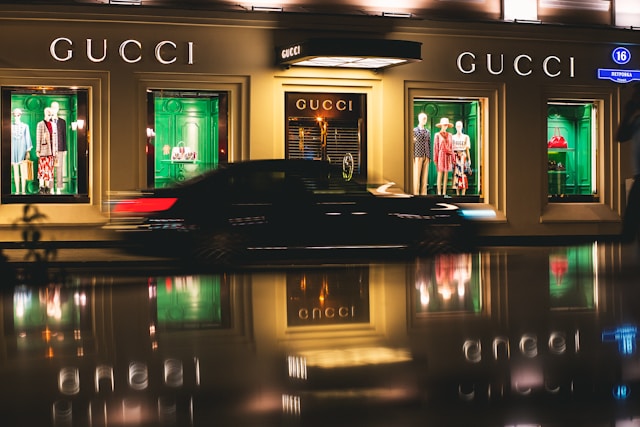
The world’s top luxury brands are bracing for ongoing headwinds in China, as a worsening property market and prolonged trade tensions with the United States continue to erode consumer confidence and spending, analysts say.
Luxury titan LVMH, the owner of brands like Louis Vuitton and Christian Dior, reported a 3% drop in first-quarter sales, falling to €20.3 billion (US$23 billion)—a decline that saw the French conglomerate lose its title as Europe’s largest luxury group to rival Hermès. The company’s wine and spirits division, hit hardest by falling cognac demand in both China and the U.S., saw sales plunge 9%, marking the steepest drop across all segments.
The results come amid a broader downturn in China’s luxury market, where spending fell 18–20% in 2024, according to consultancy Bain & Co.
China’s slumping property sector—long a key driver of household wealth and consumer confidence—is compounding the problem. March marked the 22nd consecutive month of falling new-home prices, with a 0.1% decline, government data showed.
“The start of the year has been weak for LVMH with Chinese consumers,” said Jelena Sokolova, senior equity analyst at Morningstar, noting that fewer mainland shoppers were traveling or spending in nearby markets like Japan, which had previously benefited from a weak yen. She cited falling home prices as a major factor dampening luxury sentiment, along with growing uncertainty from the ongoing U.S.-China trade war, which could further pressure equities and the broader economy.
Hermès also reported slowing momentum in Greater China, citing declining foot traffic in the region as a drag on Asia-Pacific performance outside Japan. Still, the Paris-based label managed a 7% increase in global sales, reaching €4.1 billion.
Other luxury players, including Kering (Gucci), Prada, and Richemont (Cartier), are expected to release quarterly results in the coming weeks.
Trade Tensions Shift Luxury Demand Overseas
Analysts believe the escalating U.S.-China trade dispute is prompting more Chinese consumers to shop abroad, further weakening domestic luxury demand.
“We will likely see more luxury shoppers going overseas,” said Richard Lin, chief consumer analyst at SPDB International, a Hong Kong-based investment bank. “Demand for luxury consumption is shifting from China to regions less affected by tariffs.”
While American brands like Tiffany and Coach are especially vulnerable, Lin noted that European luxury houses, though somewhat shielded from direct tariffs, could still raise prices in response to broader economic pressures.
“For the luxury sector as a whole, tariffs are largely a negative factor,” he added.
Bright Spots: Gold and Lifestyle Labels Buck the Trend
Despite the broader slump, some companies are defying the trend—most notably in the gold and lifestyle segments.
Chinese luxury gold brand Laopu Gold, which offers handcrafted accessories at fixed prices, saw net profit soar more than 250-fold in 2024, with its stock price skyrocketing over 1,875% since its Hong Kong IPO last June. The surge comes as gold demand climbs, fueled by a weakening U.S. dollar and global geopolitical tensions, driving prices of the precious metal up more than 25% this year.
Meanwhile, Italian luxury outerwear maker Moncler recorded 6% sales growth in Asia last quarter, building on double-digit growth in China the previous year. Industry peer Brunello Cucinelli also posted double-digit gains in China for the March quarter, driven by rising demand for high-end prêt-à-porter fashion, particularly from health-conscious and lifestyle-focused shoppers.
Economic Indicators Show Mixed Signals
While China’s first-quarter GDP growth beat expectations at 5.4%, suggesting resilience, analysts say the full impact of tariff hikes and slowing property values may not yet be fully reflected in official data. Retail sales rose 5.9%, with sales of gold, silver, and jewellery outpacing the broader market with a 10% surge—highlighting a shift in consumer behavior toward asset-backed purchases and safer investments.
As luxury brands await the release of earnings from Kering, Prada, and Richemont, the consensus among analysts remains clear: The Chinese luxury market’s recovery is far from assured, and the global giants who depend on it will need to adapt to a shifting economic and geopolitical landscape.











