


A leading Chinese economist has sounded the alarm over the safety of China’s vast overseas assets, warning that Washington’s intensifying trade measures under President Donald Trump could soon spill over into the financial sector—turning the nation’s foreign holdings into a new battleground in the US-China rivalry.
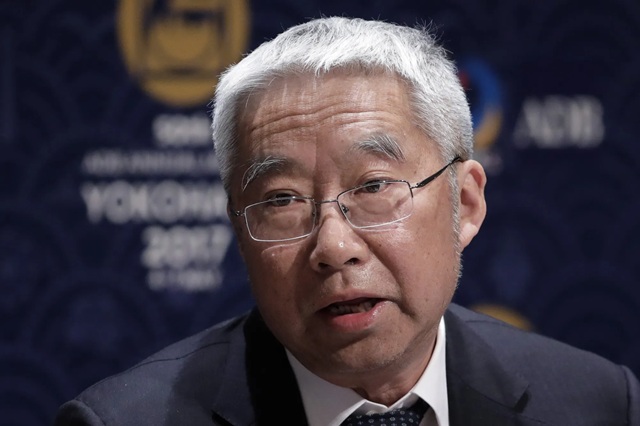
Yu Yongding, a former adviser to the People’s Bank of China and a prominent economist at the Chinese Academy of Social Sciences (CASS), made the warning at a forum in Beijing on Wednesday. His remarks come as Trump ramps up tariffs on Chinese imports to unprecedented levels, with effective duties now totaling 156 percent—up from 84 percent earlier this month, and far beyond levels seen before Trump took office.
“The US has spared no efforts in weaponising the US dollar,” Yu said, according to South China Morning Post. “Since the trade war is escalating, I am deeply concerned that the conflict could extend to China’s overseas assets.”
Yu’s comments reflect a growing sense of unease among Chinese policymakers and economists as tensions with the United States move beyond trade and into areas with systemic financial implications. China holds roughly US$3.2 trillion in foreign exchange reserves—much of it in US dollars—and its total overseas assets reached US$10.2 trillion by the end of 2024, according to the State Administration of Foreign Exchange.
While China has long sought to diversify its foreign holdings, US Treasuries remain a cornerstone of its reserve strategy. Beijing has gradually reduced its Treasury holdings by about 25 percent since mid-2017, slipping behind Japan as the largest foreign holder. As of January, China held US$760.8 billion in US government securities, based on figures from the US Department of the Treasury.
Yu, a vocal critic of overreliance on US-denominated assets, pointed to recent precedents that highlight the risks. In particular, he referenced the US-led seizure of Russian sovereign assets following the invasion of Ukraine in 2022—an action he warned could one day be replicated in the event of a full-blown financial decoupling between Washington and Beijing.
“We should be prepared for such a scenario and take concrete measures to minimise potential losses in the future,” Yu emphasized.
His remarks also included concerns over a controversial economic doctrine reportedly floated by current US Council of Economic Advisers chair Stephen Miran, dubbed the “Mar-a-Lago Accord.” The plan, which envisions a strategic devaluation of the US dollar to reshape the global financial system, includes a proposal to convert dollar-denominated debt held by foreign creditors into ultra-long-term bonds—with maturities stretching as long as 100 years.
“This would amount to an outright default – and poses a serious threat to China,” Yu warned.
The economic fallout from Trump’s latest tariffs is already being felt in global financial markets. As South China Morning Post reported, the president’s tariff blitz—announced last week and partially softened after a market rout—prompted a sharp sell-off in US government bonds. Thirty-year Treasury yields surged by roughly half a percentage point within the week, rattling investors and adding to inflationary pressures.
Yu and fellow researcher Yang Bohan previously discussed these structural risks in the February edition of China and World Economy, a CASS journal. They argued that the US dollar’s dual role as both a national and global reserve currency leaves the international financial system dangerously exposed to unilateral American policy decisions.
“The weaponisation of the US dollar has significantly eroded its credibility as the cornerstone of the post-Bretton Woods system,” they wrote, “raising concerns about the US’ ability to sustain its external debt and finance its deficits without precipitating a financial crisis.”
At Wednesday’s forum, Yu also addressed speculation that China might devalue its own currency, the yuan, in response to volatile global trade flows. He dismissed concerns about a sharp depreciation, saying he did not expect abrupt policy moves in that area.
While China has not officially commented on potential adjustments to its overseas asset strategy, Yu’s warning adds urgency to an ongoing debate over how the country should shield its wealth from external shocks—particularly as geopolitical tensions escalate.











