Citadel’s purchase of most of hedge fund Situational Awareness’ public equity portfolio has helped calm investor concerns after a sharp semiconductor market downturn erased around $3 trillion in value. The deal, first reported by the Financial Times, is widely viewed by market participants as preventing a disorderly sell-off that could have deepened volatility across global technology markets.
Global technology markets regained momentum after Citadel acquired the majority of the public equity holdings of hedge fund Situational Awareness, a transaction that investors say helped halt an escalating sell-off in artificial intelligence-related stocks and restored confidence to a sector that had been under intense pressure.
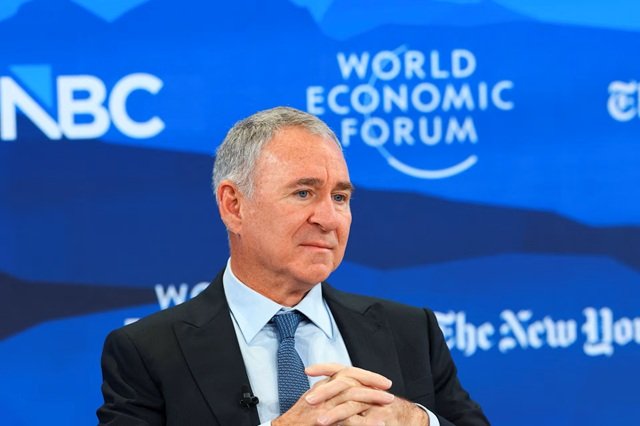
According to the Financial Times, Ken Griffin’s Citadel purchased most of Situational Awareness’ $16 billion public equity portfolio on Thursday, with the shares acquired at a discount of more than 10 per cent, according to a person familiar with the matter. Market participants believe the transaction prevented a large-scale forced liquidation of AI-related investments that could have intensified the recent downturn in semiconductor stocks.
Charles-Henry Monchau, chief investment officer at Swiss bank Syz, described the removal of a distressed seller from the market as a positive development for investor sentiment, noting that eliminating a known forced seller was “genuinely bullish”.
The agreement was followed by a strong recovery in equity markets. US technology stocks recorded their largest single-day rally in nearly four months, while South Korea’s semiconductor-heavy stock market surged 18 per cent on Friday after experiencing a prolonged decline.
Investors cautioned, however, that the rebound was not solely attributable to Citadel’s intervention. Strong quarterly earnings reported by Microsoft earlier in the week also helped ease concerns that the substantial investment being made in artificial intelligence by major technology companies could prove financially unsustainable.
Even so, analysts argued that the difficulties facing Situational Awareness had become a focal point for investors seeking to explain the sharp weakness in semiconductor shares. Max Kettner, chief multi-asset strategist at HSBC, said the fund’s problems had provided markets with a clear explanation for the second phase of the recent momentum-driven sell-off after several weeks of uncertainty over its causes.
Situational Awareness had built a highly concentrated portfolio centred on companies that benefited from the rapid expansion of artificial intelligence during the first half of 2026. As semiconductor manufacturers and providers of AI infrastructure replaced the largest technology companies as market leaders, similar investment strategies became increasingly popular across the industry. A July survey by Bank of America found that 82 per cent of respondents identified long positions in global semiconductor companies as the world’s most crowded trade.
The fund’s concentrated exposure, amplified through extensive borrowing from banks, left it particularly vulnerable when market sentiment shifted abruptly during July. The Philadelphia Semiconductor Index, which had doubled between the beginning of the year and its peak in late June, subsequently fell by 20 per cent as investors questioned whether the rally had advanced too rapidly. At the lowest point of this week’s decline, a Nasdaq index tracking global semiconductor companies had lost approximately $3 trillion in market value during July.
Some of Situational Awareness’ largest holdings, including Sandisk and CoreWeave, declined by almost 60 per cent. Analysts suggested that these losses were exacerbated by expectations that the hedge fund might be forced to liquidate significant positions into an already weakening market.
Mike Zigmont, co-head of trading at Visdom Investment Group, said investors often seek to sell ahead of heavily leveraged market participants facing financial pressure, thereby intensifying downward price movements. Once the forced selling risk disappears, he added, trading generally returns to normal market sentiment as speculative pressure eases.
Several companies in which Situational Awareness held substantial stakes led the subsequent recovery. Dutch artificial intelligence infrastructure company Nebius, in which the hedge fund owned a 5.6 per cent stake as of May, rose more than 30 per cent from the lows recorded on Wednesday. Bloom Energy, approximately 2 per cent of which was held by the fund, gained as much as 40 per cent over the same period.
Despite the recovery, some market strategists warned that volatility may not yet be over. Peter Tchir, head of macro strategy at Academy Securities, argued that while removing a major distressed seller had temporarily eased pressure, substantial leverage remained throughout the artificial intelligence investment sector. He warned that additional selling pressure could emerge in the coming weeks as investors continue to grapple with higher US Treasury yields and broader concerns about the sustainability of artificial intelligence spending.
According to the Financial Times, these structural concerns remain unresolved despite the market’s recent rebound. Analysts continue to question whether the extraordinary valuations and investment levels associated with the AI sector can be maintained if financing conditions tighten further, suggesting that investor confidence may remain vulnerable in the months ahead.