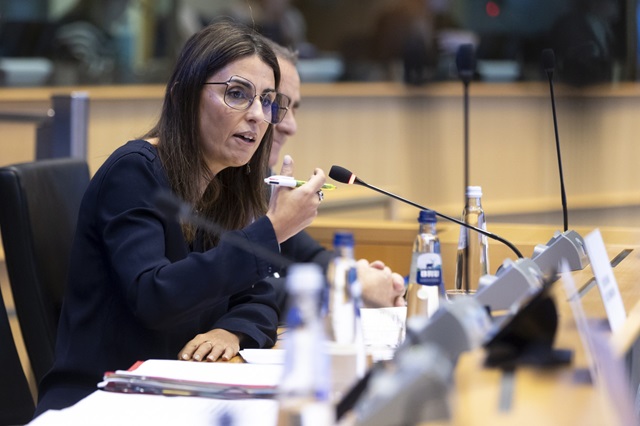
European Commission President Ursula von der Leyen is facing heightened pressure ahead of a critical no-confidence vote, as the EU’s independent watchdog has issued a stark warning over her deregulation agenda. In an interview with the Financial Times, European Ombudsman Teresa Anjinho cautioned the Commission against pushing through simplification measures without proper democratic safeguards or public consultation.
Anjinho criticized the Commission’s increasing use of fast-track procedures to implement regulatory rollbacks—especially in areas related to climate policy and corporate sustainability—arguing that such tactics risk eroding trust in EU governance.
“Simplifying the laws itself isn’t the problem,” Anjinho told the Financial Times. “The problem is when you attach to the simplification urgency procedures that deviate from the normal legislative procedures.”
Her comments come as von der Leyen, now seeking to accelerate her competitiveness agenda by cutting bureaucratic red tape for businesses, faces backlash for allegedly bypassing the European Parliament, the bloc’s only directly elected institution. Under exceptional conditions, the Commission can propose legislation without full parliamentary scrutiny—an approach that has sparked controversy over transparency and democratic accountability.
Among the most contentious moves is the Commission’s attempt to dilute corporate sustainability due diligence rules. The proposed changes would scale back requirements for companies to monitor and report on human rights and environmental issues across their supply chains. Anjinho has launched an official inquiry into the process, after NGOs accused Brussels of ignoring its own guidelines by failing to consult civil society or conduct the necessary impact assessments.
“The way these decisions are being perceived… is that competitiveness is, in a way, coming at the cost of these legislative procedures and pre-established laws,” Anjinho said. “There is a perception that these decisions are being taken behind closed doors, that they are being rushed.”
Although the Ombudsman’s recommendations are not legally binding, they can carry significant political weight. Anjinho, who took office in February and previously served on the EU’s anti-fraud agency OLAF, has initiated two additional inquiries into the Commission’s use of accelerated procedures. These focus on recent amendments to agricultural funding rules and legislation targeting migrant smuggling, the latter of which has drawn human rights concerns from advocacy group PICUM.
PICUM alleges that the Commission’s decision to bypass an impact assessment on anti-smuggling measures disregards potential violations, such as the criminalization of individuals assisting migrants. Anjinho stressed that such assessments are vital for evaluating the broader human rights consequences of proposed policies.
“There are situations where you can derogate from these impact assessments, but they are normally exceptional,” Anjinho said, adding that she will now seek further clarification from the Commission.
She also warned against complacency in upholding democratic processes, particularly at a time when U.S. President Donald Trump is dismantling regulatory oversight in the United States. “The US is influencing geopolitically everything that we are talking about… from the simplification, the question of competitiveness, to defence,” Anjinho noted.
With the no-confidence vote looming, the Ombudsman’s intervention has intensified scrutiny of von der Leyen’s leadership style and her administration’s approach to regulation and transparency. As she attempts to secure support for a second term, the mounting criticism underscores the political risks of sacrificing due process in the name of speed and competitiveness.