“The era of deportations has begun.” What once sounded like political provocation from far-right voices in Europe is now being treated in Brussels as an emerging policy reality. Following the agreement between the European Parliament, member states, and the European Commission on a new EU return regulation, the bloc is preparing to expand deportation infrastructure beyond its borders, potentially reshaping how migration is managed across the continent for years to come.
According to reporting by the Spanish newspaper El País, several European governments including Germany, Austria, the Netherlands, Denmark, and Greece are actively exploring agreements with third countries—primarily in Africa—to host so-called deportation or “return” centres. These facilities would be used to transfer rejected asylum seekers outside EU territory, marking a significant escalation in Europe’s migration enforcement strategy. While the legislative framework is now largely in place, the geographical and political implementation has only just begun.
The new policy has been welcomed by some officials as a necessary response to what they describe as a dysfunctional asylum return system. The European Commission argues that only about 28 percent of individuals whose asylum claims are rejected are currently returned to their countries of origin, a figure repeatedly cited in Brussels as evidence of systemic failure. EU officials say the new regulation, combined with stricter migration controls already adopted in recent years, is intended to increase enforcement rates and restore credibility to the asylum system.
Magnus Brunner, the European Commissioner for Home Affairs and Migration, defended the shift, stating that the EU is “putting order back into Europe” by strengthening control over who can enter and who must leave. Supporters of the reform argue that external processing centres could also serve as a deterrent, discouraging irregular migration routes toward Europe. The regulation is widely seen as part of a broader political shift across the EU toward tougher migration policies, driven by growing domestic pressure in many member states.
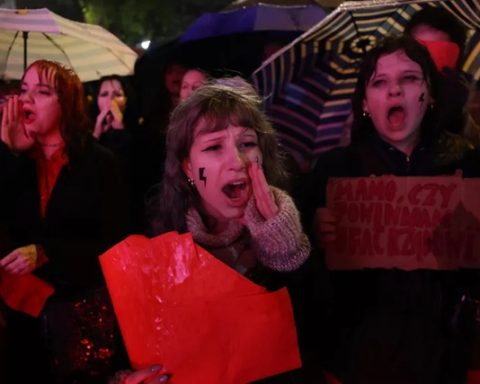
However, the proposal has triggered sharp criticism from human rights organizations, which warn that Europe is entering a new phase of migration enforcement that risks normalizing prolonged detention outside the continent. Advocacy groups such as PICUM argue that the system being designed could lead to indefinite confinement of rejected asylum seekers in third countries, far from legal oversight and without clear guarantees of rights protection.
Silvia Carta, a policy director at PICUM, described the emerging framework as a “draconian system of detention and deportation,” warning that it could expose hundreds of thousands of people to imprisonment in external centres and family separation. She also drew parallels with the United States’ immigration enforcement system under Donald Trump, cautioning that Europe risks replicating models characterized by fear and coercion rather than protection.
At the heart of the debate is the question of where these deportation centres would be located and under what conditions they would operate. Several EU states are reportedly examining options in Africa and potentially Asia, with Cyprus’s deputy migration minister Nicholas Ioannides stating that such facilities would likely be established far from Europe’s borders. He emphasized that host countries would be expected to guarantee fundamental rights, though the practical mechanisms for ensuring this remain unclear.
Legal and operational uncertainties continue to dominate discussions. While the EU insists that respect for human rights is a “red line” in any agreement, it has not clearly defined how protections would be enforced in external detention environments. Questions remain over the treatment of families and minors, particularly after provisions were included allowing for their transfer to third countries. Critics argue that this could result in children being placed in legal and educational limbo, separated from familiar systems and without clear prospects for resettlement or return.
Negotiators involved in the drafting of the regulation acknowledge that many practical details remain unresolved. Malik Azmani, the European Parliament’s lead negotiator on the file, noted that while the legal foundation is now in place, implementation depends entirely on member states’ willingness to secure agreements with third countries. He also suggested that potential partner countries could include not only African states but possibly nations in Eastern Europe, although no concrete arrangements have yet been finalized.
Despite these uncertainties, there is growing political urgency behind the initiative. Diplomats involved in the negotiations indicate that the legal framework for establishing deportation centres could be completed before the summer, reflecting a sense of momentum among supportive governments. Azmani warned that delays risk further undermining the EU’s migration system, arguing that continued inaction would deepen existing structural failures.
Yet even among supporters, there is acknowledgment that the project remains at an early stage. As Ioannides admitted in discussions with journalists in Brussels, there are currently no tangible results, and many operational questions—ranging from logistics to legal jurisdiction—remain unresolved. This includes even the basic classification of individuals transferred to these centres, with officials avoiding terms like “detention” despite acknowledging that movement would likely be heavily restricted.
Critics argue that this semantic ambiguity reflects a deeper political tension at the heart of the policy: whether Europe is creating a system of managed return or one of outsourced confinement. The absence of clear limits on length of stay, legal status, and procedural safeguards has intensified concerns that the proposed centres could operate in a legal grey zone.
As El País reports, the EU’s new return regulation represents more than just a technical reform of migration policy. It signals a broader transformation in how Europe defines responsibility for asylum seekers and border control. With the legal framework now largely settled, the coming months will determine whether the EU can translate its political consensus into a workable system—or whether the “era of deportations” becomes a new source of legal, ethical, and geopolitical conflict.