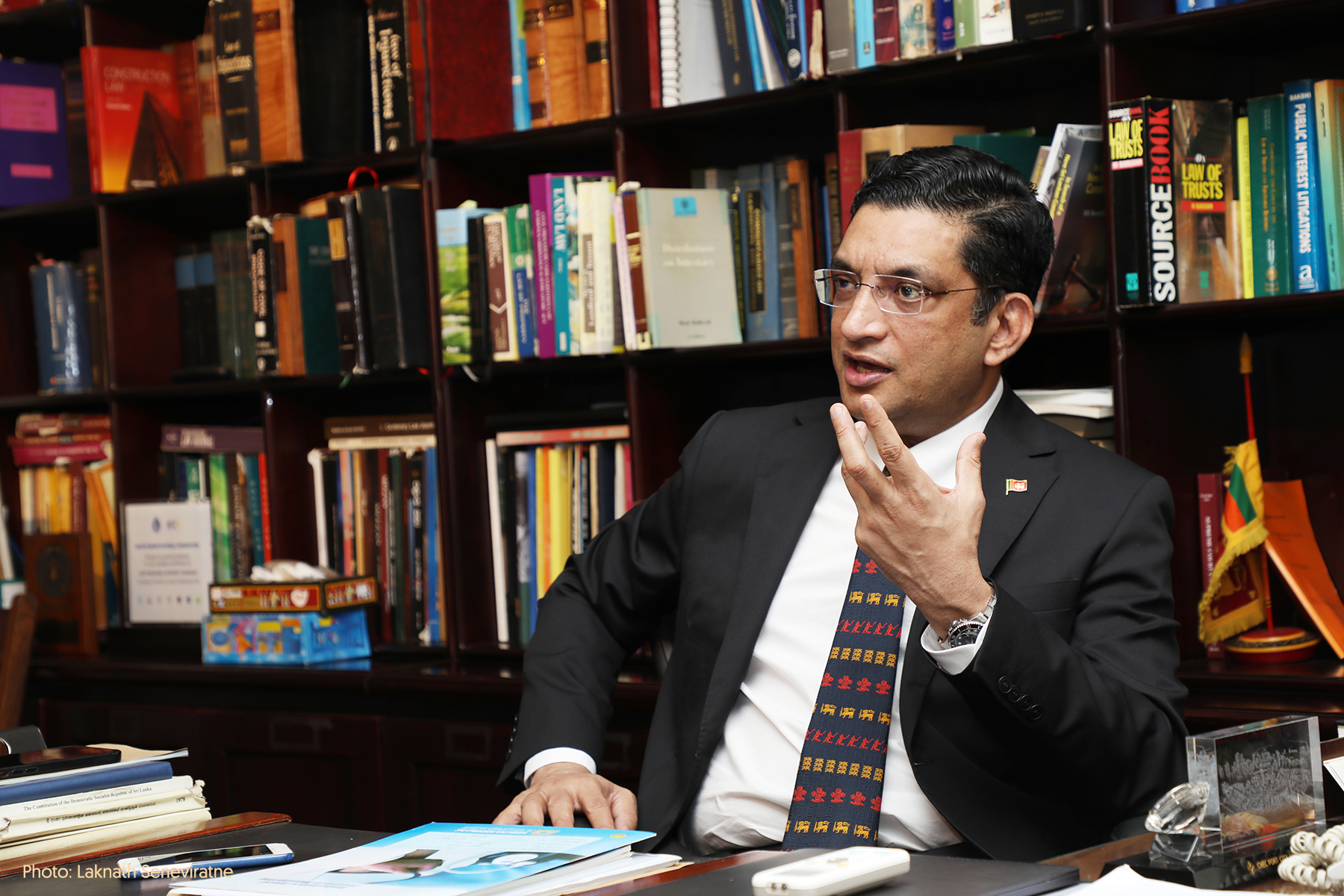
Former Sri Lankan Foreign Minister Ali Sabry has issued a stern warning about the misuse of arrest powers, emphasizing that such authority is among the most intrusive the state can exercise and must always operate within strict legal boundaries. Sabry highlighted longstanding legal principles that arrests based on vague or speculative suspicions, rather than concrete evidence, are unlawful.
Citing landmark cases, Sabry noted that the courts have consistently rejected arrests intended as a “fishing expedition” for evidence. In Piyasiri and Others v. Nimal Fernando, ASP, and Others [1988] 1 SLR 173, Sri Lankan courts affirmed that without a specific identified offence, an arrest cannot be justified. He also referenced the British case Dumbell v. Roberts [1944] 1 All ER 326, where Scott LJ stressed that personal freedom and the presumption of innocence require police to justify reasonable suspicion before detaining any individual.
Sabry warned that the recent arrest of Field Marshal Sarath Fonseka underscores the dangers of misusing arrest powers, which can erode public confidence and weaken institutional integrity. Drawing parallels to past errors, he cautioned that weaponizing law enforcement for political ends damages the nation’s commitment to justice and undermines due process.
“Using past mistakes to justify current flaws only displays ignorance,” Sabry said. “Law enforcement and investigations exist for lawful purposes, not for advancing political agendas. Those who sacrificed to defeat LTTE terrorism, like every citizen, deserve fairness, restraint, and the full protection of due process. When principle gives way to expediency, the nation ultimately pays the price.”