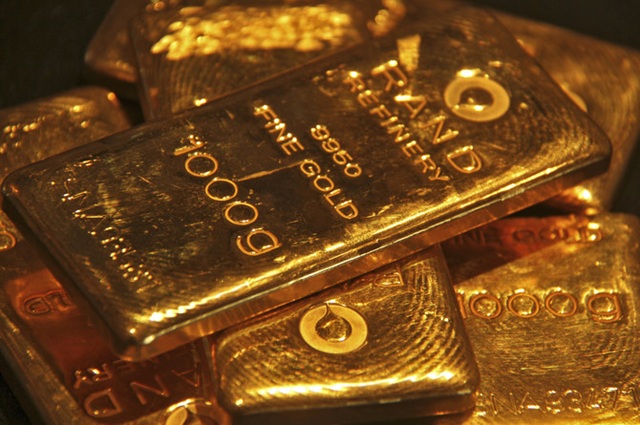
Gold has surpassed the euro to become the world’s second most important reserve asset for central banks, according to a new report from the European Central Bank (ECB). The shift marks a historic milestone, driven by unprecedented gold purchases and surging prices, as monetary authorities seek safer alternatives amid rising geopolitical uncertainty.
According to data released by the ECB on Wednesday, gold accounted for 20% of global official reserves in 2024, outstripping the euro’s 16% share. The US dollar remained the dominant reserve currency, holding a 46% share.
“Central banks continued to accumulate gold at a record pace,” the ECB stated, noting that for the third consecutive year, central banks acquired more than 1,000 tonnes of gold — approximately 20% of the world’s annual production and double the yearly average in the 2010s.
Gold holdings by central banks have now climbed to nearly 36,000 tonnes, nearing the postwar peak of 38,000 tonnes recorded during the Bretton Woods era, when global currencies were tied to the US dollar, and the dollar was pegged to gold.
The World Gold Council identified India, China, Turkey, and Poland as some of the largest gold buyers in 2024. The strong demand has helped propel gold prices to new heights, with prices rising 30% last year and another 27% so far in 2025. In recent weeks, gold reached an all-time high of $3,500 per troy ounce.
“This stockpile, together with high prices, made gold the second-largest global reserve asset at market prices in 2024 — after the US dollar,” the ECB said.
Despite lacking interest yields and involving storage costs, gold is viewed globally as a uniquely secure asset. Its liquidity, lack of counterparty risk, and immunity to sanctions make it particularly attractive during times of economic and geopolitical stress.
Central banks have increasingly turned to gold in a broader effort to reduce dependence on the US dollar, especially following the financial sanctions imposed on Russia after its 2022 invasion of Ukraine. The ECB highlighted that in five of the 10 biggest annual increases in gold’s share of foreign reserves since 1999, the countries involved had faced sanctions either in the same year or the previous one.
“Countries that are geopolitically close to China and Russia have increased their gold holdings more than others over the past three years,” the ECB noted.
A survey of 57 central banks revealed that emerging markets and developing countries are particularly motivated by fears of sanctions, potential shifts in the global monetary system, and a desire for greater independence from the US dollar.
Historically, rising real yields would dampen demand for gold, but this relationship has weakened since 2022. According to the ECB, political risk now outweighs inflation concerns in driving gold purchases.
The ECB concluded that if current trends continue, central bank demand could help sustain growth in global gold supply. “If history is any guide, further increases in the official demand for gold reserves may also support further growth in global gold supply,” the report said.