A growing number of India’s largest conglomerates are quietly pursuing partnerships with Chinese companies in sectors such as electric vehicles, lithium-ion batteries, and clean mobility, according to reporting from Bloomberg.
Executives have kept these tie-ups low profile, wary of Beijing’s reluctance to share technology with potential rivals and New Delhi’s restrictions on large-scale Chinese investment. Yet with signs of a thaw in bilateral relations, industry leaders are pushing for greater collaboration.
Ajay Srivastava, founder of the Global Trade Research Initiative, noted that “traditional and rising Indian conglomerates getting into new businesses like battery storage and clean mobility, having no expertise or technology, makes them highly dependent on China.”
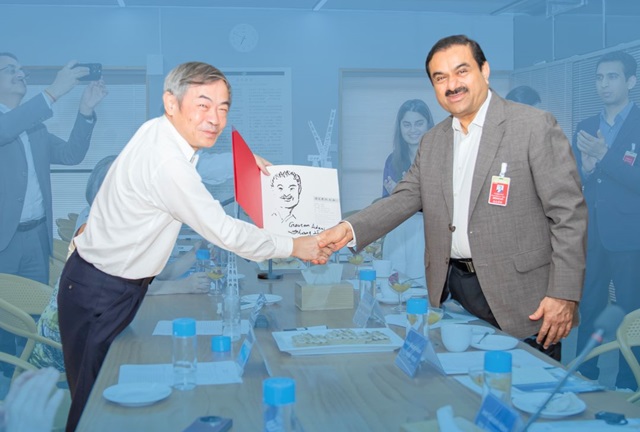
Among those exploring partnerships are some of India’s biggest names. Bloomberg News reported that Adani Group founder Gautam Adani visited China earlier this year, meeting companies including battery giant Contemporary Amperex Technology Co. (CATL) and holding talks with EV leader BYD Co., although Adani’s firm has denied pursuing a collaboration. JSW Group, led by billionaire Sajjan Jindal, has already struck a pact with Chery Automobile Co. to source technology and components for its new-energy vehicle plans. Meanwhile, Mukesh Ambani’s Reliance Industries Ltd. is weighing investments in Chinese-origin battery tech firms as part of its clean energy push.
To sidestep political hurdles, Indian companies have increasingly signed agreements with subsidiaries of Chinese firms in third countries such as Singapore and Vietnam. These deals often include technology transfer provisions while avoiding direct scrutiny.
Analysts suggest the timing is shifting in favor of more overt dealmaking. New Delhi has reinstated visas for Chinese tourists, Beijing has relaxed export curbs on critical inputs like urea, and direct flights between the countries are expected to resume soon. Chinese Foreign Minister Wang Yi is due to visit India in August, followed by a possible meeting between Indian Prime Minister Narendra Modi and Chinese President Xi Jinping at a regional security summit in Tianjin.
“If politics signals that ‘spring is coming,’ companies will quickly follow suit,” said Huiyao Wang, founder of the Center for China and Globalization in Beijing.
Still, the warming ties carry risks. Indian firms remain vulnerable to Chinese export curbs, such as restrictions on rare earth magnets, and face uncertainties after high-profile cases like BYD’s blocked $1 billion investment proposal and Great Wall Motor’s withdrawal from India.
Industry experts argue that dependence on Chinese technology is likely unavoidable if India is to scale up its clean energy ambitions. “Indian auto companies have seen multiple supply chain disruptions in recent years,” said BNP Paribas analyst Kumar Rakesh. “As these companies expand their portfolio in EVs, they would prefer to secure sourcing of key EV components as that could become a key competitive advantage.”
For Chinese companies, access to India’s 1.4 billion-strong consumer market may prove a greater incentive than sharing intellectual property. Whether that aligns with New Delhi’s protectionist instincts remains to be seen.