Until a few years ago, most people might not have heard the term Gen Z. It is unclear whether the term appeared in English dictionaries published in earlier years. Today, however, it has become a widely discussed term, prompting many to wonder what it actually means.
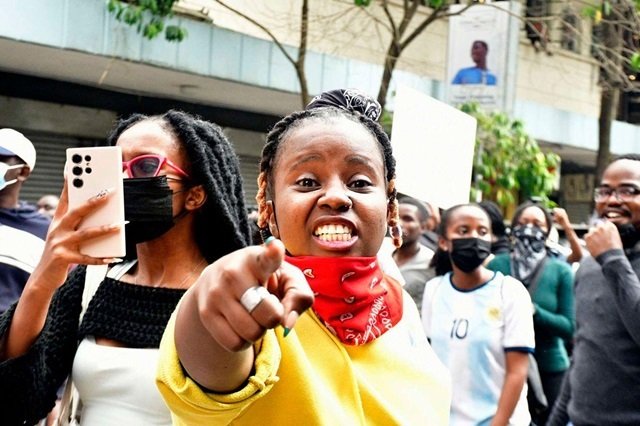
In earlier times, young people were generally referred to as students or youth. Today, when the term Gen Z is used in the context of protests, the general perception is that it refers to young people, often students, with a revolutionary mindset who are willing to take to the streets and even resort to violence to press their demands, if necessary.
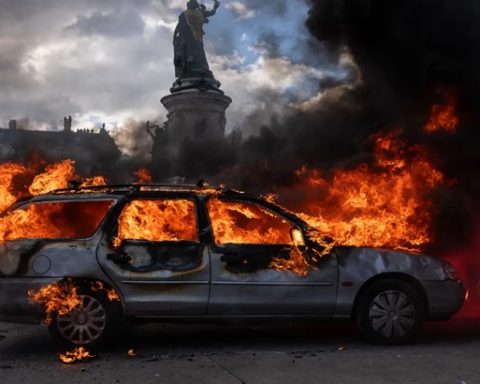
Recent unrest involving groups reportedly comprising students in Belgium, France, Sri Lanka, Bangladesh and Nepal has been described by the media as protests led by what is commonly termed Gen Z.
However, a careful examination of protests attributed to the so-called Gen Z would suggest that the demonstrators do not necessarily represent the student community as a whole. Rather, they may comprise a small group of ambitious individuals described as student leaders, alongside a larger number of non-students with political affiliations, prejudices and, perhaps, vested interests. In any case, the spread of protests attributed to Gen Z across several countries, ostensibly to achieve specific demands but with little regard for established procedures, has become a cause for concern.
The participants in protest movements launched in different countries under the Gen Z banner constitute only a small fraction of the total population, certainly less than one per cent in each country. Nevertheless, these demonstrators—comprising a handful of so-called student leaders, students who appear more interested in participating in protests than pursuing their education, and non-students—can create the impression of a formidable protest movement. They often appear unconcerned about the disruption their actions cause to public life or the possibility of violence. They may also resort to tactics such as hunger strikes and slogan-shouting to draw attention to their demands. Such activities receive extensive coverage from a media often hungry for sensational news, which is precisely the kind of attention the protesters seek.
Democratic countries with functioning parliaments and independent judiciaries appear increasingly vulnerable to such protest movements, as their governments may be unwilling or hesitant to suppress demonstrations through force.
In this context, it is worth noting that similar protests do not appear to occur in the same manner in countries governed by dictatorial or feudal-style leadership, where the authorities may be less tolerant of public dissent.
It would therefore be worthwhile for the leaders of democratic countries to put their heads together and develop a coherent policy approach to address such situations, particularly when attempts are made to bring about regime changes without duly following the procedures established under electoral democracy.