


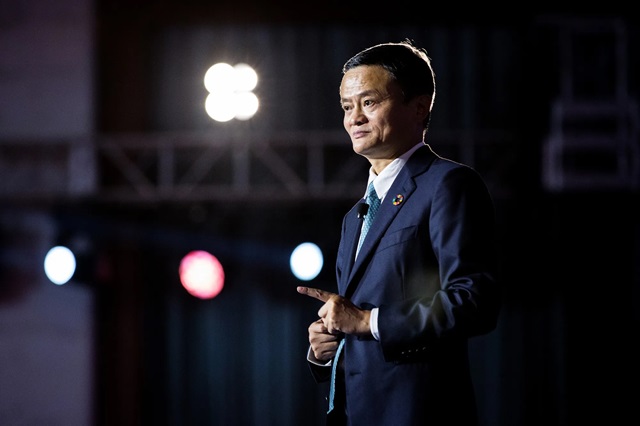
Alibaba founder Jack Ma has reemerged as a driving force inside the company he built, marking his most active involvement in years as the Chinese tech giant ramps up its fight against rivals and doubles down on artificial intelligence.
After keeping a low profile since Beijing’s sweeping crackdown on the tech industry in late 2020, Ma is once again walking the halls of Alibaba’s campuses. According to a Bloomberg report, the 61-year-old entrepreneur has been instrumental in shaping strategy, including a decision to commit up to 50 billion yuan ($7 billion) in subsidies to counter JD.com’s expansion into Alibaba’s core markets.
Although Alibaba has not confirmed any official role for Ma, insiders told Bloomberg he is more hands-on than at any point since stepping down as chairman in 2019. He is said to be closely tracking the company’s e-commerce revival and its high-stakes pivot toward AI — sometimes requesting multiple updates from executives in a single day.
“Jack Ma is Alibaba’s biggest PR figure, biggest personality, biggest idol,” said Li Chengdong, head of Beijing-based think tank Haitun. “The return of the big boss means he’s no longer a risk, and that just gets everyone’s blood pumping.”
Ma’s renewed presence comes at a pivotal moment for Alibaba. Once the dominant force in Chinese e-commerce, the company now faces fierce competition from JD.com, Meituan, and upstart PDD Holdings. As of July, Alibaba’s food delivery market share stood at 43%, trailing Meituan’s 47%, according to Goldman Sachs.
The comeback also carries symbolic weight. Ma became the emblem of Beijing’s regulatory crackdown after his 2020 criticism of China’s financial system led to the scuttling of Ant Group’s IPO and a historic wave of wealth destruction across the sector. Alibaba alone lost nearly $700 billion in market value at the height of the turmoil.
Yet his recent appearances — from a speech at Ant Group in December that left longtime employees in tears, to visits across Alibaba divisions this year — suggest a fresh determination to restore confidence and growth. In February, Ma’s handshake with President Xi Jinping was widely interpreted as a signal of political rehabilitation at a time when Beijing is looking to AI as a driver of economic momentum.
Under the leadership of longtime allies Joe Tsai and Eddie Wu, Alibaba has pledged more than 380 billion yuan over the next three years to AI and cloud infrastructure. The investments have already boosted results: in August, cloud revenue jumped 26% year-on-year, its fastest growth in years, pushing the company’s stock up 88% so far this year.
Still, Ma’s return isn’t without risks. His aggressive push into subsidies could put Alibaba back in regulators’ crosshairs, and his presence on campus has blurred lines of authority inside the company, Bloomberg noted.
Even so, many see Ma’s influence as critical to Alibaba’s next chapter. “Jack has kind of a moral authority in the company to make the big calls,” said Duncan Clark, author of Alibaba: The House That Jack Ma Built. “He’s not a day-to-day micromanager. But his word can shift the company’s direction.”
For Alibaba employees, the symbolism is clear: Ma wears his company badge again, a quiet but powerful signal that he is back in the fight.











