


by Luxman Aravind
In the predawn darkness of 20 December 1989, the streets of Panama City erupted in chaos as the United States launched Operation Just Cause to capture General Manuel Noriega, the country’s military ruler. Helicopters swooped across the skyline, tanks rolled through neighbourhoods, and gunfire tore through the air. By the end of the invasion, Panamanian authorities and observers estimated that more than 300 civilians were killed, with thousands injured and their homes destroyed in the indiscriminate crossfire. American forces suffered 23 military casualties. Yet the deaths of innocent Panamanians were treated as little more than collateral damage, excused under the banner of regime change and anti-narcotics enforcement.
Noriega, for his part, eventually surrendered and was flown to the United States, where he faced federal prosecution. In the judicial records of the Southern District of Florida, the indictment detailed the “systematic and extensive corruption” of Noriega, linking him to narcotics trafficking and money laundering, a legal justification for extraordinary military intervention. In 1992, he was convicted on multiple counts, including drug trafficking, racketeering and money laundering, and sentenced to 40 years in prison, a term later reduced to 17 years.
Upon completing his US sentence in 2007, he was extradited to France, where he received a seven-year sentence for money laundering. After serving this term, he was returned to Panama in December 2011 to face additional sentences for crimes committed during his rule. Noriega spent his final years in Panamanian custody and died in May 2017 at the age of 83. Reflecting bitterly on his life, he once told interviewers, “I was treated as a criminal abroad, but the destruction at home, the families that were shattered, the children killed, none of that was accounted for. Who will judge that?”
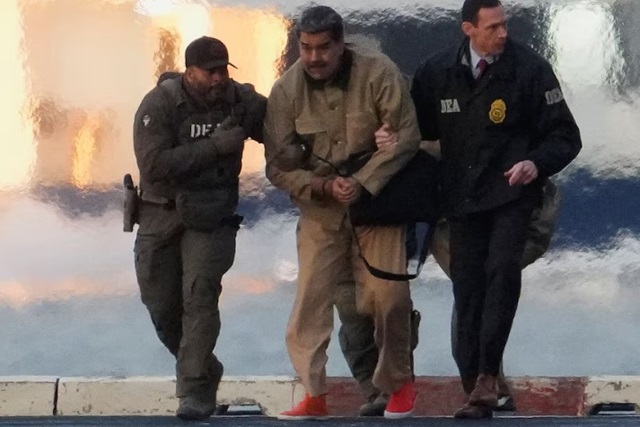
Last weekend, a strikingly similar scenario unfolded in Venezuela. On 3 January 2025, U.S. forces captured Nicolás Maduro and his wife, Cilia Flores, in Caracas, transferring them to New York for prosecution on charges of narco-terrorism, cocaine importation, and illegal possession of firearms. Reports indicate that dozens of civilians, including around 30 Cubans, were killed during the operation. Yet, as with Panama, these casualties have received scant official acknowledgement or reparations.
The indictment against Maduro and Flores paints a portrait of a state apparatus intertwined with criminal networks, a narrative reinforced by decades of documented corruption and narcotics trafficking allegedly orchestrated at the highest levels of the Venezuelan government. Flores, a lawyer by training and former Attorney General, emerges in the documents as not merely an adjunct to her husband’s power but a key legal and political architect within the Chavista regime, implicated by prosecutors in arranging and concealing narcotics operations. Maduro’s capture, lauded by U.S. officials as a law enforcement triumph, mirrors the Noriega precedent.
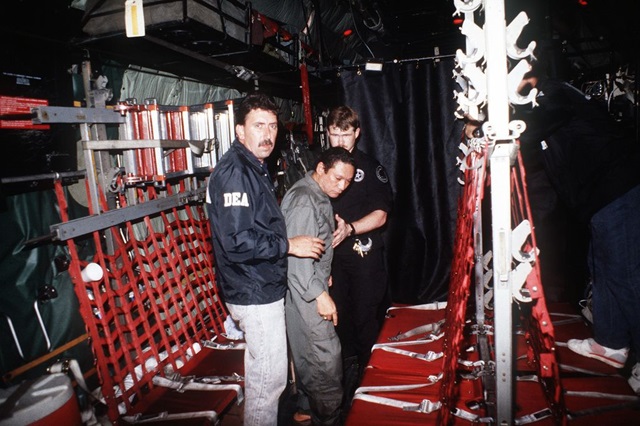
The parallels between the two operations are stark and disturbing. In both cases, the United States invoked legal justifications rooted in domestic statutes and international interpretations that strain credulity. In Panama, prosecutors argued that Noriega’s immunity as a sitting head of state could be bypassed because the U.S. did not recognise his legitimacy after his overt involvement in drug trafficking. According to the judicial records, “The indictment establishes that Noriega knowingly facilitated the importation of cocaine into the United States, thereby placing him outside the protection afforded by sovereign immunity.”
Similarly, in Venezuela, U.S. officials contend that Maduro’s status as a head of state offers no shield because the United States does not recognise the results of Venezuela’s contested elections. Legal counsel for Maduro, however, is expected to invoke the same arguments that failed for Noriega — the principle of sovereign immunity under customary international law, codified in the UN Convention on Jurisdictional Immunities of States and Their Property, which holds that foreign leaders should not be prosecuted abroad for acts performed in the exercise of official duties.
Yet these cases are not mere legal abstractions. They reveal a pattern in which American policymakers are willing to disregard civilian safety when the imperatives of geopolitics, national security, or anti-drug policy demand action. In Panama, Noriega’s capture left hundreds of dead civilians, yet no compensatory measures were instituted for the families. Noriega himself, in post-incarceration interviews, repeatedly highlighted this moral blind spot, emphasising the “lawlessness that disguised itself as justice.”
In Venezuela, preliminary reports suggest that the deaths of civilians — including foreign nationals caught in the crossfire — are similarly treated as acceptable losses, an echo of the unaccountable violence that marked Just Cause. The U.S. framing of both operations as law enforcement and counter-narcotics initiatives cloaks a deeper ethical crisis: that international law, ostensibly designed to protect sovereign equality and civilian life, is rendered selectively enforceable when American interests are perceived to be at stake.

These interventions strain the limits of the postwar international legal order. The United Nations Charter, Article 2(4), explicitly prohibits “the threat or use of force against the territorial integrity or political independence of any state,” save for acts of self-defence under Article 51 or authorisation by the Security Council. Neither Panama nor Venezuela had committed acts of armed aggression against the United States; rather, Washington invoked domestic criminal statutes and interpretations of international narcotics treaties to justify military action.
In effect, these operations set a perilous precedent in which the United States assumes unilateral authority to prosecute foreign leaders extraterritorially while treating the sovereign states themselves as secondary. This mirrors concerns raised during the Noriega trial, where Judge Federico A. Moreno noted in 1992, “While the United States has a compelling interest in the suppression of drug trafficking, the extraterritorial application of domestic law must be reconciled with international norms protecting state sovereignty.”
The Maduro operation also underscores the enduring tension between realpolitik and legal principle. Prosecutors allege that both Maduro and Flores orchestrated complex networks to traffic narcotics and launder proceeds, yet the simultaneous disregard for civilian casualties highlights a selective morality in the application of justice. U.S. Attorney General statements, framing the operation as a victory for law enforcement and national security, offer no acknowledgement of the ethical conundrum posed by the deaths of bystanders.
In Panama, the judiciary later affirmed Noriega’s criminal liability but skirted accountability for the civilian toll, allowing the state to legitimise military action without redress for human cost. In Venezuela, a similar legal theatre is unfolding: the focus remains on prosecuting the sovereign, while the extrajudicial victims — including Cubans and other non-combatants — remain invisible to the justice system that purportedly champions human rights.
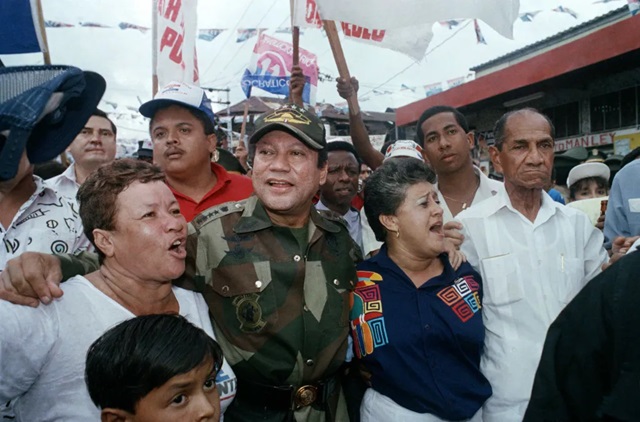
The legal controversies are further compounded by questions of extradition, recognition, and immunity. Noriega’s case relied on the argument that he had forfeited immunity due to criminal acts, yet the invasion itself violated Panama’s territorial sovereignty, raising profound questions under customary international law. Maduro and Flores face parallel challenges: the U.S. does not recognise their government, yet they remain heads of state and former chief legal officials with obligations under domestic law. The indictment and subsequent arrest, while framed as law enforcement, are inseparable from the political context — a stark illustration of how international law can be co-opted to justify actions that would otherwise constitute flagrant violations of sovereignty.
The bottom line is that the operations against Noriega and Maduro expose the tenuous boundary between law enforcement and imperial prerogative.









