


Standing before a screen displaying a goose laying golden eggs from a factory inside its stomach, Masayoshi Son delivered a message that captured both his investment philosophy and the future he believes awaits SoftBank. Addressing shareholders in Tokyo last month, the billionaire founder argued that value lies not in the eggs themselves, but in the goose capable of producing them. Suggesting he be called “Goose Son” rather than “Chairman Son,” he asked the audience whether they would rather have immediate cash or future golden eggs, using the metaphor to defend his long-term strategy and challenge investors who have questioned his approach.
The presentation came at a pivotal moment for SoftBank. On June 1, the Japanese technology investment group overtook Toyota to become Japan’s most valuable listed company for the first time since the dotcom era, marking another dramatic turnaround in the career of a businessman whose fortunes have repeatedly swung between extraordinary success and costly setbacks. The account, reported by the Financial Times, portrays a company increasingly centered on artificial intelligence and a founder determined to remain at its helm.
Throughout his career, Son has become synonymous with high-risk investment decisions. Early stakes in Alibaba and Arm generated enormous returns and helped establish his reputation as one of technology’s boldest investors. Other bets, including the company’s investment in WeWork, resulted in billions of dollars in losses and intensified criticism that his investment style depended more on conviction than caution.
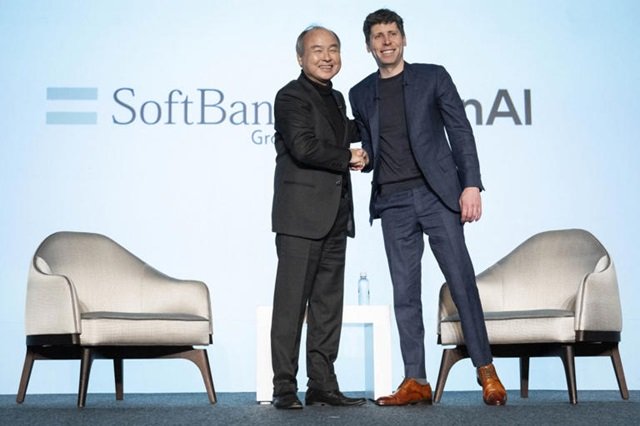
Now SoftBank has committed itself to what Son describes as the “four corners” of artificial superintelligence: data centres, AI models, semiconductor chips and robotics. Through its ownership of Arm, extensive financial backing of OpenAI and investments across the artificial intelligence ecosystem, the company has positioned itself at the centre of one of the fastest-growing sectors in global technology.
Speaking to the Financial Times, Son described the current period as the moment when SoftBank must demonstrate what it has become. Yet he has remained reluctant to reveal the full scope of his plans, comparing business strategy to a boxing match in which revealing one’s next move only gives opponents an advantage. He said he had similarly withheld details about the rationale behind SoftBank’s acquisition of Arm for years.
That secrecy has become one of the defining characteristics of SoftBank under Son’s leadership. Over the past decade he has consolidated influence within the company, expanding his personal office while several senior executives, board members and expected successors have departed. Supporters argue that SoftBank’s appeal has always rested on Son’s willingness to make unconventional long-term investments before broader markets recognise their potential. Others, however, question whether too much authority has become concentrated in one individual as the company approaches another series of major listings and strategic decisions.
Among SoftBank’s largest commitments is its investment in OpenAI. The company has committed approximately $64.6 billion for what is expected to become a stake of about 13 per cent. Investors have viewed that exposure as one of the primary reasons behind SoftBank’s rising valuation, anticipating a future public listing of the artificial intelligence company. Additional listings involving SoftBank-backed businesses, including robotics company Roze and energy and data centre developer SB Energy, are also planned as part of what Son presents as an increasingly integrated strategy.
Market enthusiasm, however, has been accompanied by renewed caution. Since early June, SoftBank shares have retreated significantly amid reports that an OpenAI initial public offering could face delays. Analysts have also pointed to the close financial relationship between SoftBank and OpenAI, drawing comparisons with previous investment cycles that ended poorly. Some have warned that rising valuations and concentrated exposure to artificial intelligence create increasing risks for investors.
Son rejects suggestions that the artificial intelligence sector represents another speculative bubble. According to the Financial Times, he argues that the AI revolution is only beginning and believes market downturns should be viewed as opportunities rather than reasons to retreat. Reflecting on the collapse of the dotcom bubble, he said his greatest regret was lacking sufficient capital to continue investing during the market decline.
His confidence also extends to artificial intelligence itself. Son has argued that increasingly sophisticated AI systems will become more responsible over time, with regulation and market incentives encouraging major technology companies to act responsibly. He has expressed greater concern about risks associated with open-source models than with the largest commercial developers.
Despite SoftBank’s recovery, questions remain over the structure supporting Son’s ambitions. The company continues to trade at a substantial discount to its estimated net asset value, even though its stake in Arm alone exceeds SoftBank’s own market capitalisation. Investors have also raised concerns about complex financing arrangements, leverage against company assets and governance issues surrounding Son’s personal co-investment structures.
The company’s growing involvement across multiple parts of the AI supply chain has also attracted scrutiny. SoftBank is both a major investor in and customer of companies such as Arm and OpenAI. It has entered large commercial agreements while simultaneously expanding its ownership interests, prompting some shareholders to question potential conflicts of interest. SoftBank has maintained that its board reviews these arrangements and continues to debate major investment decisions.
Son’s latest strategy also reflects a shift from the diversified investment model that characterised much of the Vision Fund era. Rather than backing a broad collection of unrelated technology companies, he now envisions an interconnected network in which power plants supply electricity to SoftBank-owned data centres, robots construct infrastructure, Arm-designed chips provide computing capability and AI developers such as OpenAI deliver advanced models. Executives and analysts describe this approach as significantly more integrated than the company’s previous investment strategy.
The transformation comes after decades in which Son repeatedly reinvented both himself and SoftBank. Born to ethnically Korean parents, he studied in the United States before returning to Japan convinced that software would shape the future. He built SoftBank as a software distributor, expanded into telecommunications, secured Japan’s first iPhone partnership and later created the Vision Funds, reshaping global venture capital before turning his attention almost entirely to artificial intelligence.
Today, Son’s influence extends well beyond the technology sector. He has become an increasingly important figure in Japan’s AI ambitions, maintains relationships with political leaders including U.S. President Donald Trump and French President Emmanuel Macron, and is involved in projects ranging from data centres to energy infrastructure. As SoftBank’s investments expand into sectors viewed as strategically important, lenders, regulators and policymakers are paying closer attention to the company’s growing scale and significance.
While questions remain about succession, governance and execution, Son has made clear that retirement is no longer an immediate priority. Speaking before shareholders beneath the image of his golden goose, he said he had once planned to step aside in his sixties but had changed course. Instead, he told investors he intends to continue leading SoftBank for another 10 to 15 years while pursuing a vision that he believes could increase the company’s net asset value to ¥1 quadrillion through the development of artificial superintelligence.









