


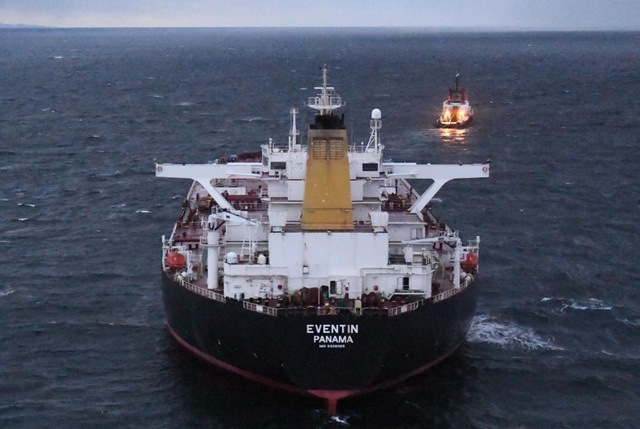
The uncertainty surrounding Donald Trump’s foreign policies, particularly in regard to tariffs and international conflicts, is causing oil traders to shy away from long-term tanker charter agreements, exacerbating the already volatile landscape for vessel owners. According to industry insiders, shipowners and major commodity traders have become increasingly reluctant to enter into time charters, which typically provide long-term stability on both the cost of transporting goods and the income from leasing vessels.
Mikael Skov, CEO of Hafnia, one of the largest tanker operators in the world, expressed that the frequent and unpredictable statements from the Trump administration have made it more difficult to secure long-term deals. “Every day, there’s a new development,” he said, noting that oil traders and shipowners alike are now more cautious. This uncertainty has also affected the second-hand vessel market, with fewer buyers willing to invest in ships without the security of a long-term lease.
The tanker market faces additional challenges stemming from geopolitical tensions. The ongoing conflict in Ukraine, as well as security concerns in the Red Sea due to attacks by Yemen’s Houthi militants, have already driven up shipping costs by forcing vessels to take longer and more costly routes. While the Houthis recently announced a scaling back of their attacks following the Gaza ceasefire, it remains uncertain whether the situation in the Red Sea will stabilize or escalate in the coming months.
Geopolitical instability and the threat of tariffs have complicated the outlook for oil transportation. Tariffs on crude oil imports from Canada and Mexico could alter shipping patterns, potentially boosting U.S. seaborne trade with other regions. However, U.S. tariffs on China might reduce Chinese oil demand, adding another layer of complexity to the global market.
The war in Ukraine, which has severely disrupted Russia’s oil exports due to international sanctions, further complicates the landscape for tanker owners. As sanctions on Russian oil are questioned, the future of oil transportation patterns remains unclear. Hafnia’s Skov questioned what impact the potential lifting of sanctions could have on global oil shipping dynamics, adding another variable for traders and shipowners to consider.
Amid these uncertainties, questions about fuel availability, or “bunker,” have also come to the fore. As shipping costs rise due to geopolitical factors, companies like Cargill and Hafnia have been collaborating to provide greater scale and security in bunker supply. This move reflects the ongoing need for stability in the midst of market volatility.
Despite these challenges, industry leaders are optimistic about the long-term outlook for tanker owners. With an aging global fleet, there is an expectation that many vessels will be scrapped in the near future, reducing supply and potentially raising prices. However, shipbrokers like Sean Miller of SSY emphasized that the tanker market is still besieged by geopolitical instability, with normalization of the market contingent on resolving key political conflicts.












