by Our Foreign Affairs Editor
The sun blazed over Jerusalem that day, a relentless heat pressing down on the ancient stones, yet as we stepped into Shalva—the Israel Association for Children with Disabilities—we felt as if we had entered a different world, a sanctuary where suffering had been transformed into purpose and despair into hope. In a city layered with millennia of history, this place stood as a living proof to humanity’s highest potential: to embrace the most vulnerable among us and, in doing so, redefine what it means to be human. Fernando Bisker, along with his wife, greeted us with warmth, humility, and an openness that immediately revealed the profound depth of their commitment. “It was the first time somebody took care of us,” Fernando said, recounting the arrival of their daughter’s diagnosis, a moment that would alter the trajectory of their lives. His words were simple, yet they carried the weight of grief, love, and the transformative power of empathy.
Fernando’s story begins in Latin America, a continent known for its vibrancy and contrast, but his path was suddenly transformed by a personal tragedy. When his daughter was born, the doctor revealed, almost in passing, “21,” referring to the chromosomal marker for Down syndrome. Fernando recalls, “Nobody told me congratulations. Nobody told me Mazel Tov, nothing. He was completely quiet.” The silence, the absence of guidance or support, encapsulates the initial shock and isolation that so many parents of children with disabilities experience. In those moments, the world can feel cruelly indifferent, leaving families to navigate grief in isolation. Fernando admitted, with heartbreaking honesty, “I even said to God, why? I don’t want.”
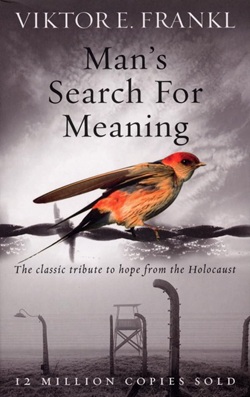
Yet, it was Shalva that offered them a new lens through which to view this unexpected reality. “Instead of saying, God chose you, you’re special, I said, no, it’s hard. They gave a hug to us. They asked me, can I see a picture of your daughter? How cute she is, so beautiful.” In that simple, human act of acknowledgement, Fernando and his wife found solace and hope. It was a moment that highlights the truth Viktor Frankl identified in Man’s Search for Meaning: even in suffering, humans can find significance not through avoidance but through engagement, through choosing how to respond. Shalva’s embrace of the family reflected precisely this: a recognition that grief is valid, yet life, meaning, and love can still flourish.
Fernando emphasised that their mission now extends far beyond their own daughter. “We also support women that want to jump from the window when they have a baby with Down syndrome. And we tell them, it’s fine to have those feelings.” His words are striking because they acknowledge the raw, unspoken fears that accompany unexpected diagnoses, without judgment, without minimisation. It reflects a profound understanding: families in crisis do not need simple platitudes; they need empathy, support, and guidance. The Biskers’ approach mirrors Frankl’s philosophy that suffering can be transformed into responsibility. By taking their grief and channeling it into action, they created a legacy of hope for countless others.
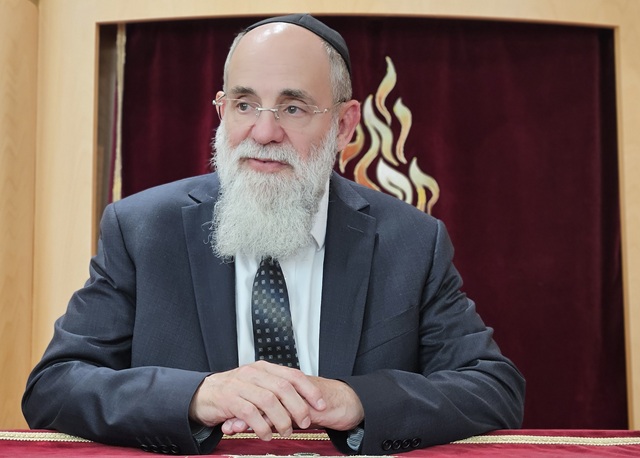
Parallel to this, the vision and perseverance of Shalva’s founder, Kalman Samuels, provide the organisational and philosophical framework that allows such transformative care to exist. Born in Vancouver, Canada, Kalman’s early life was far from religious, far from extraordinary. Yet his encounter with Israel altered his trajectory completely. “I want to explain where this came from… there’s so much more here than I had ever learned about in my education in Vancouver,” he recalled. Kalman’s initial curiosity evolved into commitment, and he immersed himself in Jewish studies, eventually becoming a rabbi and marrying his wife, Malki.
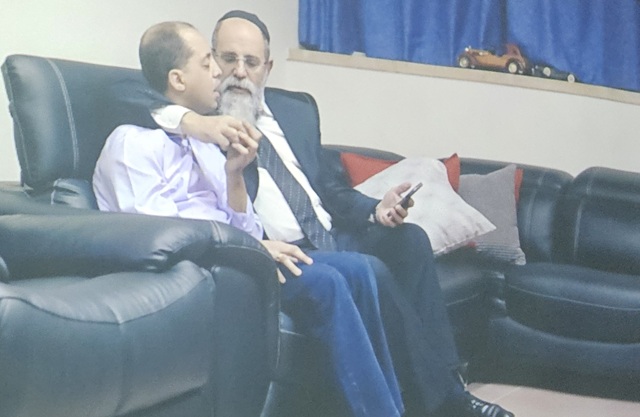
Their lives were irrevocably altered when their son, Yossi, at eleven months old, suffered a debilitating injury from a faulty vaccination, leaving him blind, deaf, and hyperactive. Kalman recounts, “Our 24/7 was just caring for him… my wife had a visitor… she said to my wife, Malki, you know, you cannot raise a family with this child in the home. And you have to find a setting for him outside the home.” Malki’s defiance, her commitment to care for Yossi in their home, embodies a principle that underpins Shalva: a refusal to marginalise those society often casts aside. “This child is also from heaven. He’s also for the best. Do I understand it at this moment? No. But I can tell you that I will care for this child for the rest of my life in my home.”
Frankl’s reflections on meaning resonate profoundly with this narrative. He writes, “When we are no longer able to change a situation, we are challenged to change ourselves.” Kalman and Malki’s transformation of grief into purpose mirrors this very principle. Their personal struggle became a collective mission. Yossi’s miraculous breakthrough at age eight—learning to communicate through finger spelling in his palm, guided by a deaf teacher—was not only a victory for him and his family but the spark that ignited the creation of Shalva.
From an initial programme serving just five children, Shalva expanded steadily, growing from a duplex to a centre capable of serving hundreds, eventually culminating in the national campus in Jerusalem. “If it would be 10,000 dollars, the problem is yours. But if the need is 70 million, the problem is God’s. He will solve the problem,” Kalman said, describing the audacious fundraising and logistical efforts that turned vision into reality. Importantly, Shalva provides services free of charge, removing financial barriers that often prevent families from accessing vital support. “We do not charge anyone… It’s free, for everyone.”
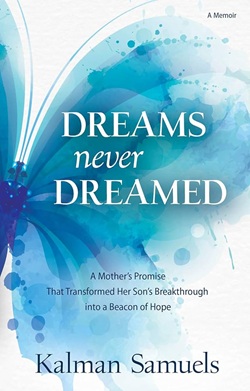
The philosophical depth of Shalva’s approach lies in its holistic understanding of disability. As Kalman explained, the programs are not limited to physical therapies or education. They include counselling, advocacy, and social inclusion initiatives. Families are taught to dream anew, to reconstruct lives once thought irrevocably altered. “Dreams never dreamed become the foundation for a new way of life,” he emphasised, echoing Frankl’s assertion that meaning can be discovered even in the most constraining circumstances.
Shalva’s impact is both local and global. Internationally, the organisation serves as a model, providing guidance to countries seeking to improve disability care. Kalman recounted, “In Mozambique… somebody had a child… we trained him for two weeks… they went back. And a year and a half later, there’s a small centre in Mozambique.” The centre’s philosophy—rooted in empathy, rigorous care, and innovation—offers a template for transforming systemic neglect into proactive inclusion.
Historical attitudes toward disability often reflected fear, exclusion, and marginalisation. In the Middle Ages, children with disabilities were frequently hidden from public life; institutions often provided confinement rather than care. It was only in the late 19th and 20th centuries that reformers began advocating for education, therapy, and inclusion. Shalva represents a culmination of this long struggle: an institution that combines modern therapeutic science with an ethical imperative for dignity and social integration. Figures like Helen Keller, who Kalman referenced, remind us that those living with disabilities possess agency, potential, and creativity. “Alone we can do so little; together we can do so much,” Keller once wrote, encapsulating the collaborative spirit embodied at Shalva.
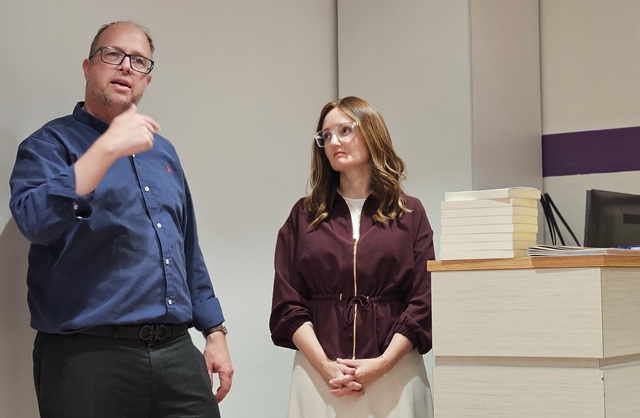
Fernando’s reflections complement Kalman’s narrative. His experience as a parent, confronted with grief and societal indifference, accentuates the urgency of a holistic, empathetic approach. “It’s important to kill the dreams that we had before to build a new dream,” he said. This concept of “rebuilding dreams” resonates across all families served by Shalva, illustrating that the work is not simply about managing disability, but about creating the conditions for human flourishing.
Walking through Shalva, one senses the palpable energy of resilience. Children engage in activities that range from music and art to sports and language therapy. Staff and volunteers move seamlessly among them, attentive and nurturing, embodying the principle that dignity is lived through action. As Kalman recounted, “Yossi… he can’t see, he can’t hear, he can’t walk. He works. He rides horses. He’s a sommelier, he creates his own wines… Yet he’s always dreaming and he’s always fulfilling his dreams.” This is not anecdote alone; it is evidence of what happens when society invests in possibility rather than limitation.
Shalva’s work reflects broader sociological and ethical imperatives. Disability inclusion is a measure not only of compassion but of societal health. Martha Nussbaum of the University of Chicago writes that “a society is measured by how it treats its most vulnerable members.” Shalva operationalises this principle, creating spaces where vulnerability is met with empowerment rather than pity. It is a model of ethical action, demonstrating that inclusion enriches everyone: families, communities, and society at large.
The expansion of Shalva’s influence internationally highlights the universality of its principles. Centres in Brazil, Panama, and other nations illustrate that the challenges faced by families of children with disabilities are not unique to Israel. They are global, and so too must be the solutions. Kalman’s work in mentoring other countries reflects a philosophy of dissemination: knowledge, support, and hope are not bound by geography. As he explained, “We helped them. They wanted to call it Shalva. I said, I don’t think so. Call it what you want, because I can’t control it. But they have a magnificent centre there.”
One of the most striking aspects of Shalva is the insistence that children and families be seen in their full humanity, not reduced to labels or syndromes. Fernando articulated this beautifully: “The baby is a baby… very holy souls… But that doesn’t help a father and a mother when a baby is born. They need to live the grief.” Recognition of suffering, combined with guidance and practical support, is a powerful tool for transforming despair into hope, reflecting Frankl’s assertion that suffering ceases to be suffering in the moment it finds meaning.
Kalman’s leadership further exemplifies how visionary action rooted in empathy can create lasting impact. His recounting of Yossi’s adventures—riding elephants in Thailand, meeting the President of the United States—reveals not only the possibilities of a child with disabilities but also the commitment of a family and a community to nurture those possibilities. “If there’s anything we can learn from Yossi, it’s that as we get older, we should never stop dreaming,” he said. The metaphorical and literal weight of Yossi’s journey highlights the message that human potential is not defined by physical ability but by the support, opportunity, and belief offered by those around us.
In reflecting on our visit, one cannot help but consider the broader implications for society. Shalva challenges entrenched stereotypes, demonstrating that disability need not preclude achievement, joy, or contribution. It shows that human dignity is a right, not a privilege, and that the ethical measure of a society is revealed in its treatment of those who are most vulnerable. The centre’s integration of education, therapy, recreation, and community building offers a holistic model, one that should inspire policymakers, educators, and social planners worldwide.
Historically, societies that have neglected their differently abled members have not only inflicted individual suffering but weakened their collective moral fabric. From the workhouses of 18th-century Europe to the eugenics movements of the early 20th century, the mistreatment and marginalisation of those with disabilities serve as blunt reminders of what can happen when empathy is absent. Shalva represents a reversal of that trajectory—a space where each child, each family, is valued and empowered.
By combining the personal narratives of Fernando and Kalman, one sees a powerful confluence of love, faith, and strategic action. Fernando’s story illustrates the immediate, emotional, and human dimensions of caregiving, while Kalman’s narrative demonstrates the structural, visionary, and sustainable aspects of transforming care into a movement. Together, they offer a blueprint for creating societies that do not merely tolerate difference but actively celebrate and support it.
Walking out of Shalva, the Jerusalem sun seemed less oppressive, its heat softened by the enduring warmth within the walls we had left behind. The lessons of empathy, resilience, and purpose were tangible, carried not only in the stories we heard but in the atmosphere of hope and human possibility that permeates every corner of the centre. As Viktor Frankl wrote, “Those who have a ‘why’ to live, can bear with almost any ‘how.’” Shalva exemplifies this principle at every level: children, families, and staff find a ‘why’ that transforms suffering into meaning, despair into action, and limitation into possibility.
Shalva stands as a living monument to the human capacity for empathy, courage, and transformation. Fernando and his wife, alongside Kalman and Malki Samuels, have shown that caring for children with disabilities is not merely a moral duty—it is an opportunity to uncover the deepest reserves of human love and ingenuity. Around Shalva, a dedicated community of over 1,500 people, the majority of whom are volunteers, work tirelessly to bring this mission to life. Their work reminds us that inclusion is not charity, but a recognition of inherent human dignity. It reminds us that dreams deferred are not dreams lost, and that through compassion, creativity, and commitment, even the most daunting challenges can be transformed into triumphs. In every sense, Shalva is not just an organisation—it is a vision, a movement, and above all, a beacon of hope for humanity itself.
In Sri Lanka, as in many nations where countless differently-abled individuals face daily struggles and their families yearn for support, there is an urgent need for a transformative initiative like Shalva—one that offers hope, dignity, and the chance to thrive without delay.