Syrian President Ahmed al-Sharaa has issued a landmark decree affirming the rights of Kurdish Syrians, formally recognizing their language, restoring citizenship to thousands previously rendered stateless, and declaring Kurdish identity an integral part of the nation. Reported on Friday by state news agency SANA, the decision represents one of the most consequential shifts in Syria’s ethnic and political landscape since the outbreak of the civil war more than a decade ago.
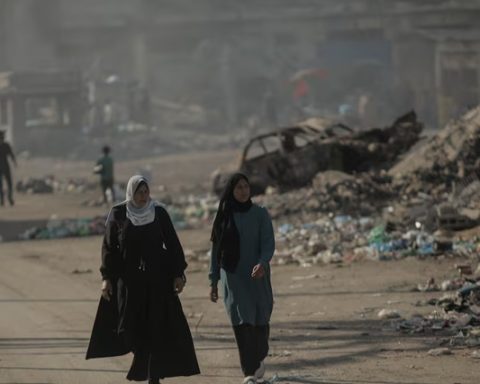
The decree comes in the aftermath of fierce clashes in the northern city of Aleppo last week, violence that left at least 23 people dead according to Syria’s health ministry and forced more than 150,000 residents to flee two Kurdish-run pockets of the city. The fighting subsided only after Kurdish fighters withdrew, but the episode underscored the volatility of relations between Damascus and Kurdish forces at a time when the country remains deeply fractured.
Al-Sharaa has pledged to reunify Syria under a single leadership following 14 years of conflict, yet the unrest in Aleppo has laid bare one of the country’s most enduring faultlines. Kurdish groups, who have carved out autonomous governance structures during the war, have been wary of the president’s Islamist-led government and its intentions toward minority rights and local self-rule. The latest violence has further strained trust, even as the decree seeks to signal a new political approach.
For the first time, Kurdish Syrians are being granted explicit legal and cultural recognition by the state. The decree designates Kurdish as a national language alongside Arabic and allows it to be taught in schools, a move that reverses decades of policies aimed at suppressing Kurdish identity. It frames Kurdish culture as part of Syria’s national fabric rather than a threat to it, marking a sharp departure from previous government doctrine.
The decree also addresses one of the most painful legacies faced by Syrian Kurds: statelessness. Measures dating back to a 1962 census in Hasaka province had stripped many Kurds of Syrian nationality, leaving generations without basic rights. Under the new order, citizenship is restored to all affected residents, including those long registered as stateless, a change that could transform access to education, employment, and political participation for tens of thousands.
Symbolic and legal gestures are paired with broader commitments to inclusion. The decree declares Nowruz, the Kurdish spring and new year festival, a paid national holiday, bans ethnic and linguistic discrimination, and requires state institutions to adopt inclusive national messaging. It also establishes penalties for incitement to ethnic strife, an acknowledgment of how identity-based tensions have fueled violence throughout the conflict.
Despite the sweeping nature of the decree, its implementation remains uncertain. The Syrian government and the Kurdish-led Syrian Democratic Forces, which control much of the country’s northeast, held months of talks last year aimed at integrating Kurdish-run military and civilian bodies into state institutions by the end of 2025. Those negotiations have yielded little concrete progress, raising questions about whether the new commitments will translate into durable political arrangements.
As Syria struggles to emerge from years of war, the decree represents both a bold attempt to reshape the state’s relationship with its Kurdish population and a test of al-Sharaa’s promise of national unity. Whether it eases long-standing grievances or merely papers over unresolved power struggles may determine if the move becomes a turning point or another fragile moment in Syria’s turbulent postwar transition.