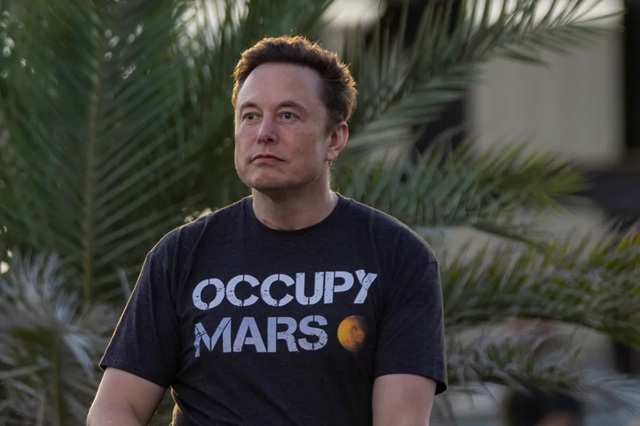
Tesla announced on Wednesday that it will invest $2 billion in CEO Elon Musk’s artificial intelligence company, xAI, while confirming that production plans for its Cybercab robotaxi remain on track for 2026. The investment supports Musk’s broader strategy to pivot Tesla from a traditional electric vehicle maker into an AI-driven technology company, a key element of its roughly $1.5 trillion market valuation, according to Reuters.
The company is also ramping up production of humanoid robots, part of a series of factory investments that will push capital expenditures above $20 billion this year, more than double the $8.5 billion spent in 2025. Tesla shares rose 2.5% in after-hours trading following the announcement. Analysts said the transition phase makes rollout metrics for self-driving software and robotaxi services more important than vehicle deliveries as indicators of future revenue.
Despite the ambitious AI and robotics push, Tesla’s core electric vehicle business has faced pressures. Revenue declined about 3% in 2025 to roughly $94.83 billion, marking the company’s first annual drop, while net income fell 61% to $840 million in the fourth quarter. Adjusted earnings per share of 50 cents exceeded Wall Street estimates of 45 cents. Automotive gross margins, excluding regulatory credits, rose to 17.9% from 13.6% a year earlier, demonstrating Tesla’s pricing strength despite softer sales.
Tesla has relied on discounts, incentives, and lower-priced trims to maintain vehicle volumes. Wall Street forecasts deliveries of 1.77 million vehicles in 2026, an 8.2% increase from the prior year. The company’s energy generation and storage business provided a bright spot, with revenue rising 25.5% to a record $3.84 billion in the December quarter, driven by demand for grid-scale batteries to support renewable energy and stabilize electricity networks.
Investors are increasingly focused on Tesla’s Full Self-Driving (FSD) technology and the rollout of purpose-built Cybercabs, designed without steering wheels or pedals. Musk has acknowledged that initial production of both Cybercabs and the humanoid robot Optimus will be slow before scaling up over time. Regulatory caps currently limit production of vehicles that deviate from standard design requirements to 2,500 units annually, though legislation under consideration could raise that ceiling.
Musk has repeatedly set ambitious targets for robotaxi deployment, including coverage for half of the U.S. population, but has missed prior timelines and has yet to provide firm dates for regulatory approval or full unsupervised deployment. Despite these challenges, Tesla shares rose about 11% in 2025, reflecting investor confidence in Musk’s long-term vision and his $878 billion pay package, which is tied to operational and valuation milestones, according to Reuters.
The xAI investment underscores Tesla’s strategy to leverage AI and robotics as central pillars of growth, aiming to transition investor focus from traditional EV sales to potential revenue streams from autonomous driving software and humanoid robotics. Analysts say the move positions Tesla to participate in the rapidly expanding AI market even as legacy EV competition intensifies and regulatory hurdles persist.