Tesla has reported weaker-than-expected first-quarter earnings, underscoring growing pressure on its core electric vehicle business as global competition intensifies and Elon Musk doubles down on ambitious bets in artificial intelligence and autonomous technology. The results, closely watched by investors across the automotive and tech sectors, show a company caught between slowing traditional car growth and high-risk future-facing investments.
The Austin-based automaker posted revenue of $22.3 billion for the quarter ending March 31, falling short of Wall Street expectations of $22.6 billion. Net income rose 17 percent year-on-year to $477 million, but still significantly missed analyst forecasts of $876.7 million, according to figures reported in the Wall Street Journal. While the earnings gap was narrower than some feared, the results reinforced concerns about Tesla’s near-term momentum in an increasingly crowded EV market.
Once the undisputed leader of the electric vehicle industry, Tesla has now lost its top position to Chinese rival BYD, which surpassed it in global sales after reporting a second consecutive annual decline in deliveries. The shift marks a symbolic turning point in the global EV race, as Chinese manufacturers continue to expand aggressively across international markets while Tesla faces mounting pricing pressure and demand fluctuations.
Vehicle deliveries in the first quarter rose 6.3 percent year-on-year to 358,023 units, but remained well below the company’s peak performance in early 2023, when it delivered more than 423,000 vehicles. Analysts say the slower growth reflects both intensifying competition and weakening incentives in key markets, particularly in the United States.
One significant headwind has been the expiration of a $7,500 federal tax credit for electric vehicle purchases in the U.S. at the end of September. The removal of this incentive has reduced affordability for consumers, contributing to softer demand at a time when rivals are expanding aggressively with lower-cost models. The policy change has added further uncertainty to Tesla’s domestic sales outlook.
Despite the earnings miss, Tesla shares rose nearly 4 percent in after-hours trading to $402.49, reflecting investor optimism about the company’s long-term direction. Markets continue to price in expectations that Tesla’s future value will be driven less by car sales and more by its developments in artificial intelligence, robotics, and autonomous driving systems.
This valuation dynamic has become increasingly central to Tesla’s identity. The company’s stock now trades at 183 times forward earnings, making it one of the most expensive major firms in the S&P 500, according to Bloomberg data. Investors are effectively betting that Tesla will evolve from a car manufacturer into a leading AI and robotics platform, despite its current reliance on automotive revenue.
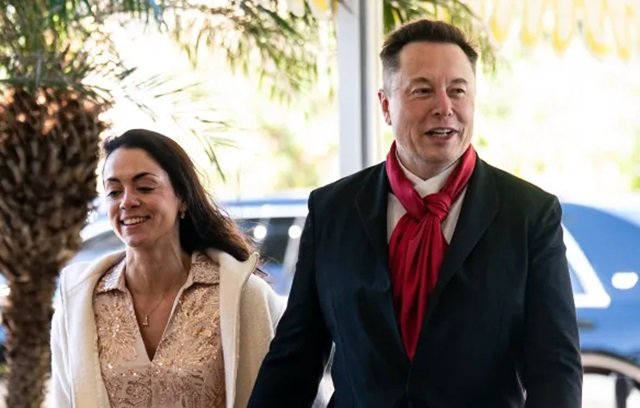
Elon Musk has repeatedly emphasized that Tesla’s most transformative opportunities lie beyond traditional vehicle production. The company is investing heavily in self-driving technology, humanoid robotics, and AI-powered mobility systems. Musk described these initiatives as “very, very challenging” but potentially “revolutionary,” reinforcing his long-term vision for the company’s evolution.
A central pillar of this strategy is Tesla’s autonomous driving and robotaxi program. The company launched its robotaxi service in June 2025, initially limiting operations to select areas in Texas and San Francisco. Executives previously indicated plans to expand the service into nine additional cities in the first half of this year, though no new rollouts have yet been confirmed. Investors are now increasingly pressing for clearer timelines and measurable progress on full-scale deployment.
Tesla has also announced plans to begin production of its purpose-built Cybercab, a fully autonomous vehicle designed without a steering wheel or pedals. Musk said earlier this year that production was expected to begin in April, positioning the vehicle as a cornerstone of Tesla’s future mobility ecosystem. The Cybercab, along with broader robotaxi expansion, is viewed by the company as essential to unlocking new revenue streams beyond car ownership.
While much attention is focused on future technology, Tesla’s financial results suggest its traditional automotive business remains under pressure. However, the company reported signs of regional demand recovery. Chief financial officer Vaibhav Taneja said Tesla had seen renewed strength in Europe, the Middle East, and Africa, particularly in France and Germany, where deliveries reportedly grew by more than 150 percent quarter-over-quarter. He also pointed to growth in Japan and South Korea, as well as modest improvements in the United States.
Tesla also surprised analysts by reporting positive free cash flow of $1.44 billion, significantly outperforming expectations for a cash burn of $1.43 billion. This strong cash position is seen as critical as the company embarks on a more than $20 billion capital expenditure plan for AI infrastructure, self-driving technology, and robotics development. The financial flexibility gives Tesla room to continue investing heavily even as core automotive margins come under pressure.
Despite near-term challenges, Musk remains confident in Tesla’s long-term trajectory. The company’s leadership has framed its current transition as a shift from a carmaker to a diversified AI and robotics enterprise. Investors have largely supported this narrative, even as volatility in earnings and delivery figures continues.