Stroke of the pen: law of the land: kinda cool…Paul Begala
The Inauguration
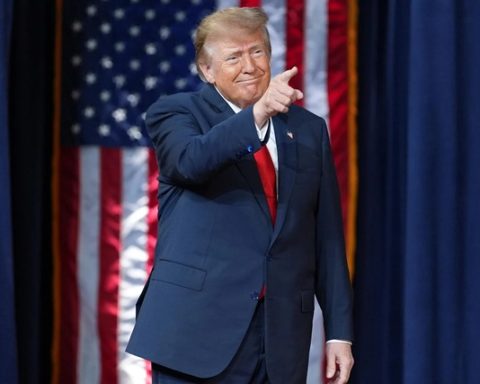
The inauguration of the 47th President of the United States, Donald J. Trump on 20 January 2025 marked a pivotal juncture in the nation’s political and cultural narrative. The ceremony, infused with both grandeur and gravitas, reflected the profound weight of the office and the transformative potential vested in the individual assuming it. In his acceptance speech, President Trump articulated a vision of governance deeply rooted in his campaign’s central tenets of national sovereignty, economic revitalization, and the reassertion of American exceptionalism.
The essence of his address lay in the pledge to restore power to “We the People,” a motif he revisited throughout his rhetoric. He decried the entrenched systems of governance which he described as favoring elites while marginalizing ordinary citizens. Trump’s words resonated with a palpable urgency, encapsulating themes of self-reliance, unity, and a resurgence of national pride. His speech evoked a narrative of reclamation—a determination to dismantle what he perceived as systemic inefficiencies and to restore a governance framework attuned to the aspirations of the American people. In his words the 20th of January was “the day of liberation” of the American people. The golden age of America begins right now,” President Trump said in a roughly 30-minute inaugural address. “From this day forward, our country will flourish and be respected again all over the world. We will be the envy of every nation, and we will not allow ourselves to be taken advantage of any longer during every single day of the Trump administration”. Such a moment symbolized the interplay of leadership and the will of the governed, underscoring the dynamic continuum of democracy.
Executive Orders Signed
On the first day of his presidency, President Trump’s executive actions reflected an unambiguous commitment to the promises made on the campaign trail. Among these, the order aimed at reducing regulatory burdens on businesses stood out as a linchpin of his economic strategy. Framed within the broader agenda of stimulating domestic growth and reinvigorating industrial competitiveness, this directive mandated a stringent review of existing regulations, emphasizing cost-efficiency and pragmatic outcomes. Additionally, an order addressing immigration policy—focusing on border security and enforcement mechanisms—underscored the administration’s prioritization of national security and territorial integrity. These actions illustrate the executive’s prerogative to channel policy through immediate and decisive action.
The promulgation of these orders adhered to a carefully delineated process. Each directive emerged from a rigorous drafting phase within the Executive Office of the President, ensuring congruence with constitutional and statutory frameworks. Legal counsel and inter-agency consultations played a crucial role in aligning the objectives of the orders with the operational capabilities of federal departments. This methodological approach exemplified a certain proactive regulatory alignment where clarity of purpose and procedural integrity coalesce.
Furthermore, the publication of these orders in the Federal Register ensured transparency, enabling public scrutiny and fostering an ethos of accountability. The subsequent phase of implementation necessitated a robust administrative apparatus, with federal agencies mobilizing resources and issuing subsidiary guidelines to translate executive intent into tangible outcomes. At every juncture, metrics for evaluating the efficacy of these measures were embedded within the execution framework, reinforcing the principle of evidence-based governance.
President Trump’s early executive actions, though polarizing, exemplified the dynamic interplay between authority and accountability. They underscored the potential of executive orders as instruments of immediate policy recalibration while navigating the inherent checks and balances of the American system. These measures highlighted the power of decisive governance tempered by the imperatives of transparency and legitimacy, ensuring that the wielding of executive authority remained aligned with constitutional principles and public expectations.
Procedural Issues
An executive order issued by the President of the United States represents a potent instrument of governance, rooted in the Constitution and imbued with the authority to influence policy and administration. However, the path from its inception to implementation is marked by a sequence of procedural, legal, and practical steps that ensure its alignment with the broader framework of governance and the rule of law.
The genesis of an executive order seemingly lies in the President’s constitutional mandate to ensure the faithful execution of federal laws, as articulated in Article II of the United States Constitution, which states: “The executive power shall be vested in a President of the United States of America”. However, this authority is circumscribed by the separation of powers, ensuring that executive orders neither legislate nor encroach upon the prerogatives of Congress. An executive order is, therefore, an instrument to clarify or direct the implementation of existing statutory provisions, delineating the operational scope for federal agencies.
The drafting process commences within the Executive Office of the President, often involving the Counsel to the President and relevant policy advisors. Careful legal scrutiny is applied to ensure that the order withstands judicial review and conforms to statutory and constitutional parameters. Inter-agency consultations are pivotal, as they harmonize the order’s objectives with the operational realities of affected federal departments. This can be identified as “proactive regulatory alignment,” ensuring coherence with existing legal and administrative frameworks.
Once finalized, the executive order is signed by the President and assigned a sequential number. It is subsequently published in the Federal Register, ensuring transparency and public accessibility. This step underscores the principle of open governance, a hallmark of democratic processes.
Implementation requires robust administrative preparation. Federal agencies tasked with executing the order must analyze its directives and develop actionable plans. This involves resource allocation, personnel training, and the issuance of supplementary guidelines or internal regulations. Coordination mechanisms, such as inter-agency task forces, are often established to address cross-cutting issues.
Legal and Regulatory Issues
An executive order’s legality and scope may be subjected to judicial scrutiny if challenged in court. Such challenges often arise when stakeholders perceive an overreach of executive authority or a conflict with existing laws. Simultaneously, Congress retains oversight through hearings and resolutions, ensuring that the executive order aligns with legislative intent.
At the operational level, federal agencies execute the order through regulatory actions, programmatic changes, or enforcement measures. Metrics for monitoring and evaluating the order’s outcomes are typically established, ensuring accountability and iterative improvement. There must be evidence-based governance where empirical data informs policy effectiveness.
The implementation of a presidential executive order is not a unilateral imposition but a dynamic interplay of constitutional authority, administrative competence, and stakeholder engagement. It exemplifies a structured approach to governance, where the imperatives of executive action are balanced against the principles of legality and transparency. Such processes underscore the inextricable nexus between authority and accountability, ensuring that executive power is wielded with prudence and purpose.
One of the most notable instances of judicial intervention occurred with President Harry Truman’s Executive Order 10340 in 1952, which sought to nationalize steel mills during the Korean War. The Supreme Court, in Youngstown Sheet & Tube Co. v. Sawyer, struck down the order, asserting that the President had overstepped his authority. The Court emphasized that executive orders must have a clear foundation in statutory or constitutional provisions, a principle that underscores the separation of powers.
Similarly, President Barack Obama’s Deferred Action for Parents of Americans (DAPA) program, introduced via executive action, faced legal challenges culminating in United States v. Texas. The Supreme Court’s split decision left in place a lower court’s injunction, halting the program’s implementation. The ruling hinged on the argument that the executive order effectively created new immigration policy, encroaching upon Congress’s legislative prerogative.
President Donald Trump’s travel ban, issued through Executive Order 13769, also faced significant judicial scrutiny. The original order, which restricted entry from several predominantly Muslim countries, was challenged on grounds of religious discrimination and lack of due process. Federal courts initially blocked the order, prompting revisions that eventually led to the Supreme Court’s partial upholding of a revised version in Trump v. Hawaii. This case highlighted the evolving balance between national security imperatives and constitutional protections.
These examples illustrate that while executive orders can serve as powerful mechanisms for swift policy action, their viability is intrinsically tied to judicial oversight and constitutional fidelity. They are not unilateral mandates but components of a governance system designed to balance expediency with accountability.
My Take
The debate surrounding the absoluteness of executive orders remains a cornerstone of constitutional discourse in the United States. As this discussion reflects, while executive orders serve as indispensable instruments of presidential authority, they are far from absolute. Their legal, administrative, and societal acceptance is contingent on a robust interplay of oversight, judicial review, and public accountability. Instances where executive orders have been successfully challenged in court demonstrate the constitutional safeguards in place to prevent overreach.
One must first recognize the principle that executive orders derive their legitimacy from the Constitution and existing federal statutes. They are tools for implementing and clarifying these laws, not creating new ones. However, the judiciary has served as a vital arbiter, ensuring that executive actions adhere to these boundaries.
Arguably, the essence of executive authority lies in its alignment with the broader democratic ethos—a framework where power is exercised with prudence, tempered by legality, and cognizant of the public’s trust. In this context, the rejection of executive orders by the courts should not be seen as a diminution of presidential power but as an affirmation of the rule of law. These decisions safeguard the structural integrity of governance, ensuring that executive action is both decisive and justifiable.
In conclusion, executive orders are neither absolute nor impervious to challenge. They operate within a constitutional architecture that prizes accountability and balance. The instances where they have been deemed unconstitutional serve as reminders of the judiciary’s role as a guardian of this architecture, ensuring that executive actions align with the principles of democracy and the rule of law.