In a striking analysis published in Haaretz, economist Eran Yashiv of Tel Aviv University warns that the escalating confrontation between the United States and Iran may ultimately be shaped less by military developments than by economic pressure. Drawing on a concept that has gained traction in global financial circles, Yashiv suggests that President Donald Trump could eventually retreat from the conflict once its financial and political costs begin to mount.
The idea revolves around the phrase “Trump Always Chickens Out,” shortened to the acronym TACO. The expression was coined on May 2 by Robert Armstrong, a financial commentator at the Financial Times, who argued that markets had begun adjusting their expectations around what he described as Trump’s low tolerance for sustained economic pain. According to Armstrong’s theory, investors increasingly believe the U.S. administration tends to back away from policies that cause significant damage to markets or the broader economy.
Armstrong wrote that recent rallies in financial markets were partly driven by the realization that the administration would likely retreat once tariffs or economic measures began hurting the economy. “This is the Taco theory: Trump Always Chickens Out,” he explained. The nickname quickly spread through global financial markets and political commentary, reportedly infuriating Trump and prompting widespread debate about whether the label accurately describes his political behavior.
Some observers even speculated that Trump’s decision to launch strikes against Iranian nuclear facilities was partly influenced by a desire to disprove the label and demonstrate resolve. The United States soon found itself leading a broad military campaign against Iran, one that analysts say lacks a clearly defined endpoint.
According to Yashiv’s analysis in Haaretz, the administration’s shifting explanations for the war suggest uncertainty about its core objectives. Officials have cited numerous justifications for the strikes, including the claim that Iran posed an imminent threat, the need to counter Tehran’s pursuit of nuclear weapons, the urgency of neutralizing Iran’s missile capabilities, and the necessity of defending regional allies.
Other explanations have gone even further, suggesting the operation is intended to weaken the Iranian regime or even trigger political change in Tehran. Critics argue that the long list of justifications reflects the absence of a coherent strategy and raises questions about how the United States intends to bring the conflict to an end.
Veteran New York Times journalist David Sanger reported that many national security experts, including former officials who participated in past White House war deliberations, believe the decision-making process behind the strikes was unusually superficial. According to those familiar with the discussions, Trump relied heavily on personal instincts rather than detailed strategic planning.
Yashiv suggests another possible motive behind the confrontation: personal hostility toward the Iranian regime. Trump has long accused Tehran of attempting to undermine his political ambitions and even plotting against him, grievances that may have fueled his willingness to escalate the conflict.
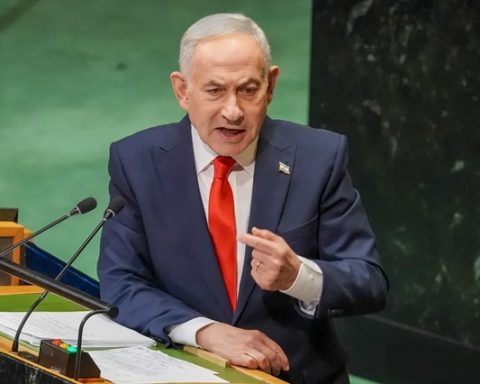
The geopolitical backdrop also involves Israel and its prime minister, Benjamin Netanyahu, who has spent years advocating a tougher stance toward Iran. Critics claim Netanyahu has skillfully maneuvered Trump into a position where backing down could appear politically embarrassing. Facing his own domestic pressures and political uncertainty, Netanyahu has strong incentives to maintain a confrontational approach toward Iran.
At the same time, diplomatic alternatives appear to have stalled. According to reports cited in the Haaretz analysis, discussions had taken place about a possible agreement that would grant the United States economic rights in Iranian oil fields in exchange for investment and improved relations. That proposal never advanced, leaving military confrontation as the dominant strategy.
Yet the greatest threat to the continuation of the war may not come from the battlefield but from the global economy. Yashiv argues that the TACO theory may ultimately play out once the financial consequences of the conflict begin to intensify.
Energy markets have already reacted sharply to the escalation. Oil prices surged from below $70 per barrel before the war to briefly approach $120. Although prices later eased following reports that G7 finance ministers might coordinate the release of petroleum reserves, volatility remains high.
Liquefied natural gas prices are also rising rapidly, partly due to disruptions in Qatar, which accounts for roughly one-fifth of global supply. Some forward contracts indicate prices could nearly double, while Qatar’s energy minister has warned that costs could even quadruple under certain conditions.
The strategic Strait of Hormuz has become another critical flashpoint. Shipping traffic through the narrow corridor, which handles a major share of the world’s energy exports, has slowed dramatically amid fears of further escalation. A prolonged disruption would have severe consequences for global trade and energy distribution.
Economists warn that rising energy prices could quickly translate into higher inflation worldwide. Analysts at Goldman Sachs estimate that if oil prices stabilize around $100 per barrel, inflation in the United States alone could increase by about 0.6 percentage points. In an environment where central banks are already struggling to balance growth and price stability, such an increase would represent a significant economic shock.
Beyond inflation, global supply chains could also suffer. Disruptions to shipping routes and rising transportation costs could affect food production, manufacturing and international trade. Financial markets have already shown early signs of concern.
During the first week of the conflict, major U.S. stock indexes fell between 1.2 percent and 3 percent. While those declines remain relatively modest, analysts warn that a prolonged war could trigger deeper losses and intensify investor anxiety.
Market volatility has also increased sharply. The VIX volatility index, often referred to as the “fear index,” jumped from around 25 to 30 late last week after spending much of the past year near 20. The spike reflects growing concern that the conflict could drag on and inflict greater economic damage.
Domestic political pressure in the United States could further complicate the administration’s position. Public opinion polls suggest that even within the Republican Party there is no clear majority supporting the war against Iran. While many Americans view Tehran with suspicion, a large share of the public prefers ending the conflict quickly rather than sustaining a prolonged military campaign.
Opposition may become particularly strong among Trump’s own political base, where skepticism toward foreign wars remains widespread. Rising fuel prices, falling stock markets and economic uncertainty could amplify those concerns and erode political support for continued military engagement.
International partners could also play a role. Several Gulf states maintain close financial and political relationships with Trump’s circle, and they may push for de-escalation if the conflict threatens regional stability or global markets.
Taken together, these pressures form what Yashiv describes as the “TACO risk.” If economic pain intensifies, Trump may ultimately opt for a familiar strategy: declaring victory, emphasizing the damage inflicted on Iran, and withdrawing from the conflict.
Such a move would not necessarily end the confrontation, however. As Yashiv warns in his Haaretz analysis, a rapid American withdrawal could leave Israel facing the strategic consequences largely on its own. For Washington, the challenge will be avoiding another prolonged entanglement in the Middle East, a scenario that has already haunted several American presidents.
Whether the TACO theory ultimately proves accurate remains uncertain. But as the economic costs of the conflict begin to ripple across global markets, the pressure on the White House may grow steadily stronger. In that environment, financial realities could shape the outcome of the war as much as military strategy.