Turkey’s biggest financial scandal in a decade has reached the political circle of President Recep Tayyip Erdogan, with senior members of his Justice and Development Party (AKP) and relatives of government officials under investigation over alleged benefits from a network of investment funds accused of market manipulation, fraud and money laundering.
Authorities have intervened in 131 investment funds with a combined value of about €17 billion after a series of defaults and allegations of stock-market manipulation left around 455,000 savers trapped. More than 200 people are currently under investigation, with 65 held in pre-trial detention on allegations including criminal association, market manipulation, money laundering and aggravated fraud.
At the centre of the case is Muhammed Yariz, a 28-year-old former AKP youth activist who rapidly accumulated a collection of luxury assets while managing Pusula Portföy, an investment portfolio company. Yariz owned a McLaren 750S, Rolls-Royce Cullinan, Bentley Continental, Mercedes Maybach S580 and Audi Q8, as well as several villas in an exclusive Istanbul district, at least one yacht and interests in business projects. He was detained on 13 September after allegedly attempting to move one of his company’s yachts to Greece and transferring his luxury cars to friends.
Five years earlier, Yariz had been a relatively junior AKP activist, putting up party posters and flags and serving as an alternate member of the Istanbul provincial youth organisation. “Five years ago he was drinking cheap instant coffee and suddenly he was managing funds with billions of liras. We are astonished,” former pro-government MP Samil Tayyar wrote on X.
The investment structure now under investigation expanded rapidly after Tera, the largest of seven investment companies managing the affected funds, opened to public investment in 2025 after initially operating as an invitation-only private portfolio. Some products promised returns exceeding 1,000%. According to prosecutors, the funds invested in companies with limited liquidity and trading activity, rapidly inflating share prices through new investors and bank-financed purchases.
One of the most prominent cases involves Özata Denizcilik, a small shipyard whose shares increased twentyfold in five months, reaching a market capitalisation comparable with Turkey’s largest banks. Former AKP minister and vice-president Fatma Betül Sayan Kaya and her husband bought shares worth 165 million liras in April and sold them for 2.17 billion liras in early September, shortly before the scandal broke. The transaction, worth about €40 million, led to Sayan Kaya’s resignation.
The company was controlled by the Ataseven family, which the opposition says has links to the AKP. Its board included Iskender Balci, who is under arrest; his father sits on the board of the Banking Regulation and Supervision Agency, while his father-in-law is Deputy Finance and Treasury Minister Osman Çelik. “Perhaps what we are experiencing is not only an investment fund crisis, but a crisis of nepotism,” wrote columnist Yildiray Ogur.
Other political connections have intensified scrutiny. Nihat Zeybekci, the AKP’s vice-president for economic affairs, says he was a “victim” after reports that he held a 250 million-lira stake that he could not recover. Prosecutors also temporarily froze the accounts of the son of Hayati Yazici, the AKP’s vice-president for legal affairs, before lifting the measure and retaining a travel ban.
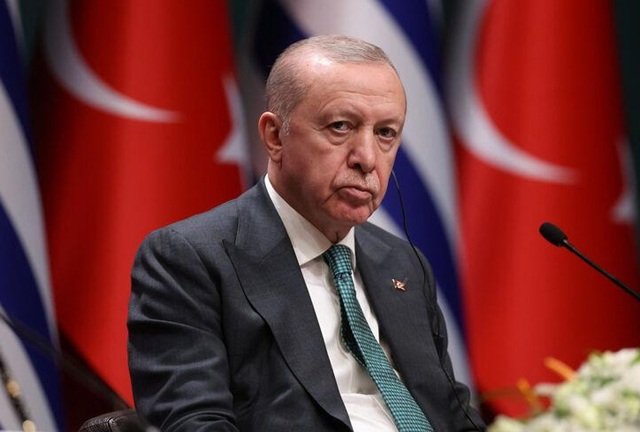
President Erdogan has promised to pursue those responsible and compensate savers, while warning that he would not allow the party’s reputation to be damaged. “Some lost their way, others became slaves to their ego, some were deceived by the devil and others infiltrated—or were infiltrated—into our ranks expressly to tarnish this blessed movement,” he said.
Berk Esen, a political science professor at Sabanci University in Istanbul, said the scandal reflected the close relationship between political and economic power under the AKP. “Basically, if you have political power, you gain access to an enormous amount of funds,” he said.